

What Pixel Pitch Should Outdoor Advertising LED Displays Have?
Outdoor advertising billboards typically use a pixel pitch in the range of P6–P20, meaning the distance between pixels is from 6 to 20mm. This wide range is because outdoor viewers are usually very far away: a billboard mounted on a multi-story building facade or a highway pano is viewed from tens of meters away. At such distances, the human eye cannot distinguish closely spaced pixels, so choosing a sufficiently large pitch is a cost-effective way to maintain image clarity.
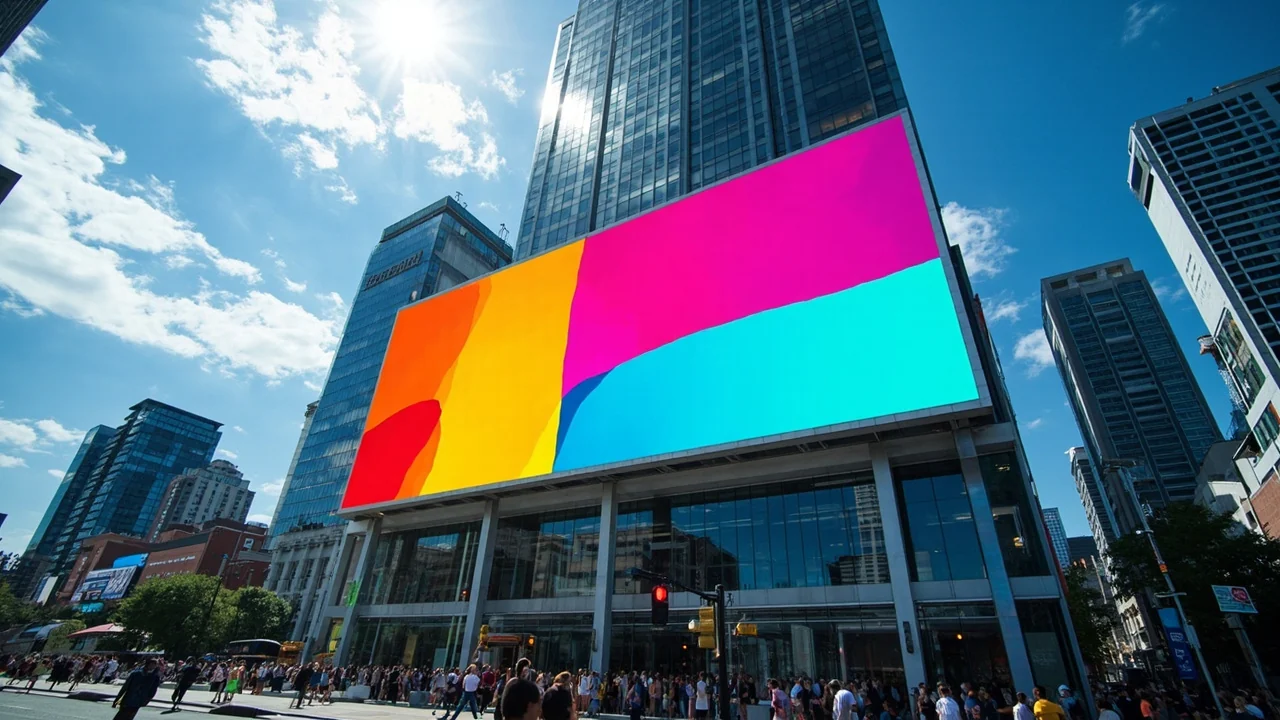
Pixel pitch determines both resolution and cost: a smaller P means higher pixel density, a smoother image at close distances, but a rapidly increasing cost per square meter. For outdoor DOOH billboard or facade signage applications, investing in a very small pitch for a display viewed from afar is pure waste. The correct approach is to match the pitch to the closest viewing distance; the following section will detail the calculation rule.
How Many Nits Brightness is Enough for Outdoor LED Displays?
Outdoor LED displays require a minimum brightness of 5,000 nits, many times higher than indoor displays which typically range from 1,500–2,000 nits, because outdoor screens must directly compete with sunlight. For billboard surfaces directly exposed to harsh midday sun, the required brightness can reach up to approximately 10,000 nits to prevent the image from appearing "washed out." This is a fundamental difference between LED indoor and outdoor displays that many buyers often overlook when trying to save costs.
The specific nits level depends on the installation direction and the surrounding ambient light, not a fixed number. Surfaces facing east or west, receiving intense oblique sunlight, require a higher threshold than north-facing surfaces or those with overhangs. High-end outdoor series like BOE BYB can reach peak brightness of 10,000 nits (as announced by BOE) to cover the most extreme sun conditions. The article How many nits brightness is enough provides a deeper analysis of matching nits to different environments.

What IP Rating is Needed for Outdoor Advertising LED Displays?
The minimum water resistance standard for outdoor LED displays is IP65 on the front according to IEC 60529 — completely dust-tight and protected against water jets from any direction, sufficient for typical urban rain. For harsher environments such as salty coastal areas, high-speed highways, or regions with prolonged heavy rainfall, an upgrade to IP66 is recommended to withstand high-pressure water jets. The BOE BYB P5.9 series achieves IP66 while the BYB4 Plus P4.4 achieves IP65 (as announced by BOE).
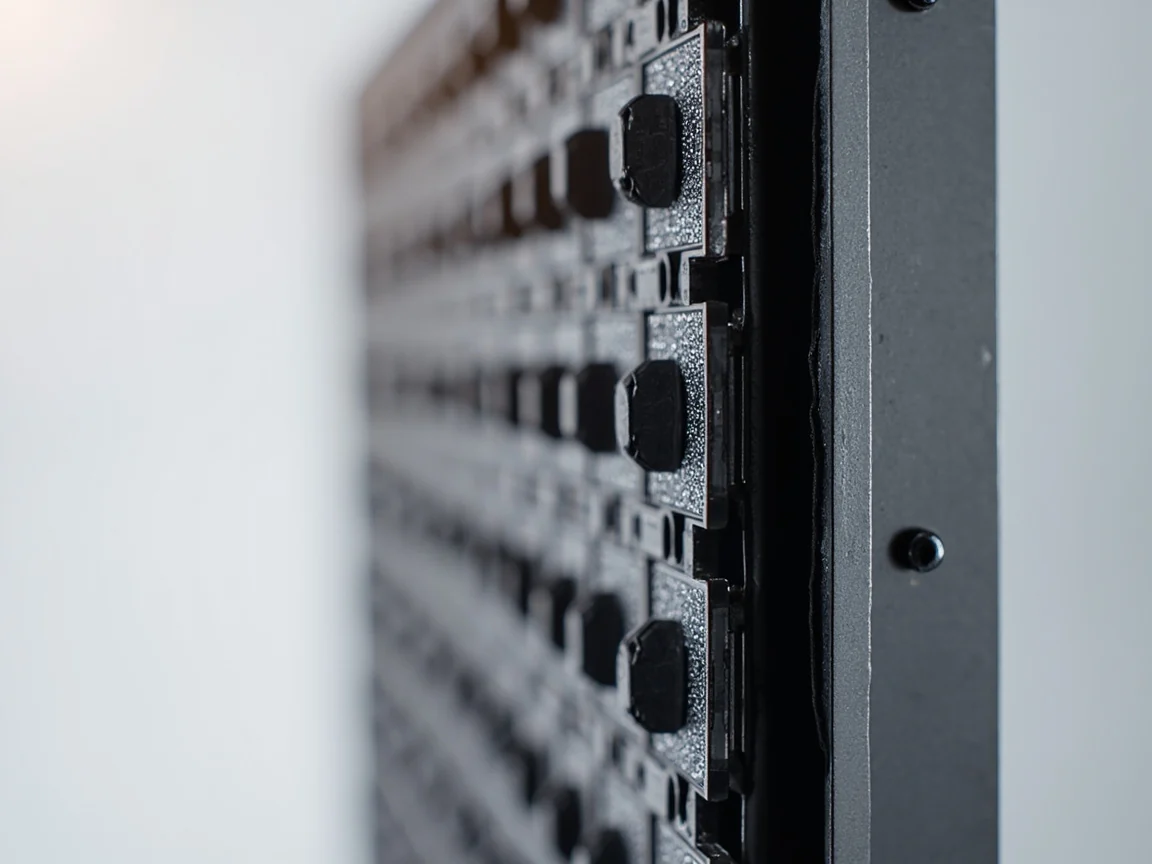
A commonly overlooked point is the distinction between the front and rear ingress protection ratings of the cabinet. The front, housing the LED chips, always requires IP65 or higher. The rear, containing power ports, fans, and signal cables, typically requires a lower level of sealing — but the datasheet must clearly specify both. Tropical rains in Vietnam can blow sideways, entering the rear through ventilation slots, so a generic "full IP65" label is a sign to double-check. The article Outdoor LED IP Rating: IP65 vs IP66 vs IP67 provides a detailed breakdown of how to read and verify this specification.
How to Calculate Pixel Pitch Based on Outdoor Viewing Distance?
A common industry reference rule is that the minimum viewing distance in meters is approximately equal to the pixel pitch value in millimeters. Using this method, P10 provides a clear image from about 10m onwards, and P16 from about 16m — closer than these thresholds, the eye starts to perceive pixelation, while viewing from much farther away makes choosing a smaller P an unnecessary expense. For outdoor billboards, measure the distance from the billboard to the closest viewer position and then determine the appropriate pitch range.
There are two practical adjustments to keep in mind. If the billboard content consists of many small text characters and numbers, choose a P one step smaller than the rule to maintain sharp text; conversely, for billboards primarily displaying videos and large images, you can increase the P by one step to reduce costs, as the difference will not be noticeable to the eye. This is also why two billboards of the same size and viewing distance but with different content might require different pitches. The article How to Choose Pixel Pitch 2026 provides step-by-step guidance for matching viewing distance with pitch according to this rule.
How Do Stadium LED Displays Differ from Billboards in Specifications?
LED displays for stadiums and sports venues typically use pixel pitches of P4–P10 with brightness levels of around 5,000–10,000 nits — smaller pitches than billboards but comparable high brightness levels. The difference stems from the usage context: spectators are seated at varying distances, so the display needs to be fine enough for nearby rows to clearly read scores, timers, and replays, while also being bright enough to compete with the intense stadium lighting at night.
In contrast, street billboards and building facades usually have viewers at greater and more uniform distances, allowing for a wider pitch range up to P20 while still maintaining acceptable clarity. Conversely, building facades can utilize larger, sparser pitches for architectural lighting effects rather than detailed content display. Essentially, while they belong to the same family of outdoor displays, each application optimizes a specific set of parameters based on viewing distance and display objectives, rather than a single "outdoor" configuration being universally applicable to all projects.
What Factors Influence Outdoor LED Display Costs and the Role of Controllers?
The investment cost for outdoor LED displays depends on numerous factors: pixel pitch (smaller pitches are more expensive), IP65/IP66 water resistance standards, required brightness for optimal visibility under sunlight, area, product series, control system, and installation structural requirements. A large-area billboard using a shared processing system will have a different cost per square meter than a small, individual billboard, so an accurate quote requires on-site assessment. Contact us via /quote to receive a quote based on your specific configuration.
A often underestimated component is the controller and video processor. NovaStar specializes in video control and processing — they do not manufacture LED panels — but their systems enable brightness adjustment based on the environment, allowing outdoor displays to operate at high brightness during the day and automatically dim at night, preventing glare and saving energy. Choosing the right controller model and configuration can directly impact the lifespan and operational costs of the entire system.
Common Mistakes When Choosing Outdoor LED Displays?
The most costly mistake is selecting a configuration based on catalog defaults instead of actual on-site measurements at the installation location. As a brand under Ho Gia JSC — an authorized distributor of BOE, NovaStar, and Muxwave — Luxwave adheres to the principle of surveying and measuring the closest viewing distance and sun exposure at the site before providing a configuration. Correct pitch and nits selection depend on these measurements; even a single step off can compromise the entire project lifecycle. The technical team that delivered the BOE COB P0.9 project in Q1/2026 also followed this "measure first, confirm later" process.
Other common errors involve chasing numbers while ignoring context. Some buyers choose pixel pitches that are too small for displays viewed from a distance — paying extra for pixel density that is imperceptible at that range. Others purchase screens below 5,000 nits for sun-facing surfaces, resulting in washed-out images during peak hours when viewership is highest, rendering the advertisement ineffective. Some trust generic IP labels or run screens at full brightness 24/7. Each of these mistakes stems from skipping a simple site survey and can be avoided by matching specifications to the actual conditions of the installation location.
Conclusion: How to Finalize Outdoor LED Display Specifications?
Choosing an outdoor advertising LED display boils down to three key parameter axes, each tied to specific real-world conditions, rather than simply aiming for the highest values. Here's a quick summary for making decisions on any outdoor project:
- Pixel Pitch: P6–P20 for billboards and facades, P4–P10 for stadiums — select based on the closest viewing distance (P approximates minimum viewing meters), increase by one step if primarily displaying video.
- Brightness: Minimum 5,000 nits, up to ~10,000 nits for surfaces in direct sunlight — depends on installation direction and ambient light.
- Water Resistance: IP65 front is the minimum standard, IP66 for coastal areas, highways, and heavy rain regions — always read the datasheet to differentiate between front and rear ratings.
Finalizing all three parameters correctly requires one essential step: measure the actual viewing distance and sun exposure at the installation site before matching them to product series like BOE BYB4 Plus P4.4 and the appropriate control system configuration. Refer to the brightness chart by environment and the pixel pitch selection guide to budget and configure before contacting us for a site survey.
Pitfalls
Common mistakes
- Choosing a pixel pitch that is too small for high-mounted displays viewed from afar — paying extra for pixel density imperceptible at that distance, while a larger P for the same area would be significantly cheaper
- Purchasing screens below 5,000 nits for surfaces facing direct sunlight — images appear "washed out" during the day, content is faint, and the billboard loses its advertising effectiveness during peak traffic hours
- Trusting generic "full IP65" labels without checking datasheets to differentiate front/rear protection — sideways rain can enter the rear, causing moisture damage and module short circuits after a few rainy seasons
- Allowing screens to run at full brightness 24/7 without environmental calibration — causing glare at night, wasting energy, and accelerating LED degradation
- Skipping the measurement of actual viewing distance and sun exposure at the base of the billboard, and finalizing configuration based on catalog defaults — an error of one step in pitch or insufficient nits compromises the entire project lifecycle
FAQ
Frequently asked questions
What pixel pitch should outdoor advertising LED displays have?
Most outdoor advertising billboards fall within the P6–P20 range. Select based on the closest viewing distance: the P value approximates the minimum viewing meters. Therefore, displays viewed from 8–10m are suitable for P8–P10, while highway billboards viewed from 20m or more can use P16–P20 and still appear sharp. Measure the actual distance first; don't assume smaller P is always better.
How many nits does an outdoor LED display need to be clearly visible during the day?
A minimum of 5,000 nits is required for outdoor displays, and surfaces facing direct midday sun may need up to approximately 10,000 nits to avoid being obscured by sunlight. The specific number depends on the installation direction, surrounding ambient light, and whether there is an overhang — north-facing surfaces require a lower threshold than east/west-facing surfaces exposed to intense sun.
What IP rating is required for outdoor advertising LED displays?
The minimum standard is IP65 on the front to provide complete protection against water jets and dust, sufficient for typical urban rain. For harsher environments like coastal areas, highways, or regions with heavy rainfall, an upgrade to IP66 is recommended. It is crucial that the datasheet clearly specifies the rating for both the front and rear; generic "IP65" labels are not acceptable.
What pitch should be chosen for an outdoor LED display mounted 10m high?
A billboard mounted 10m high typically has a closest viewing distance of around 10m or more. Therefore, P10 provides a sharp image while optimizing costs. If the content primarily consists of videos and large images, you can consider P12–P16 to reduce costs, as the difference in pixelation will not be noticeable at that distance. Measure the actual viewing distance for precise selection.
What specifications are used for stadium LED displays?
Stadium and sports venue LED displays typically use pixel pitches of P4–P10 with brightness levels of around 5,000–10,000 nits. This is because spectators are seated at closer distances than for street billboards, and the displays must compete with very bright stadium lighting. Smaller pitches than billboards help clearly display scores, timers, and replays for both near and far stands.
What is the approximate cost per square meter for outdoor LED displays?
The investment cost for outdoor LED displays depends on pixel pitch, water resistance standards (IP65/IP66), brightness, area, control system, and installation structural requirements. A large-area billboard using a shared processing system will have a different cost per square meter than a small, individual billboard. Due to the wide variation per project, please contact us via [/quote](/quote) for an accurate quote after a site survey.
References
- 1.ManufacturerBOE MLED BYB Outdoor Series — InfoComm 2025
- 2.ManufacturerNovaStar — Video Controller & Processing
- 3.StandardIEC 60529 — Ingress Protection (IP) Standard
- 4.ResearchLED Display Specs Reference Chart (Internal SKV/Luxwave 2026)