

What is the BOE BTS Series and Where is it Positioned?
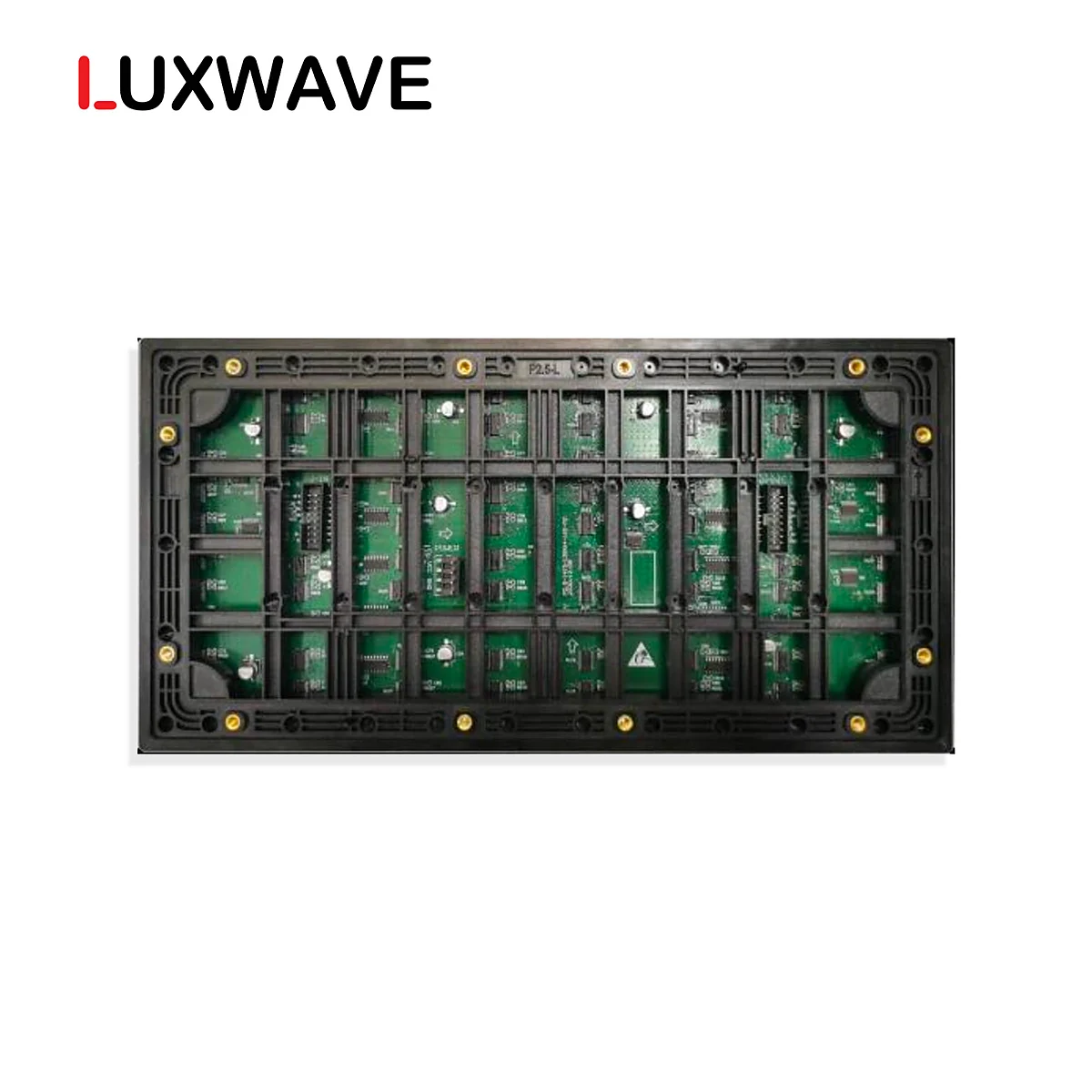
BOE BTS is BOE MLED's outdoor SMD LED display series, designed for installations requiring durable display performance under sun, dust, humidity, and long operating hours. The product range includes BTS025, BTS030, BTS040, BTS050, BTS060, BTS080, and BTS100, corresponding to pixel pitches of P2.5, P3.0, P4, P5, P6, P8, and P10, respectively. This is an outdoor SMD series, distinct from BOE's indoor COB series, so proper evaluation must begin with the installation environment, viewing distance, and actual operational requirements.
Within the BOE MLED ecosystem, BTS is positioned in the outdoor LED display segment for advertising, events, traffic management, sports, and large-scale media facades. For clients comparing brands like Unilumin or Absen, the focus should not solely be on pitch configuration but on BOE's display manufacturing capabilities, material control, and commitment to stable operation. You can explore the BOE MLED page to understand BTS within the brand's broader context, rather than viewing it as an isolated LED model.
!BOE BTS Outdoor SMD LED Display
Which BOE BTS Specifications Should Be Read First?
The three key specification groups to prioritize are pitch, LED encapsulation, and outdoor protection. BTS spans from P2.5 to P10, covering a wide range of viewing distances: from facades requiring higher detail to billboards or event screens viewed from afar. Depending on the pitch, this series uses either SMD1415 or SMD1921 LEDs. For outdoor applications, the choice of LED not only affects sharpness but also durability against dust, moisture, UV, and color stability over time.
Regarding specific products, BOE BTS025 should be considered when the screen is viewed at closer distances or when content requires fine text, images, and details. BOE BTS060 is more suitable for various outdoor facade applications, balancing detail and scale. For screens viewed from further distances, BOE BTS100 might be the logical choice. The correct selection method is not to choose the smallest pitch, but rather the pitch that viewers can actually perceive under outdoor conditions.
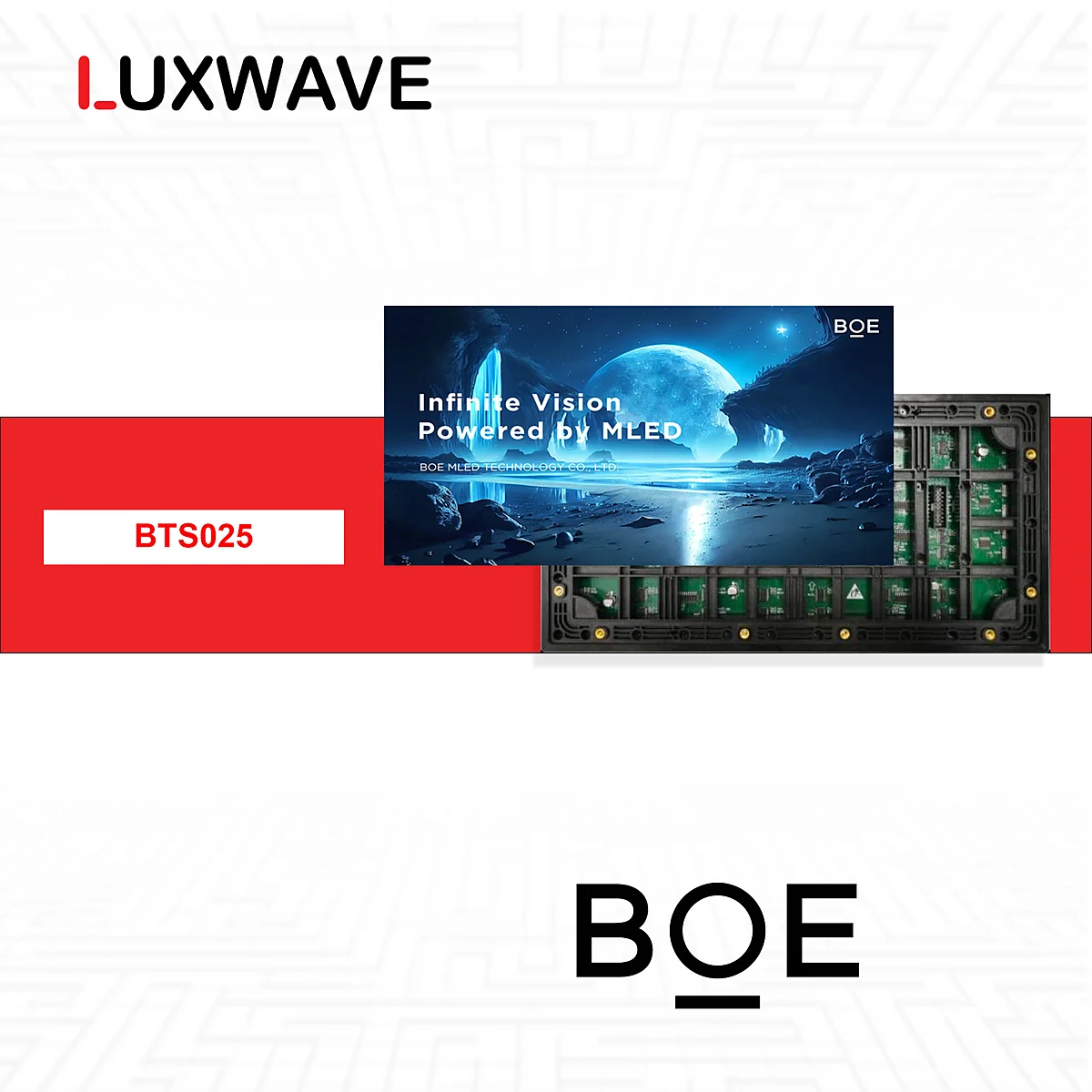

Why Are Saving ~35% Power and ~20°C Lower Temperature Important?
For outdoor LED displays, power consumption and temperature are not secondary details. BOE positions the BTS series with approximately 35% lower power consumption and up to ~20°C lower operating temperature compared to conventional displays. These two figures should be considered together: power savings reduce operational costs, while lower temperatures lessen the strain on LEDs, ICs, power supplies, and cabinet structures. In long-hour operations, temperature differences can directly impact stability.
The practical advantage is that outdoor displays rarely operate in ideal environments. Surfaces are exposed to direct sunlight, heat accumulates behind the cabinet, and dust and humidity vary seasonally. When the system runs cooler, components have a greater safety margin for stable operation, especially for continuously operating media billboards or information displays. If you are calculating the total cost of ownership, it's advisable to read more about LED Display Power Consumption and Operating Costs to separate initial investment from long-term usage costs.

How Do IP65 and Fire Retardancy Protect Outdoor Displays?
The BTS series features an IP65 rating, high fire-retardant materials, and sealed glue-coated LEDs to protect against moisture, dust, and UV. This level of protection is crucial because outdoor displays are exposed not only to rain but also to fine dust, humidity, solar radiation, and temperature fluctuations. For an outdoor cabinet, the protective layer must be effective beyond paper specifications; it must help modules, LEDs, and electronic components maintain stable performance over extended periods.
High fire-retardant material is also noteworthy in high-temperature outdoor environments. Risks in outdoor installations often stem from a combination of factors: accumulated heat, dust, power supply issues, improper installation, and lack of maintenance. While BTS does not replace correct electrical design, its fire-retardant materials and structure help reduce a layer of risk for the investor. Before finalizing the configuration, it's recommended to consult the article How are Indoor and Outdoor LEDs Different? to avoid selecting the wrong product type.
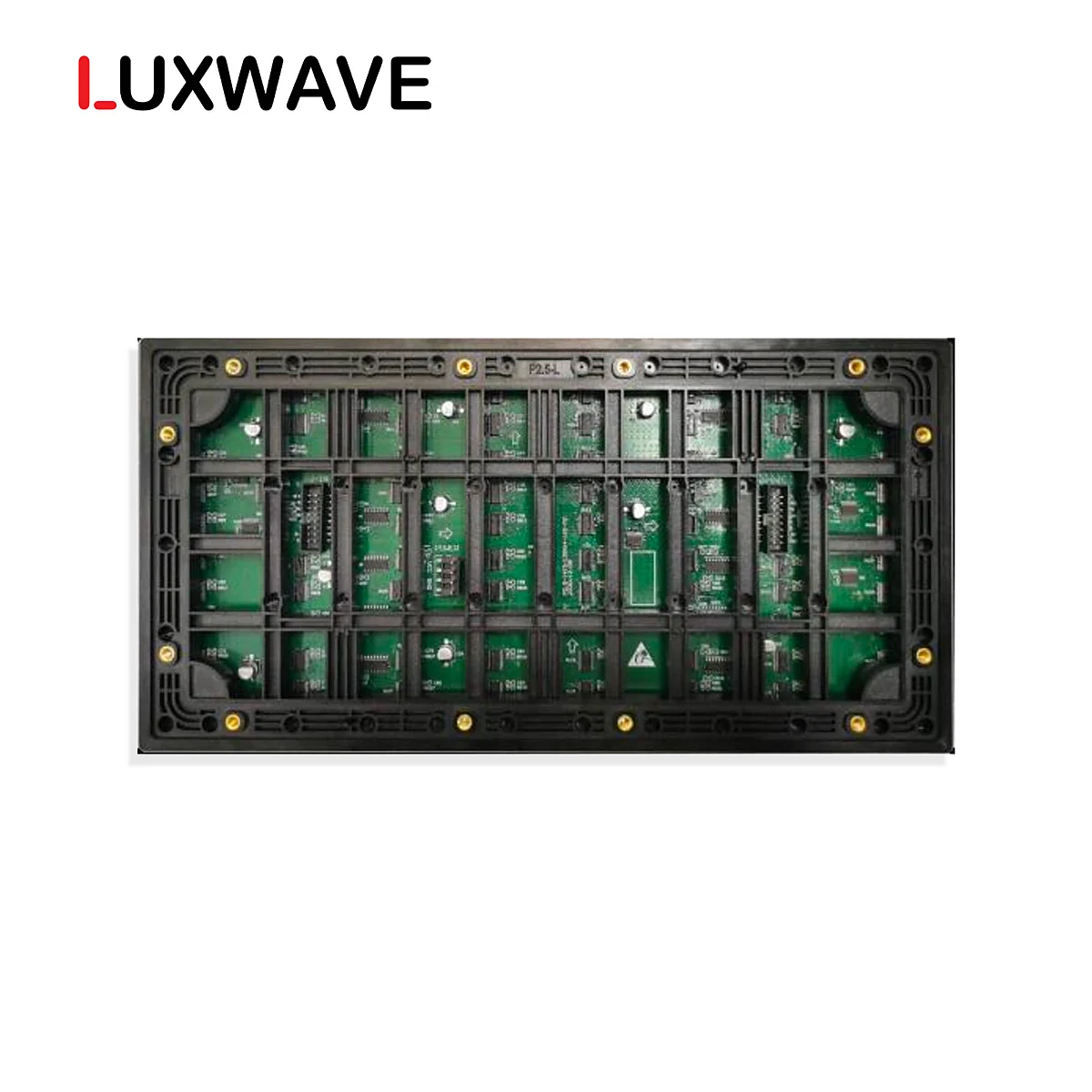
!High Brightness BTS Outdoor Display
How Should BTS Durability and Reliability Be Understood?
BOE states that the BTS series undergoes a minimum 240-hour reliability test, with IC temperatures not exceeding 75°C, while emphasizing high brightness and wide viewing angles for direct sunlight conditions. These specifications should not be read in isolation. For outdoor displays, high brightness ensures content visibility under strong ambient light, wide viewing angles allow viewers in various positions to receive content, and temperature control prevents the system from operating at its limits during long duty cycles.
Actual reliability also depends on system design. A good BTS display still requires a proper structural frame, clear drainage, stable power supply, lightning protection measures, and a maintenance schedule. When consulting, Luxwave typically views LED displays as a system comprising modules, cabinets, power supplies, cards, processors, structure, and operational procedures. If the signal processing requires multiple sources, backups, or complex mapping, you may refer to NovaStar or PixelHue processors within the related content.
What Applications Suit BTS, Including Naked-Eye 3D?
BTS is suitable for outdoor applications such as large events, traffic command displays, naked-eye 3D, sports events, and outdoor media billboards. In the advertising sector, this series is ideal for facades requiring high brightness, wide viewing angles, and stable operation across various hours. For events, BTS offers advantages for large screens that withstand weather conditions and maintain clear images in complex lighting environments. For traffic management, stability and visibility are more critical than visual effects.
For naked-eye 3D, BTS is only one component of the solution. The display needs sufficient size, appropriate viewing angles, a suitable pitch, and 3D content rendered with correct perspective. The image processing system must also maintain stable signals, especially when the display has multiple viewing zones or requires synchronization of multiple sources. Investors can read more about Outdoor Advertising LED Displays and Outdoor Advertising Solutions to define their requirements before selecting a model.
Real-world installations provide a clearer understanding of BTS compared to datasheets alone. BOE has used BTS060 for the 1500m² Fuqing Longjiang Park outdoor project, BTS060 at the 32nd Qingdao Beer Festival for a 250m² display, and BTS025 at the Hi BOE Brand Event for a 157m² screen. These three examples demonstrate that the BTS range can accommodate everything from brand events to large-scale outdoor facades, depending on pitch, size, and viewing distance requirements.
The key takeaway is not that every project requires the same model, but that BTS offers a sufficiently wide range of pitches to configure solutions for real-world scenarios. A park, festival, or brand event will differ in terms of viewer distance, content, operating hours, and image quality requirements. When shortlisting BTS against competitors like Unilumin or Absen, request a clear technical proposal: pitch, materials, protection standards, thermal solutions, processing configuration, and maintenance plan.
Should BOE BTS Be Chosen for Outdoor Projects in Vietnam?
The BOE BTS should be included in your shortlist if your project requires an outdoor SMD LED display with a P2.5-P10 range, IP65 rating, sealed glue-coated LEDs, high fire-retardant materials, power efficiency, and cooler operation compared to conventional options. This is not a choice for the lowest price; BTS's strengths lie in its durable outdoor positioning, clear technical specifications, and BOE's display manufacturing foundation. For 24/7 installations, stability is often as critical as brightness and resolution.
BOE's advantage stems from its position as a world-leading panel manufacturer, its expertise in image processing algorithms from the LCD/OLED sector, and its stringent material control. This provides BTS with a more compelling technical narrative than many common assembled options. The correct decision involves surveying the site, determining viewing distances, selecting the pitch based on content, checking thermal conditions, and designing a suitable signal processing system. Once these variables are clear, BTS is a worthwhile outdoor option for advertising, events, traffic management, sports, and naked-eye 3D in Vietnam.
Pitfalls
Common mistakes
- Selecting the smallest pitch model without considering viewing distance, facade size, content, and outdoor lighting conditions.
- Comparing only initial investment costs with Unilumin or Absen, while overlooking power consumption, operating temperature, fire-retardant materials, and long-term stability.
- Assuming IP65 is sufficient for all projects, while outdoor installations still require proper structural design, drainage, ventilation, lightning protection, and maintenance.
- Using BTS for indoor fine-pitch spaces requiring very close viewing, instead of choosing a more suitable indoor LED series.
FAQ
Frequently asked questions
What type of LED display is the BOE BTS series?
BOE BTS is BOE MLED's outdoor SMD LED display series, comprising models BTS025, BTS030, BTS040, BTS050, BTS060, BTS080, and BTS100. The corresponding pixel pitch range is from P2.5 to P10, using either SMD1415 or SMD1921 LEDs depending on the pitch. This series is positioned for advertising, events, and outdoor projects requiring durability.
Is BOE BTS suitable for long-term outdoor installation?
Yes, provided the project design and operation adhere to outdoor conditions. BTS features an IP65 rating, sealed glue-coated LEDs for moisture, dust, and UV protection, high fire-retardant materials, and a minimum 240-hour reliability test. However, the project still requires appropriate structural design, drainage, lightning protection, and a maintenance plan.
Why is BTS's power saving noteworthy?
According to the BTS series data, the product consumes approximately 35% less power and operates at a temperature ~20°C lower than conventional displays. For outdoor LED displays, the benefits extend beyond lower electricity costs to reduced thermal load on LEDs, ICs, power supplies, and cabinets during long operating cycles.
Should I choose BTS025, BTS060, or BTS100?
The choice should be based on viewing distance, screen size, and content type. BTS025 is suitable for content requiring more detail at closer distances; BTS060 is a balanced choice for many outdoor facades; BTS100 is appropriate for long-distance viewing. Do not choose the smallest pitch if viewers cannot utilize the fine detail.
How does BTS differ from common outdoor LEDs?
The difference lies in BOE's positioning of BTS as an outdoor SMD series with strict material control, IP65 rating, sealed glue coating, high fire-retardant materials, and cooler operation. BOE also leverages its panel manufacturing expertise and image processing algorithms from LCD/OLED technology, giving it a more credible technical profile than many commonly assembled options.
Can BOE BTS be used for naked-eye 3D?
Yes, it can be used for outdoor naked-eye 3D projects if the display design, content, viewing angles, size, and image processing system are synchronized. BTS offers high brightness, wide viewing angles, and a pitch range suitable for various scales. The final visual effect largely depends on the 3D content and the signal processing configuration.
References
- 1.DatasheetBOE MLED — BTS Series Introduction
- 2.ManufacturerGenuine BOE MLED — COB/COG at InfoComm 2025
- 3.ResearchOutdoor LED Market Summary
- 4.ManufacturerGenuine PixelHue
- 5.NewsPixelHue Facebook
- 6.StandardPixelHue Master Academy Curriculum