

What is the BYH V1 Series and Where Does it Fit in BOE's Portfolio?
The BOE BYH V1 is a commercial COB LED display series from BOE MLED, built on FULL FLIP-CHIP COB technology. While the BYH Ultra represents the flagship P0.9 COB group for ultra-premium projects, and BTQ is the indoor fine-pitch SMD line, the BYH V1 occupies the middle ground. It's premium enough to leverage COB advantages but is positioned more practically for meeting rooms, monitoring centers, showrooms, and corporate lobbies. This series should be shortlisted when clients aim to upgrade from SMD to COB without needing the absolute flagship specifications.
!BOE BYH V1 full flip-chip COB LED display
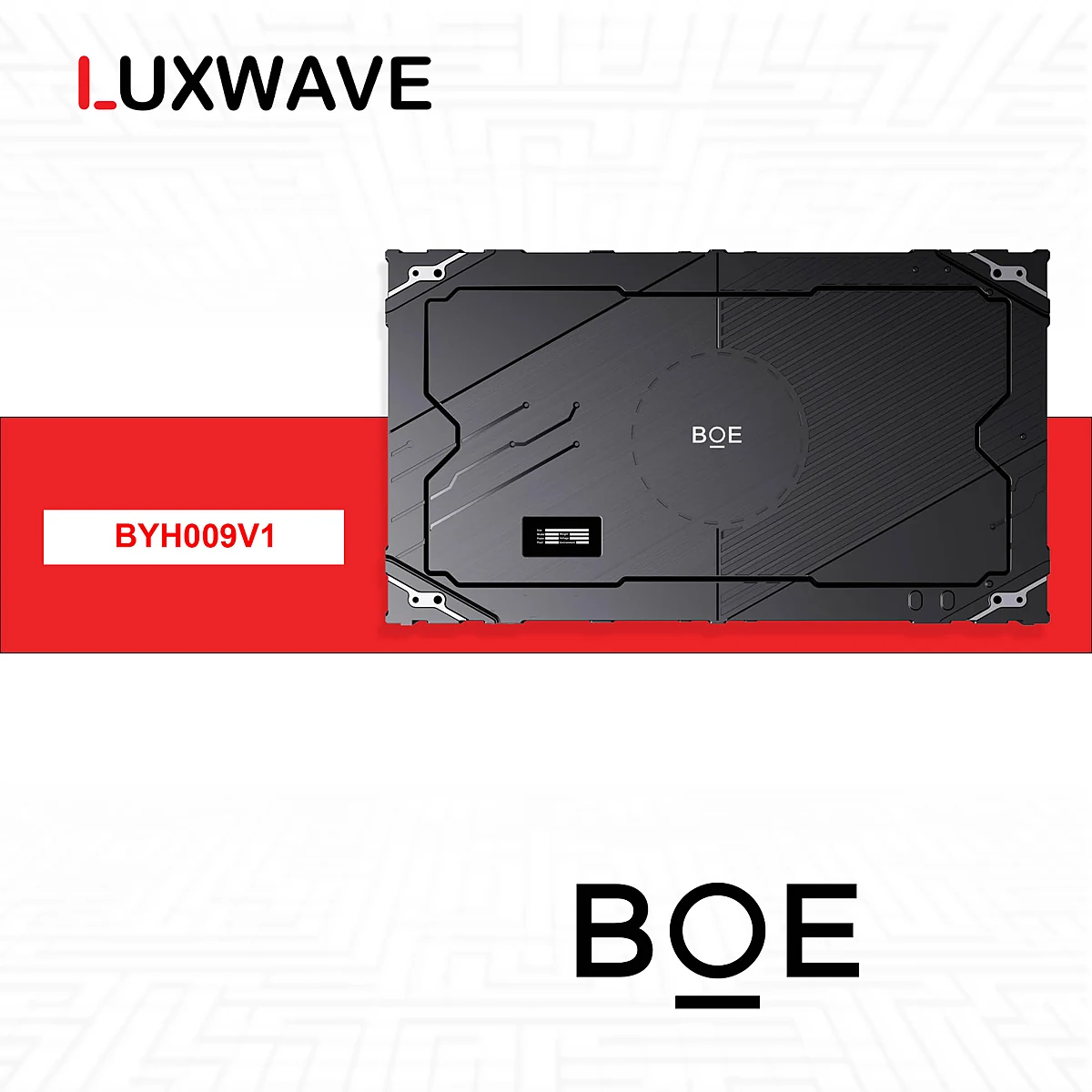
In terms of pixel pitch, the BYH V1 offers options of P0.9375, P1.25, and P1.5625 (ranging from P0.94 to P1.56). This range covers most indoor fine-pitch requirements, from close-viewing spaces needing extremely smooth images to corporate lobbies or showrooms with more flexible viewing distances. If you are comparing based on technology, the article What is a COB LED Display? will help differentiate COB, SMD, Mini-LED, MicroLED, and pixel pitch.
It's important to note that the BYH V1 is not a "down-specced" version of COB. Rather, it's BOE's approach to bringing COB technology to a broader commercial segment. It retains the durable surface, dark level uniformity, and long operating hours benefits of COB, without aiming to replace the BOE BYH Ultra series in projects demanding flagship performance. This positioning helps buyers avoid extremes: choosing SMD when COB is needed, or opting for a flagship when actual requirements don't necessitate it.
What are the Standout Specifications of the BOE BYH V1?
The BYH V1 stands out with a balanced set of specifications for a commercial LED display: 3840Hz refresh rate, 93% DCI-P3 color gamut, cabinet weight around 3.4kg, surface temperature ≤40°C, IP65 rating, million-to-one contrast ratio, and stable 7x24h operation. These figures should not be viewed in isolation. For meeting rooms, control rooms, or showrooms, the value lies in the display being sufficiently fine, uniform, durable, and easy to operate in brightly lit environments with close proximity viewing and extended daily use.
The 3840Hz refresh rate is suitable for most professional display environments, especially when the screen needs to show slides, graphics, dashboards, or videos in a meeting space. The 93% DCI-P3 color gamut provides a wider color range than typical configurations, beneficial for branded content, product showrooms, and video content with rich colors. However, excellent color reproduction depends not only on gamut but also on signal processing, calibration, and input content.
!BYH V1 displaying colorful content in a commercial space

The cabinet weight of approximately 3.4kg is also a notable detail for installation. Lighter weight reduces structural load and simplifies handling during installation or maintenance, particularly in meeting rooms with finished interiors. The IP65 rating indicates a design focus on surface durability and better resistance in real-world operating environments. Nevertheless, IP ratings do not replace site surveys; technical teams must still assess humidity, airflow, power supply, maintenance access, and installation conditions before finalizing specifications.

What Do FULL FLIP-CHIP COB and △L<0.23 Offer?
FULL FLIP-CHIP COB is the foundational technology of the BYH V1. At the user experience level, while deep understanding of chip structure isn't required, the results are evident in a flatter surface, improved durability, and a more seamless visual experience compared to many conventional SMD displays with exposed LED beads. In spaces where people stand close to the screen, like showrooms or meeting rooms, the COB surface reduces the risk of direct impact on LED beads and provides a premium feel at short viewing distances.
A standout specification for the BYH V1 is its color uniformity in dark states, with a △L<0.23 difference. This is a significant metric because black level uniformity is a common weakness in fine-pitch LED displays if modules are inconsistent or the reflective surface is uneven. When dimmed, many displays can exhibit uneven dark areas, blotches, or a "dirty screen" effect. The BYH V1 is positioned to excel in this area, offering smoother, less blotchy, and more uniform black levels across wide viewing angles.
For monitoring centers or control rooms, dark level uniformity directly impacts the readability of dashboards, maps, cameras, and dark interface backgrounds. In showrooms, it adds depth to product content, especially when displaying black backgrounds, transitions, or high-contrast objects. This is also why the BYH V1 should be compared to the BOE BTQ Indoor SMD not just on pixel pitch or screen size, but also on dark level uniformity and surface durability.

Why is a ≤40°C Screen Temperature Important for 24/7 Operation?
A screen surface temperature of ≤40°C is a more practical specification than many realize. In meeting rooms, corporate lobbies, or control centers, LED displays are often placed near users, furniture, and within air-conditioned spaces. An excessively hot screen can make nearby occupants uncomfortable, increase the air conditioning load, and require operational staff to be cautious during continuous operation. The BYH V1 is described as a cool-running display, aligning with requirements for energy efficiency, enhanced durability, and ease of 24/7 operation.
!Lightweight BOE BYH V1 cabinet, full flip-chip, and cool operation
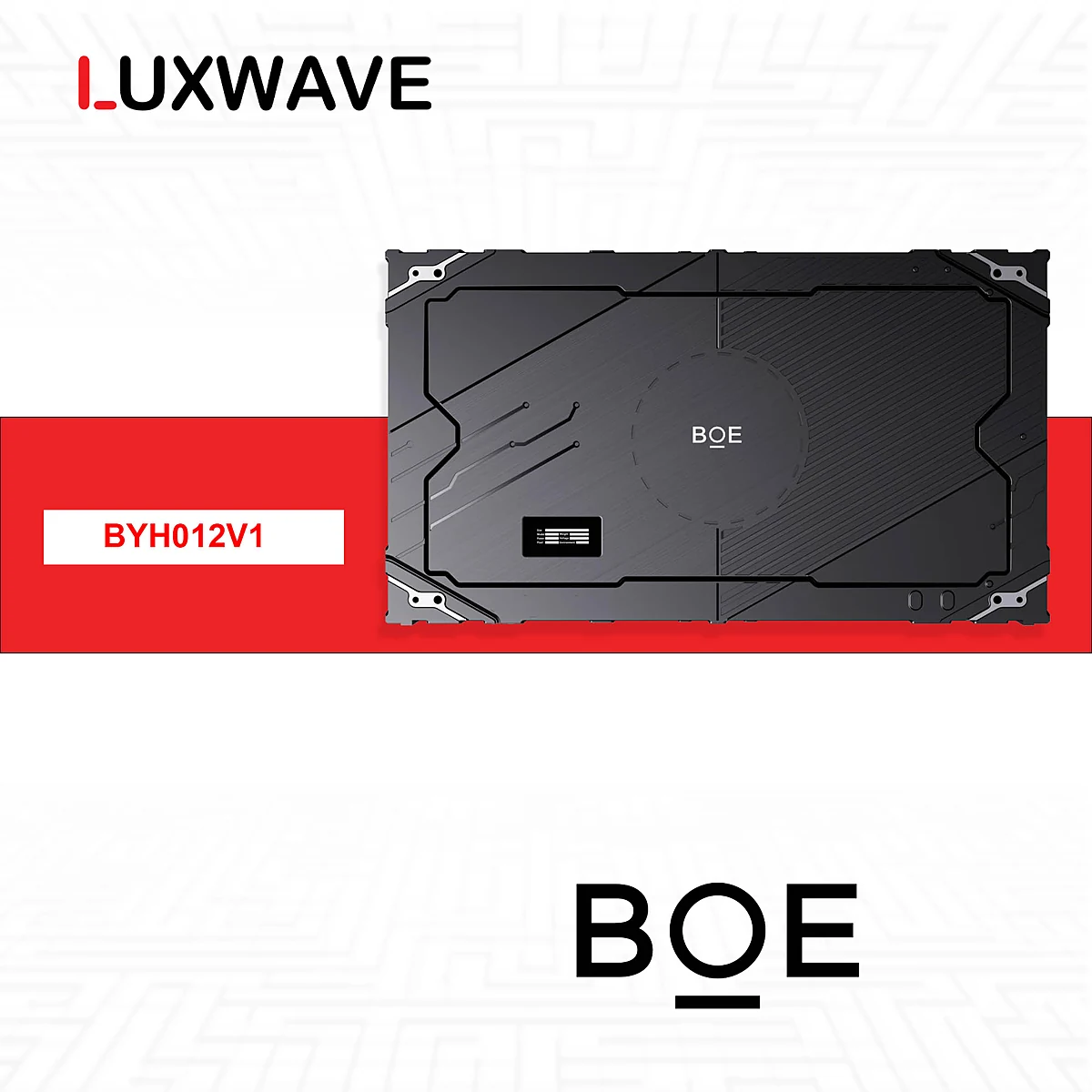
Lower temperatures also relate to long-term stability. LED displays operating many hours daily must not only perform well at commissioning but also maintain stability throughout their actual service life. When the screen surface effectively manages heat, the system is generally easier to maintain in terms of power, cooling, and periodic servicing. This is particularly valuable in 7x24h monitoring rooms, where the display is not just decorative but essential infrastructure for operations.
However, ≤40°C should not be interpreted as an independent guarantee irrespective of installation conditions. Actual temperatures depend on the environment, operating brightness, ventilation, wiring, power supply, and content configuration. For serious projects, Luxwave typically evaluates the LED display, image processor, signal path, and room conditions concurrently. If the system uses a dedicated processor, the knowledge base on PixelHue serves as a good reference for understanding the role of signal processing in final display quality.
Which Projects in Vietnam is the BYH V1 Suitable For?
The BYH V1 is best suited for projects requiring premium commercial fine-pitch LED displays while maintaining investment efficiency: meeting rooms, monitoring centers, control rooms, showrooms, corporate lobbies, and brand presentation spaces. The commonality among these applications is relatively close viewing distances, content with small text or graphical interfaces, extended operating hours, and a client desire for a more durable surface than standard SMD.
In meeting and board rooms, the BYH V1 enables large display surfaces, unconstrained by the size limitations of TVs or tiled LCDs. Pixel pitches P0.9375, P1.25, or P1.5625 can be selected based on viewing distance, wall size, and content type. For control rooms, the dark level uniformity of △L<0.23, 7x24h operation, and cool screen temperature are clearly significant factors. For showrooms, the 93% DCI-P3 gamut and COB surface enhance product content with clarity, depth, and a premium feel.
Regarding brand and supply chain, BOE is the world's No. 1 display panel manufacturer, and Luxwave/Ho Gia is BOE's exclusive distributor in Vietnam under BVD. This is crucial for projects requiring technical documentation, product origin verification, and clear after-sales support. Clients can refer to the BOE MLED page and the news item Ho Gia Appointed Exclusive BOE Distributor in Vietnam to contextualize the BYH V1 within the product ecosystem and support available in the Vietnamese market.
How to Choose Between BTQ, BYH V1, and BYH Ultra?
The selection process should start with operational needs, not just model names. If the project involves an indoor LED display with moderate viewing distances, a need for cost optimization, and no specific requirements for a COB surface, the BTQ SMD is a reasonable choice. If viewers are closer, a durable surface, uniform black levels, and extended operation are needed, the BYH V1 offers a good balance. If the project demands the flagship P0.9 pixel pitch and the highest specifications in BOE's catalog, then the BYH Ultra should be shortlisted.
For the BYH V1, the choice of pixel pitch should align with viewing distance and content. P0.9375 is suitable for very close viewing or content with fine details. P1.25 is a balanced configuration for many meeting rooms and monitoring centers. P1.5625 is more appropriate for larger screens, longer viewing distances, or content focused on video, branding, or overview presentations. If unsure about the pixel pitch selection, the article How to Choose LED Pixel Pitch in 2026 can serve as an initial evaluation framework.
In practical terms, the BYH V1 is not a one-size-fits-all solution, but it is a highly considerable series when clients want to upgrade to COB while maintaining prudent investment decisions. It sits between the BTQ and BYH Ultra, utilizes FULL FLIP-CHIP COB, offers a 3840Hz refresh rate, 93% DCI-P3 color gamut, △L<0.23 uniformity, IP65 rating, a cabinet weight of approximately 3.4kg, a screen temperature of ≤40°C, and 7x24h operational capability. For premium commercial projects in Vietnam, this combination is robust enough for serious consideration before finalizing specifications.
Pitfalls
Common mistakes
- Confusing BYH V1 with BYH Ultra: BYH V1 is a premium mainstream COB display, while BYH Ultra is BOE's flagship P0.9 series.
- Focusing solely on pixel pitch while overlooking dark level uniformity (△L<0.23); for meeting rooms and control rooms, smooth black levels are as critical as image fineness.
- Deploying BYH V1 in all outdoor projects simply because it has an IP65 rating; installation design, environment, maintenance, and specific system configurations still require verification.
- Selecting COB when viewers are too far away or the content does not require fine pitch, failing to leverage the visual advantages appropriately.
FAQ
Frequently asked questions
What type of LED display is the BOE BYH V1?
The BOE BYH V1 is a commercial COB LED display series from BOE MLED, utilizing FULL FLIP-CHIP COB technology. The series offers pixel pitches of P0.9375, P1.25, and P1.5625 (P0.94 to P1.56) and is targeted at meeting rooms, control rooms, showrooms, and corporate lobbies requiring fine imagery, a durable surface, and stable operation.
How does the BYH V1 differ from BOE BTQ?
The BTQ is an indoor fine-pitch SMD LED series, suitable when cost control and standard operating conditions are priorities. The BYH V1 uses full flip-chip COB technology, offering a more durable surface, better dark level uniformity, and is more suitable for close viewing distances or extended operation. Therefore, the BYH V1 is positioned higher than the BTQ in BOE's product lineup.
Is the BYH V1 BOE's highest-end series?
No. The BYH V1 is positioned as a premium mainstream commercial COB display, below the BYH Ultra. The BYH Ultra is the flagship P0.9 COB series for projects demanding the highest level of image quality. The BYH V1 is more suitable when clients seek a balance between COB quality, durability, 24/7 operation, and cost-performance.
What does the △L<0.23 specification mean for users?
△L<0.23 indicates a very low color difference in dark states. For users, this translates to smoother black levels, less blotchiness when dimmed, and more uniform images across wide viewing angles. This is particularly important in meeting rooms, control rooms, and showrooms where dark content or black backgrounds are frequently displayed.
How important is the ≤40°C screen surface temperature?
A low screen surface temperature helps the BYH V1 operate more comfortably in enclosed rooms, reduces heat felt by nearby occupants, and supports durability during 7x24h operation. Cooler displays also typically help operational teams better manage power consumption, air conditioning, and maintenance, especially in large meeting rooms or monitoring centers.
Which projects should consider the BOE BYH V1?
The BYH V1 is suitable for corporate meeting rooms, monitoring centers, control rooms, showrooms, office lobbies, and premium presentation spaces. These applications typically involve relatively close viewing distances, require clean imagery, a durable surface, good uniformity, and stable system operation for many hours daily.
References
- 1.ManufacturerGenuine PixelHue
- 2.NewsPixelHue Facebook
- 3.StandardPixelHue Master Academy (PMA) Curriculum
- 4.DatasheetBOE MLED — BYH V1 Series Introduction
- 5.ManufacturerBOE MLED Official — COB & COG at InfoComm 2025
- 6.ResearchCommercial COB Compendium