

What is the BOE BTQ Series in the BOE MLED Ecosystem?
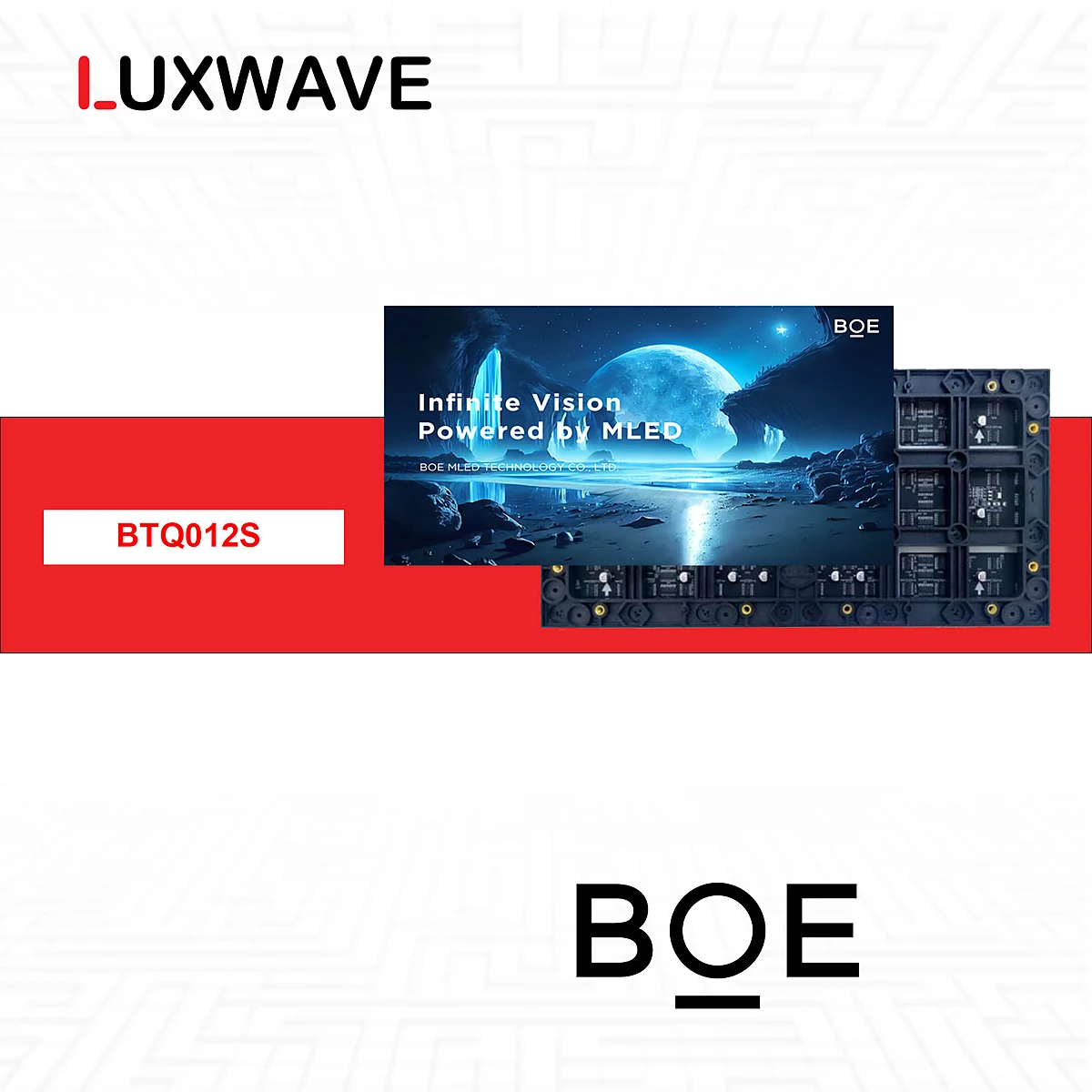
BOE BTQ is an indoor fine-pitch SMD LED display series from BOE MLED, positioned for commercial and indoor projects requiring sharp close-up visuals. The product range includes BTQ012S, BTQ015S, BTQ018S, BTQ020S, BTQ025S, and BTQ030S, corresponding to pixel pitches of P1.25, P1.53, P1.86, P2.0, P2.5, and P3.0 respectively. In short, BTQ is not a trial series; it's a practical SMD choice for meeting rooms, auditoriums, lobbies, control rooms, and showrooms that require stable operation.
Within BOE's portfolio, BTQ should be understood correctly: it is an SMD series, positioned below COB products like BOE BYH Ultra and below the glass-based COG technology that BOE focuses on long-term. This does not diminish BTQ's appeal; on the contrary, it provides investors with a more balanced selection tier between display quality, the familiarity of SMD technology, and deployment flexibility in various indoor spaces.
!BOE BTQ Indoor Fine-Pitch SMD LED Display
What Specifications of BOE BTQ Stand Out the Most?
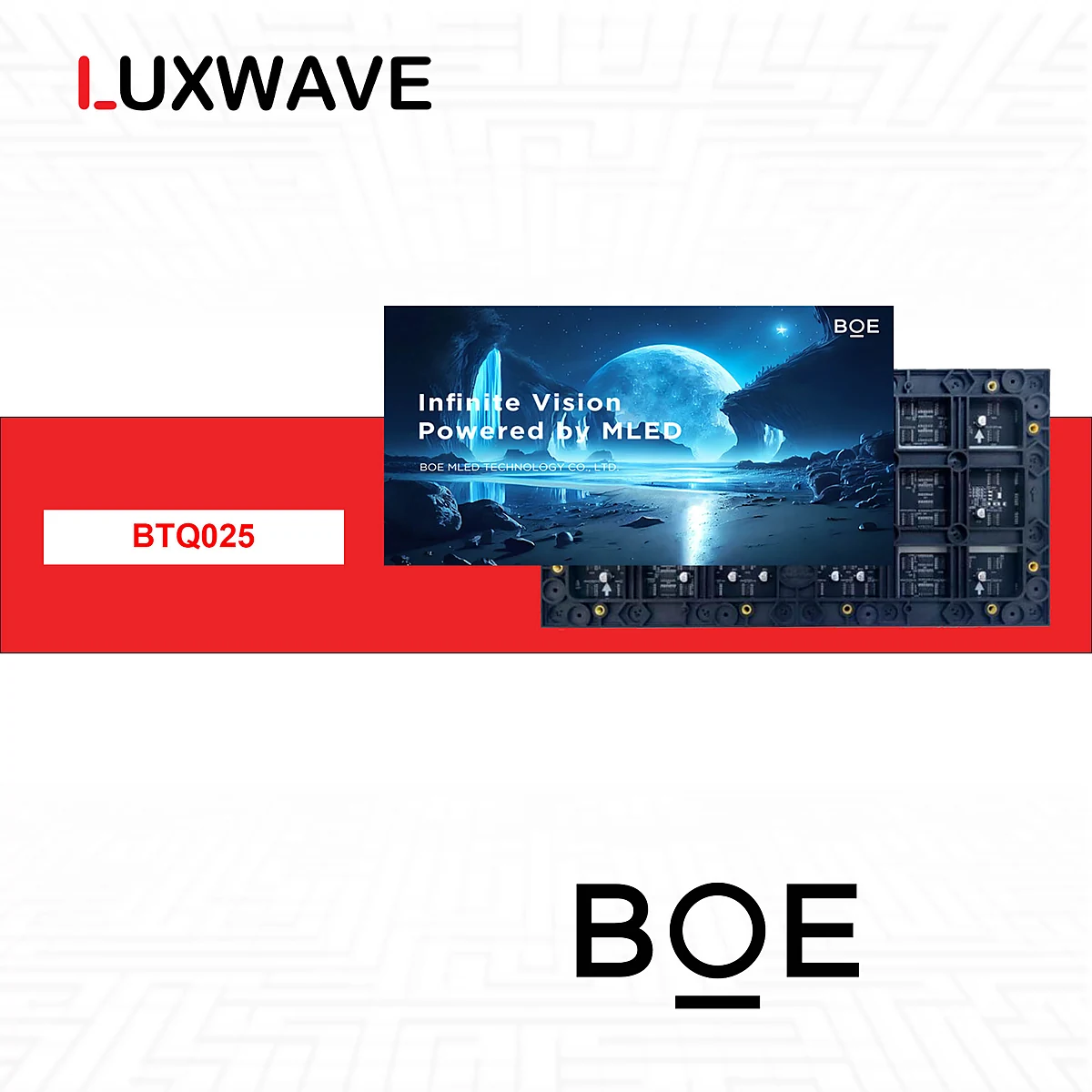
The first three key specification groups to consider are pitch, cabinet, and refresh rate. BTQ covers P1.25 to P3.0, addressing a broad range of indoor close-viewing needs. The standard cabinet is 320x160mm, weighing approximately 3.66kg per cabinet, with a 160° viewing angle and a 3840Hz refresh rate. Notably, the P3 model also offers a 192x192mm module option, enhancing the product line's flexibility for installation planning. This set of specifications is clear enough for consultation based on viewing distance, without forcing clients into a single model.
For meeting rooms, showrooms, or lobbies, smaller pitches like BOE BTQ012S are more suitable when viewers are close, and the content involves text, data tables, or control interfaces. For auditoriums, projection spaces, or indoor stage screens viewed from further away, BOE BTQ025 and larger pitches might be more appropriate overall. The correct selection is not about choosing the smallest pitch, but the one that viewers can genuinely perceive.

Why is True 3840Hz Important for Camera Capture?
The true 3840Hz refresh rate is a notable feature of BTQ because many current indoor projects are not just viewed by the eye but also captured by video conferencing cameras, event cameras, smartphones, or internal recording systems. When the refresh rate is unstable, images may exhibit flicker, scan lines, or uneven brightness zones on the frame. With BTQ, BOE emphasizes a true refresh rate for filming and camera capture, aiming for a studio-like usage standard rather than just ordinary projection.
It's important to clarify that 3840Hz should not be seen as mere marketing. This value is only meaningful if the driving IC maintains a stable refresh rate and the system isn't overclocked to achieve the specification. In projects involving cameras, Luxwave typically considers refresh rate as part of a complete chain: LED display, processor, receiving card, content, lighting, and shutter speed. If the image processing is weak, even a good display might not achieve a clean image when recorded.

What Do Constant-Current SMD and the Module Mask Offer?
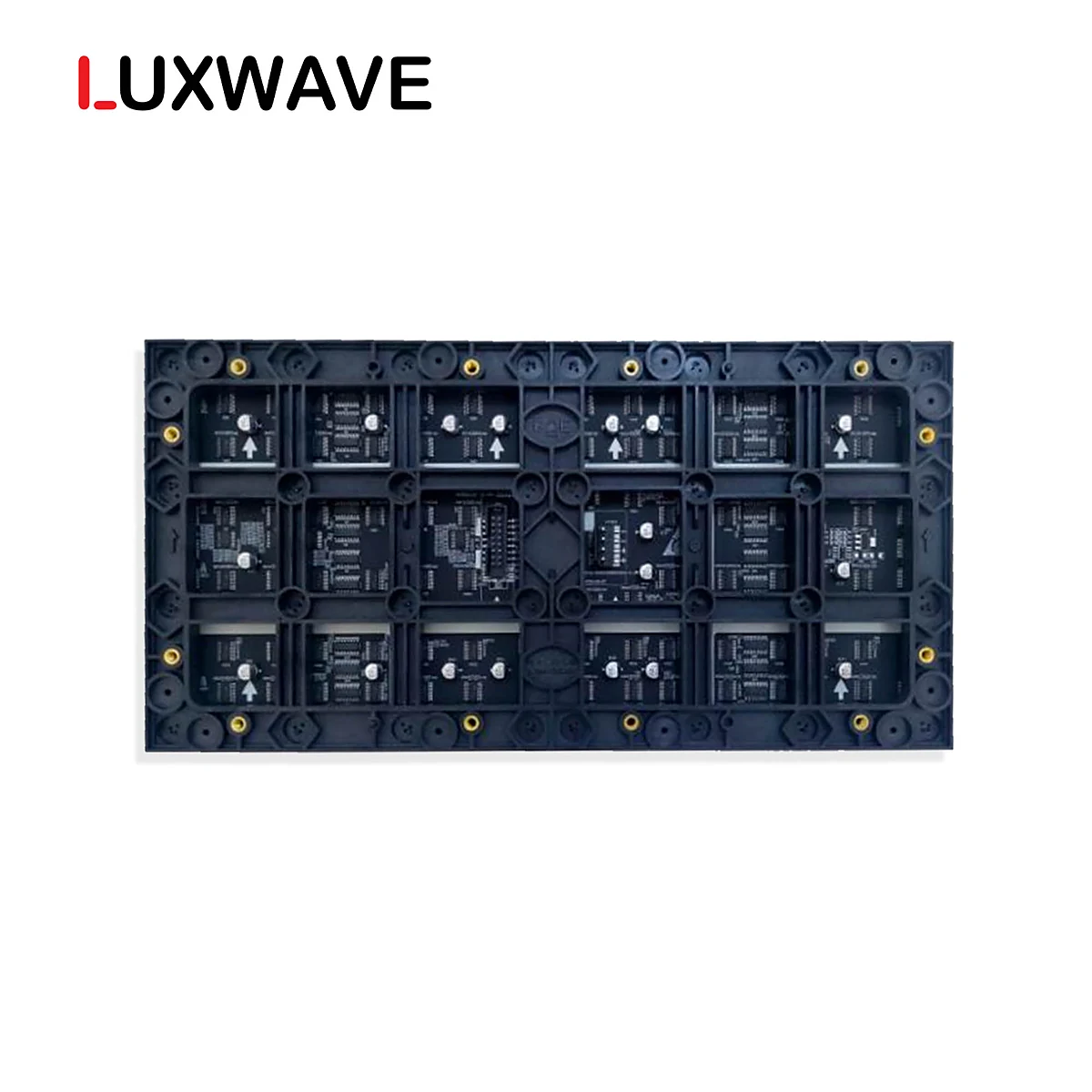
BTQ utilizes SMD packaging with constant-current driving, not common-cathode. This distinction is important because the LED market often mixes terminology: SMD, COB, GOB, common-cathode, and constant-current. For BTQ, the focus is not on using new terminology for novelty but on the ability to maintain a stable current, combined with a module mask for uniform color consistency. When dimming in a room, black areas are less prone to blooming, the surface appears more even, and the image has greater depth.
The module mask is a small detail that significantly impacts the premium feel. In fine-pitch displays, if each module has a different black background, viewers can easily notice uneven patches or seams even when no content is displayed. BTQ addresses this issue with a mask for uniform color consistency and factory pixel calibration. For investors, the practical benefit is that the display can more easily achieve uniformity upon acceptance, especially with dark backgrounds, white text slides, and control interfaces.
!BTQ015 SMD Surface with Uniform Color Mask
How Does BTQ Compare to Leyard, Unilumin, and Absen?
BTQ competes in the commercial indoor fine-pitch segment with options like Leyard VHD, Unilumin Utile or Usurface, and Absen's indoor fine-pitch series. These are all reputable brands with proven project deployment capabilities, so a direct comparison shouldn't declare one brand as absolutely superior. For BTQ, BOE's prominent advantage lies in its display manufacturing foundation, self-sufficiency in component supply chains, and control over semiconductor materials, providing a stronger industrial basis for its quality documentation.
In practical consultation, differences between brands often emerge in aspects not readily found on spec sheets: uniformity after dimming, long-term operational stability, module replacement policies, factory calibration quality, and the ability to provide CO/CQ documentation. With BOE MLED, the story is not just about a new LED brand entering the market, but about a leading global display panel manufacturer expanding into SMD, COB, and COG LEDs under a unified display strategy.
If a project heavily emphasizes processing, managing multiple sources, or event operations, consider integrating with processing ecosystems like NovaStar or Luxwave's PixelHue articles, such as What is PixelHue. BTQ addresses the display surface; the processor and signal design still significantly influence the final experience.
Which Projects in Vietnam are Suitable for BOE BTQ?
BTQ is ideal for indoor projects requiring smooth visuals while retaining the familiar SMD structure: meeting rooms, auditoriums, corporate lobbies, operation centers, showrooms, training rooms, and commercial presentation spaces. For control rooms, the advantage lies in close-up sharpness and uniform black backgrounds for detailed interfaces. For showrooms, deep blacks and a uniform surface make product content appear cleaner when customers stand close to the screen.
For event and auditorium settings, BOE BTQ030S or larger pitches within the BTQ range might be suitable when viewers are not standing right next to the screen. For rooms with cameras, the true 3840Hz feature needs to be considered from the outset, similar to selecting systems for a broadcast studio. If a project is undecided between SMD and COB, the COB vs SMD comparison article will help clarify needs for surface durability, very fine pitches, and budget.
When to Choose BTQ, and When to Consider COB or COG?
Choose BTQ when a project requires stable indoor fine-pitch LED displays with good sharpness, clean camera capture, and a reasonable lifecycle cost within the premium SMD category. BTQ is particularly suitable when investors prefer a strong display manufacturer, clear technical documentation, and technology that is not overly new, making maintenance easier. It's a good choice for most commercial indoor projects, especially where the primary needs are projection, meetings, operations, and brand recognition.
Consider COB or COG when a project demands a more seamless surface, higher impact resistance, premium fine pitches, or flagship-level image quality. Within BOE's range, BTQ is SMD; above it are BYH012, BYH Ultra, and glass-based BYH-COG. The right decision involves shortlisting based on the actual space, content, and operating conditions, rather than just selecting based on technological terms. BTQ excels when the requirement is for stable and easily deployable commercial indoor fine-pitch displays.
Yes, if the project requires an indoor fine-pitch SMD LED display from P1.25 to P3.0, prioritizing true 3840Hz refresh rate, uniform black areas, a uniform color mask, and factory pixel calibration. BTQ should not be marketed as a substitute for high-end COB, nor should it be grouped with standard SMD LEDs simply because it's SMD. The series' strength lies in balancing mature technology, BOE's quality control, and practical deployment needs in Vietnam.
For Luxwave, advising on BTQ should begin with usage questions: where are the viewers located, what is the content, will cameras be used, what are the acceptance criteria, and will the project potentially upgrade to COB or COG in the future? Once these questions are clear, BTQ becomes a highly viable option in the indoor fine-pitch shortlist, especially for investors seeking beautiful, stable displays with transparent technical documentation.
Pitfalls
Common mistakes
- Confusing BTQ with COB or COG: BTQ is an indoor fine-pitch SMD series, while BYH Ultra and BYH-COG represent BOE's higher-tier technologies.
- Selecting a pitch solely based on the smallest model without considering viewing distance, display content, operational budget, and actual maintenance conditions.
- Treating 3840Hz as a generic marketing spec; for BTQ, it's crucial to confirm the control configuration maintains stable refresh without overclocking.
- Comparing BOE BTQ with Leyard, Unilumin, or Absen based solely on initial cost, overlooking CO/CQ, materials, pixel calibration, and after-sales support capabilities.
FAQ
Frequently asked questions
What type of LED display is BOE BTQ?
BOE BTQ is an indoor fine-pitch SMD LED display series from BOE MLED. The series includes models BTQ012S, BTQ015S, BTQ018S, BTQ020S, BTQ025S, and BTQ030S, covering pixel pitches from P1.25 to P3.0. BTQ is suitable for commercial projects requiring smoother visuals and greater stability and ease of deployment compared to high-end COB solutions.
Is the BOE BTQ an LED COB display?
No. BOE BTQ is an SMD LED display using constant-current driving, not COB or common-cathode. For a seamless surface, higher impact resistance, and premium fine-pitch capabilities, consider BOE's BYH Ultra or BYH-COG series. BTQ focuses on stable indoor SMD performance.
Why is BTQ's 3840Hz refresh rate important?
The true 3840Hz refresh rate ensures more stable images when filming, photographing, or used in meeting rooms with cameras. The primary benefit is reducing the risk of flicker, scan lines, and banding on the frame. For BTQ, the notable aspect is that the refresh rate is stably maintained by high-end constant-current driving ICs, not through overclocking.
What projects are suitable for BOE BTQ?
BTQ is suitable for meeting rooms, auditoriums, lobbies, control rooms, showrooms, and other indoor commercial spaces requiring close viewing. The series should be considered when projects prioritize sharp visuals, uniform blacks, stable operation, and clear origin documentation, but do not yet require high-end COB or COG solutions.
How does BTQ differ from standard indoor SMD LEDs?
The key differences lie in its fine-pitch positioning, module mask for uniform color consistency, factory pixel calibration, and true 3840Hz refresh rate. BOE also benefits from being a major display manufacturer with better control over materials and processes compared to many standard SMD assemblers with unclear supply chains.
Which pitch should be chosen within the BTQ range?
The pitch should be selected based on viewing distance, screen size, content type, and desired detail level. P1.25 or P1.53 are suitable for close viewing distances and small text content; P2.5 or P3.0 are more appropriate when viewers are further away. Avoid choosing the smallest pitch if viewers cannot fully utilize its fineness.
References
- 1.DatasheetBOE MLED — BTQ Series Introduction
- 2.ManufacturerBOE MLED Official — COB/COG at InfoComm 2025
- 3.ResearchVietnam LED Market Overview
- 4.ManufacturerPixelHue Official
- 5.NewsPixelHue Facebook
- 6.StandardPixelHue Master Academy Curriculum