

What is a Transparent LED Display and How Does it Work?
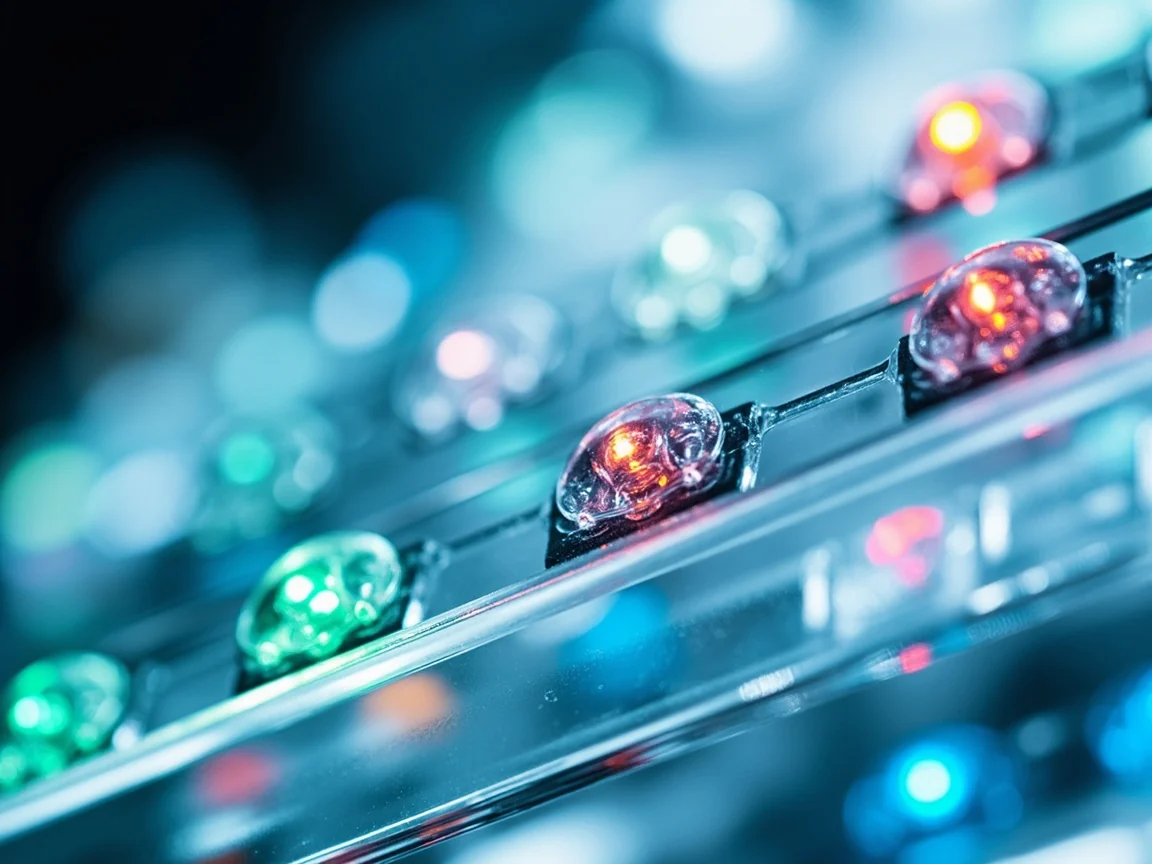
A transparent LED display is a type of screen with a hollow structure: the LED modules are mounted on thin strips or bars spaced relatively far apart, leaving a large portion of the background open. These gaps allow light and vision to pass through, so people behind the screen can still see the space outside. When turned on, the screen displays dynamic content like any other LED screen; when turned off, it becomes nearly invisible on the glass surface, living up to its name as "transparent" or "holographic."
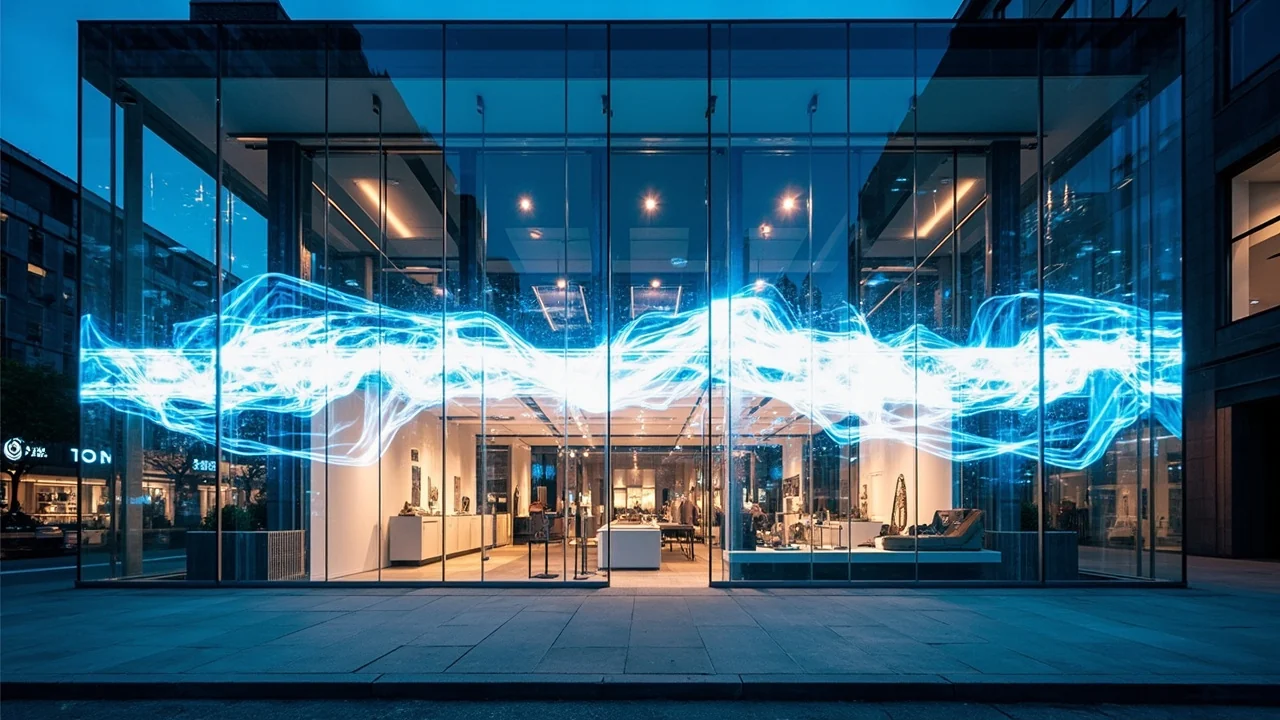
The key to understanding this technology is that its transparency comes from "less material," not from a glowing glass layer. The fewer LEDs per unit area and the thinner the strips, the more transparent the view, but the coarser and less detailed the image becomes. This is the fundamental trade-off of this technology. Therefore, any assessment of "how transparent" must be linked to the specific pixel pitch and strip spacing of each model, rather than a general figure.
How Does a Transparent LED Screen Differ from a Traditional (Opaque) LED Screen?
The fundamental difference lies in surface density. Traditional LED screens use opaque modules that fill the entire area, offering high resolution and brightness but completely blocking the view behind and having a significant weight. Transparent screens leave most of the background open, making them thin, light, and see-through. In return, their lower pixel density results in less detailed images and lower native brightness. In short: one optimizes image quality, the other optimizes visibility and aesthetics on glass.
It's important to distinguish transparent screens from a potentially confusing related product: glass-based screens. Within the BOE MLED category, COG (Chip-on-Glass) refers to opaque panels mounted on a glass substrate, approximately 5mm thick and weighing about 12kg/m² (as announced by BOE). COG panels still fill the entire surface and do not allow see-through viewing—they are "on glass" but not "transparent." Clearly differentiating these three concepts—opaque screens, glass-based screens, and transparent screens—helps avoid confusion when suppliers use these terms interchangeably in catalogs.
What are the Advantages of Transparent LED Displays?
The biggest advantage of transparent screens is their compactness and ability to maintain visibility. Because a large portion of the background is open, these screens are significantly thinner and lighter than opaque screens of the same size. They can be directly applied or hung on existing glass surfaces without requiring space-consuming support structures. More importantly, they minimally obstruct natural light and do not block the background view, allowing shops to remain bright and customers outside to see in. This is something opaque LED screens cannot achieve.
A second advantage is aesthetic appeal and installation flexibility. When turned off, the screen is nearly invisible, preserving the architectural design of the glass facade. When turned on, it creates a striking "floating" visual effect for building fronts and lobbies. The ability to install from the inside also reduces the risks and costs associated with working at height compared to outdoor opaque screens. For projects that aim to promote their brand while maintaining the transparency of the glass, this solution offers few comparable alternatives.

What are the Disadvantages and Limitations of Transparent LED Displays?
The most obvious limitation is image quality. Due to the widely spaced pixels required to maintain transparency, transparent screens struggle to achieve the same smoothness and native brightness as opaque LED screens, making them unsuitable for highly detailed content or close-up viewing. The screens are also sensitive to ambient light conditions: because the background is open, direct sunlight and bright backgrounds can reduce contrast, causing the image to appear "washed out" during the day if the sun's direction and ambient light levels at the installation site are not considered.
Another set of limitations stems from how the market describes these products. Many attractive specifications, such as transparency ratio, thickness, or weight per square meter, are presented in marketing materials but are not official figures released by the manufacturers. Therefore, they should not be used as the sole basis for decision-making. The safest approach is to request the official datasheet for the specific model and conduct a physical sample test. For a deeper understanding of how to correctly interpret brightness specifications, you can refer to the article How Many Nits Brightness is Enough for LED Screens before finalizing your configuration for brightly lit locations.
When Should You Use Transparent LED Displays for Your Project?
Choose a transparent screen when the installation location prioritizes view and aesthetics over maximum image smoothness. Typical applications include shop windows, lobbies, and showrooms where advertising or dynamic content is desired without sacrificing natural light and openness. They are also ideal for building facades requiring dynamic effects on large glass areas without blocking windows, or for high-mounted billboards, exhibition booths, and stage backdrops where the background should not be obscured. The common factor is that viewers are at a distance, and the goal is to create a visual impact.
For shop front signage solutions, transparent screens can transform glass surfaces into dynamic billboards while allowing visibility into the store during the day. On a larger scale, building facade solutions leverage the "window-unblocking" advantage to display imagery on glass areas without turning the building into a solid block. In showroom & exhibition solutions, the "floating" visual effect on glass makes the booth stand out while allowing customers to see products behind it. Conversely, if sharp images for close-up viewing are needed, opt for a fine-pitch opaque screen instead of a transparent one.
How to Choose the Right Pixel Pitch and Configuration for Transparent LED Displays?
Since transparent screens are typically viewed from a distance, their pixel pitch tends to be larger than that of indoor fine-pitch screens, offering greater transparency in return. A larger pitch means wider spacing between LED strips, higher transparency, but a coarser image. A smaller pitch provides a smoother image but reduces transparency and increases cost. The selection principle remains to base the decision on the actual viewing distance: for high-mounted, distant viewing, a larger pitch is sufficient. The article How to Choose LED Pixel Pitch 2026 details how to convert pitch based on viewing distance.
Beyond the display panels, don't overlook the control system. A transparent screen system comprising multiple panels requires a sufficiently powerful processor to synchronize and handle the total resolution. NovaStar provides controllers and video processors but does not manufacture LED panels; the signal chain goes from the sending card via Ethernet to the receiving card within the cabinet, and then to the modules (as announced by NovaStar). An underpowered processor will limit the screen's resolution and uniformity, even if the panels are excellent. Therefore, this component must be considered from the initial design phase, not as an afterthought.
What are Muxwave and Popular Transparent Screen Models?
In the transparent LED screen market, Muxwave (Shenzhen MUXWAVE) is a notable brand specializing in "holographic invisible" displays. The company originated from IC design (MXW Device, founded in 2012) and entered the transparent screen market in 2022 (as announced by Muxwave). Its background in microchip technology makes it a noteworthy player in the transparent screen segment, although specific project consultations still require reviewing individual model datasheets.
Muxwave's product line is divided into five series based on installation type: A (all-in-one), M (panel type), P (poster), F (hanging type), and S (cabinet). The M Series alone offers pixel pitch options of P2.5, P3.91, and P6.25 (according to the manufacturer), ranging from finer pitches for closer viewing distances to more transparent options for higher installations (as announced by Muxwave). The choice of series depends on the mounting surface, area, and viewing distance; a showroom glass surface viewed up close would favor a small-pitch panel series, while a high-mounted facade might use a larger pitch to optimize transparency and cost.
How Does Luxwave Advise on Transparent LED Screen Configurations?
Luxwave—a brand under Ho Gia JSC, the official distributor for BOE, NovaStar, and Muxwave in Vietnam—approaches transparent LED screens by clearly separating verified data from unverified marketing claims. Specifically, the technical team only provides advice based on officially published specifications, such as the M Series pitch ranges, and proactively warns clients about transparency ratios, thicknesses, or weights that lack official manufacturer disclosure. This approach helps clients select configurations based on actual viewing distances and mounting surfaces, rather than relying solely on brochures.
Experience in installing opaque fine-pitch screens directly supports the deployment of transparent LED displays, particularly in calculating control systems and synchronizing multiple panels. In Q1 2026, the team delivered two projects involving BOE COB P0.9 screens, gaining valuable insights into site surveys for ambient light and actual viewing distance measurements—steps that are also crucial for the success of transparent screen systems on glass. For further comparison of chip packaging technologies, the articles COB vs SMD Comparison 2026 and Mini-LED vs Micro-LED Differences will help place transparent LED screens within the broader technological landscape.
Conclusion: Which Projects are Best Suited for Transparent LED Displays?
Choose transparent LED displays when the primary goal is to maintain the view, natural light, and aesthetics of a glass surface while still displaying dynamic content. This includes storefronts, showrooms, building facades, or high-mounted billboards where viewers are at a distance and absolute image smoothness is not the top priority. This segment is well-served by models like the Muxwave M Series with pitches from P2.5 to P6.25. Conversely, if sharp images for close-up viewing and high brightness are required, fine-pitch opaque LED screens or COG glass-based products would be more suitable. Most importantly, determine the mounting surface, sun exposure, and actual viewing distance first, then finalize the pixel pitch, control system, and product series—and always request the official datasheet for the specific model rather than trusting unconfirmed transparency figures. When considering opaque screen options, you might also refer to the BOE BYH COB Ultra P0.9 series for a comparison point on close-viewing image quality.
Pitfalls
Common mistakes
- Trusting unverified transparency figures from advertisements—many brochures list attractive transparency ratios, thicknesses, or weights that are not officially released by the manufacturer; request the official datasheet and test a physical sample instead of believing marketing numbers.
- Confusing transparent LED screens with COG glass-based LED glass—COG (Chip-on-Glass) is an opaque panel on a glass substrate, not a type designed with an open background for see-through viewing; these are two different concepts in terms of structure and application.
- Choosing a pixel pitch that is too small for high-mounted billboards—transparent screens are typically viewed from a distance, so a larger pitch is often sufficient; purchasing an expensive small pitch for distant viewing is wasteful.
- Overlooking the ambient lighting conditions at the installation site—transparent screens have open backgrounds, making them susceptible to reduced contrast from direct sunlight and bright backgrounds; survey the sun's direction and ambient light levels before finalizing the configuration.
- Forgetting the control and signal processing system—even with excellent panels, an underpowered processor will limit the total resolution and synchronization of multiple panels; the control system must be considered from the initial design phase.
FAQ
Frequently asked questions
What is a transparent LED display?
It's a type of LED screen with a hollow structure: LED modules are mounted on thin strips spaced widely apart, leaving most of the background open. This allows people behind the screen to see through to the outside and lets natural light in. When on, the screen displays images or text; when off, it's nearly invisible on the glass, hence the name transparent or holographic.
What percentage of transparency do transparent LED displays offer?
The transparency depends on the spacing between LED strips and the pixel pitch of each model, so there isn't a single universal figure. The larger the pitch and the wider the strip spacing, the more transparent the view, but the coarser the image. It's best to consult the official datasheet for the specific model and test a sample rather than trusting brochure percentages that haven't been officially released by the manufacturer.
How does a transparent LED display differ from a regular LED screen?
Regular (opaque) LED screens are covered with seamless modules, offering high resolution and brightness but completely blocking the view behind and being quite heavy. Transparent screens leave most of the background open, making them light, thin, and see-through. In return, their sparser pixel density results in less smooth images and lower native brightness. In summary, one prioritizes image quality, the other prioritizes visibility and aesthetics on glass.
What are transparent LED displays used for?
Most commonly, they are applied to the glass surfaces of shops, showrooms, and building facades for advertising, branding, or dynamic effects, while maintaining interior visibility and light. They are also used for high-mounted billboards, exhibition booths, and stages requiring backdrops that don't obscure the background. The common factor is prioritizing aesthetics and openness over maximum image smoothness.
Can transparent LED displays be installed directly on glass?
Yes, this is a key advantage of this type of screen. Surface-applied or hanging models are designed to be mounted on existing glass surfaces from the inside, eliminating the need for space-consuming support structures. However, it's still necessary to assess the glass's load-bearing capacity, the routing for power and signal cables, and the direction of sunlight to avoid excessive background brightness reducing contrast when the screen is operating.
What is the typical pixel pitch for transparent LED displays?
Since transparent screens are usually viewed from a distance, their pixel pitch is generally larger than that of indoor fine-pitch screens. For example, Muxwave's M Series offers pitches like P2.5, P3.91, and P6.25 (according to the manufacturer). A larger pitch allows for wider LED strip spacing, resulting in greater transparency and sufficient smoothness for distant viewing. Closer viewing distances might warrant considering a smaller pitch, but this comes at a higher cost and reduced transparency.
What factors influence the cost of transparent LED displays?
The investment cost for transparent LED displays depends on the product series, pixel pitch, transparency level, screen size, brightness, control system, and installation method. Therefore, pricing requires a specific configuration quote. As a specialized product, direct comparison with standard opaque LED screens is difficult. Given the wide range of variations per project, please contact us via [/quote](/quote) to receive an accurate quote for your space.
References
- 1.ManufacturerMuxwave — Introduction to the company & holographic LED display series
- 2.ManufacturerMuxwave M Series — Transparent LED panel (pixel pitch per manufacturer)
- 3.ManufacturerBOE MLED — COB, COG (Chip-on-Glass), SMD technology catalog
- 4.ManufacturerNovaStar — Controllers & video processors for LED displays