

What is Micro-LED Packaging and Why is it Easily Misnamed?
Micro-LED packaging refers to integrating very small light-emitting chips into a structure that allows for stable manufacturing, module assembly, maintenance, and operation. The common confusion arises because the market often uses a single term to encompass multiple concepts: chip size, packaging method, pixel pitch, and display surface. In this article, "true Micro-LED packaging" is used for MiP and COG; COB is an important foundation for fine-pitch but does not automatically qualify as Micro-LED.
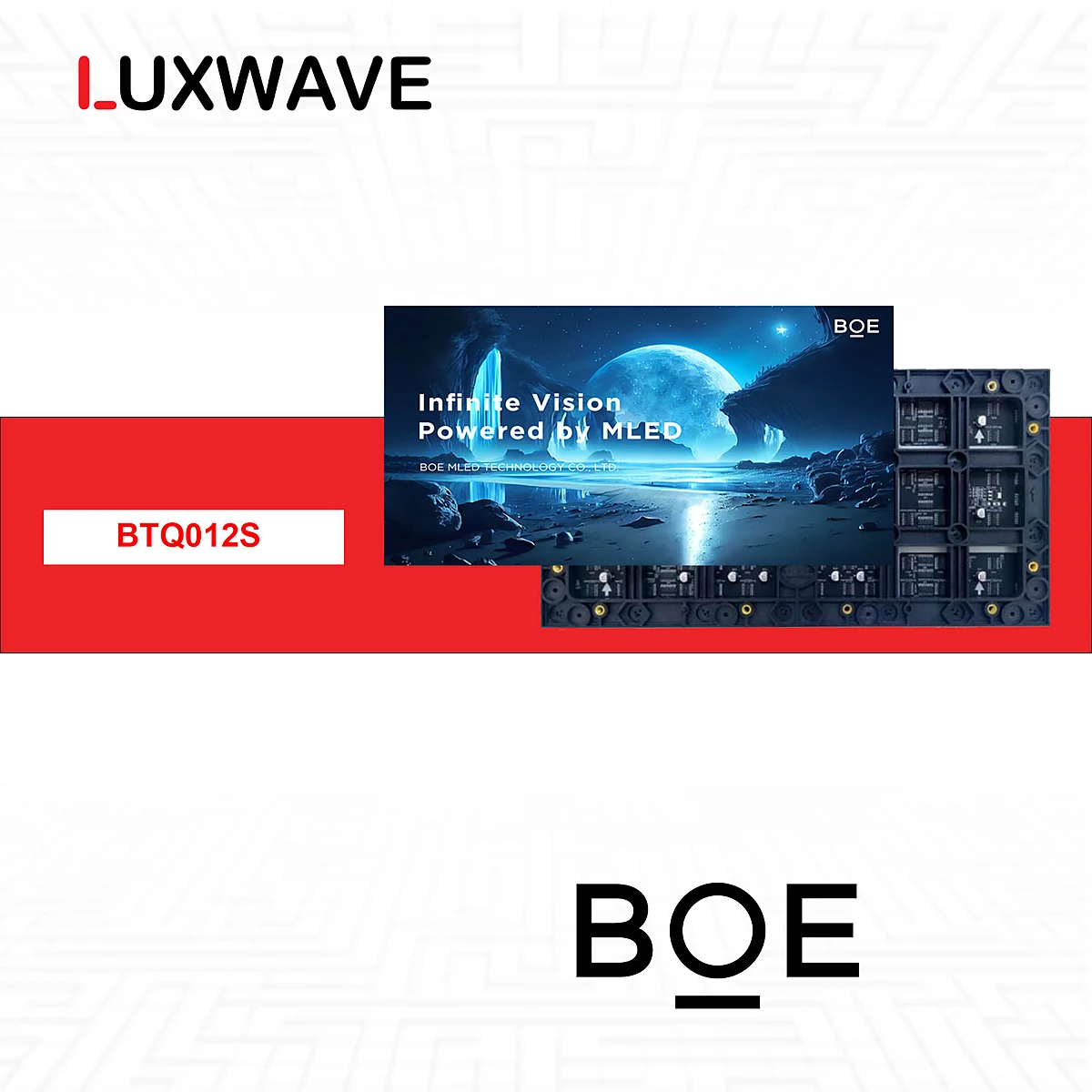
To correctly interpret catalogs or technical specifications, it's essential to consider two separate axes. The first axis is chip size: Mini-LEDs are approximately 100-300µm, while Micro-LEDs are 50µm or smaller. The second axis is the packaging method: SMD, GOB, 4-in-1/IMD, COB, MiP, or COG. Since these two axes are independent, the statement "COB = Micro-LED" is incorrect; COB describes chips placed on a board, not the size of those chips.
This confusion isn't just a matter of terminology. If a project is marketed as Micro-LED but is actually a fine-pitch COB on PCB, expectations regarding thinness, glass substrate, active-matrix control, transparency capabilities, or ultra-fine pitch roadmaps will be misaligned. The article Mini-LED vs. Micro-LED Differences helps position chip size correctly before comparing packaging methods.
Are SMD, GOB, and 4-in-1/IMD Considered Micro-LED?
SMD, GOB, and 4-in-1/IMD should not be referred to as Micro-LED packaging. They represent generations or variations centered around surface-mounted LED components. While still highly effective for many projects, they differ fundamentally from MiP and COG. SMD uses discrete RGB components, offers good cost-effectiveness, and allows for easy individual component replacement. GOB applies a protective coating to SMD. 4-in-1/IMD integrates four pixels into a single unit to enable finer pitches.
SMD is the most familiar foundation for direct-view LED displays. Each discrete RGB component is surface-mounted onto a PCB, ensuring a broad supply chain, ease of replacement for technicians, and controlled costs. The practical limit for this approach is around P0.9, as smaller pitches increase the sensitivity of component size and assembly tolerances to physical impacts, color deviations, and mechanical failures.
GOB is often advertised as a new packaging technology, but a more accurate understanding is that it's a protective adhesive layer applied over SMD. This coating can enhance resistance to dust, moisture, or surface impacts, but the underlying chips remain SMD logic. Therefore, GOB should not be grouped with MiP or COG when evaluating true Micro-LED roadmaps.
4-in-1 or IMD serves as a crucial intermediate step by combining four pixels into one module. This enhances robustness and pushes SMD technology towards finer pitches, potentially down to P0.7 in common classifications. However, it remains a bridging solution, not true micro-LED packaging. For projects requiring a deeper understanding of COB after the SMD stage, refer to What is COB LED Display.

Where Does COB Excel, and Why Isn't COB Synonymous with Micro-LED?
COB, or Chip-on-Board, involves placing chips directly onto a board to create a more seamless surface compared to SMD. This is a powerful foundation for fine-pitch LED displays, capable of achieving pitches down to approximately P0.4. It delivers smooth images, virtually eliminating perceived dead pixels, while also improving impact resistance and reducing moiré effects. However, COB still utilizes PCB, so it is not automatically Micro-LED.
!COB LED Display BOE BYH Ultra
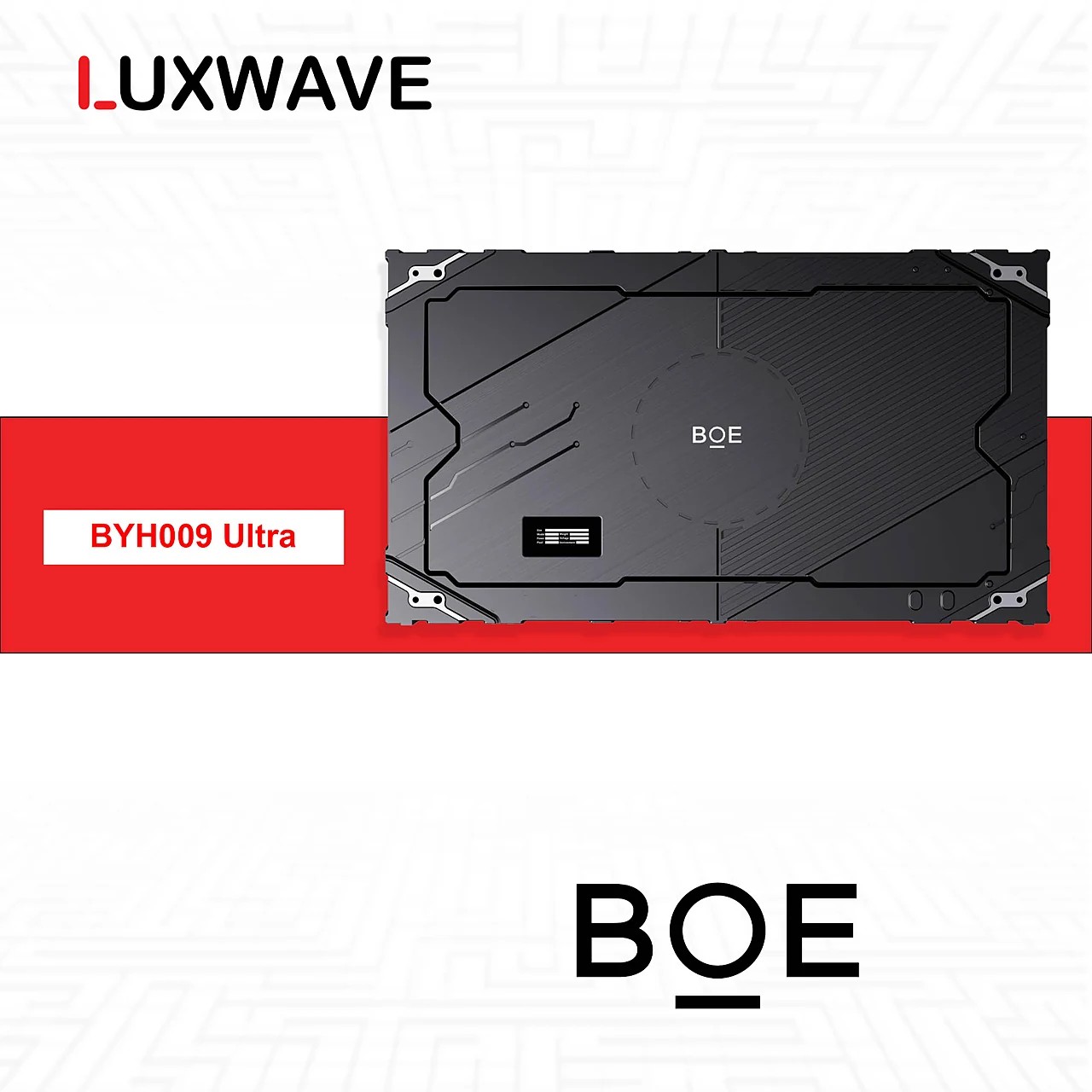
COB's strengths lie in its surface finish and stability for close viewing distances. With SMD, viewers might discern individual LEDs or point reflections at short distances. COB creates a smoother emitting surface, ideal for premium meeting rooms, control centers, studios, and spaces requiring clean visuals for camera recording. This is why many fine-pitch projects consider COB a practical choice before contemplating next-generation Micro-LED.
COB often incorporates flip-chip and common-cathode technologies, but these terms also need correct contextualization. Flip-chip eliminates wire bonding, enhancing reliability and thermal performance. Common-cathode optimizes power delivery per color, contributing to energy savings and reduced heat. These are supporting architectures within COB or MiP, not independent packaging types to be directly compared with SMD, MiP, or COG.
Therefore, stating "COB is Micro-LED" can lead buyers to misjudge products. A more accurate statement is: COB is a PCB-based packaging technology for premium Mini/fine-pitch displays; depending on its configuration, it can use small chips and produce very smooth images, but the defining factor for Micro-LED remains chip size and system architecture. For customers seeking a stable commercial platform, COB remains a viable consideration, but it should not be mislabeled.

What Problem Does MiP Solve for Fine-Pitch?
MiP, or Micro-in-Package, involves packaging micro-LED RGB chips into a standardized unit before transferring them to the module level. This approach differs from COB: instead of placing chips directly onto a board as a seamless surface, MiP standardizes each micro-unit before module production. Consequently, MiP aims to combine the durability and fine pitch of COB with the individual pixel repairability reminiscent of SMD.
Within the classification of this article, MiP excels in the P0.3-P0.6 pitch range. This is an area where traditional SMD becomes less practical, 4-in-1/IMD serves only as a bridge, and while COB is smooth, individual pixel repair can depend on specific processes and equipment. MiP targets the simultaneous resolution of three requirements: very small pixel pitch, durable surface, and more flexible maintenance in case of localized failures.
An important aspect of MiP is that it doesn't negate COB. Both approaches can coexist in technical specifications, depending on project priorities. If deploying familiar fine-pitch technology is the goal, COB might be a safer choice. If a roadmap towards micro-chips, finer pitches, and individual pixel repairability is desired, MiP should be included in the comparison list. The article What is MiP Micro-in-Package delves deeper into this direction.
When working with suppliers, buyers should inquire about the MiP level: chip, package, module, or complete display. A visually appealing demonstration is insufficient to conclude mass-deployment capability. Clarification is needed on unit replacement methods, post-replacement color calibration, required spare module quantities, and warranty conditions in Vietnam. This approach transforms a technological term into concrete acceptance criteria.
How Does COG Differ from MiP and COB?
COG, or Chip-on-Glass, integrates chips onto an active-matrix glass substrate instead of a PCB. This is a fundamental difference from COB, as COB relies on a board, while COG uses glass to achieve a thin, lightweight, flat structure, potentially offering a more comfortable viewing experience due to active-matrix control. Within the Micro-LED packaging classification, COG is considered a true Micro-LED approach, paving the way for pitches below P0.1 and transparent displays.
!COG Glass-Based LED Display BOE
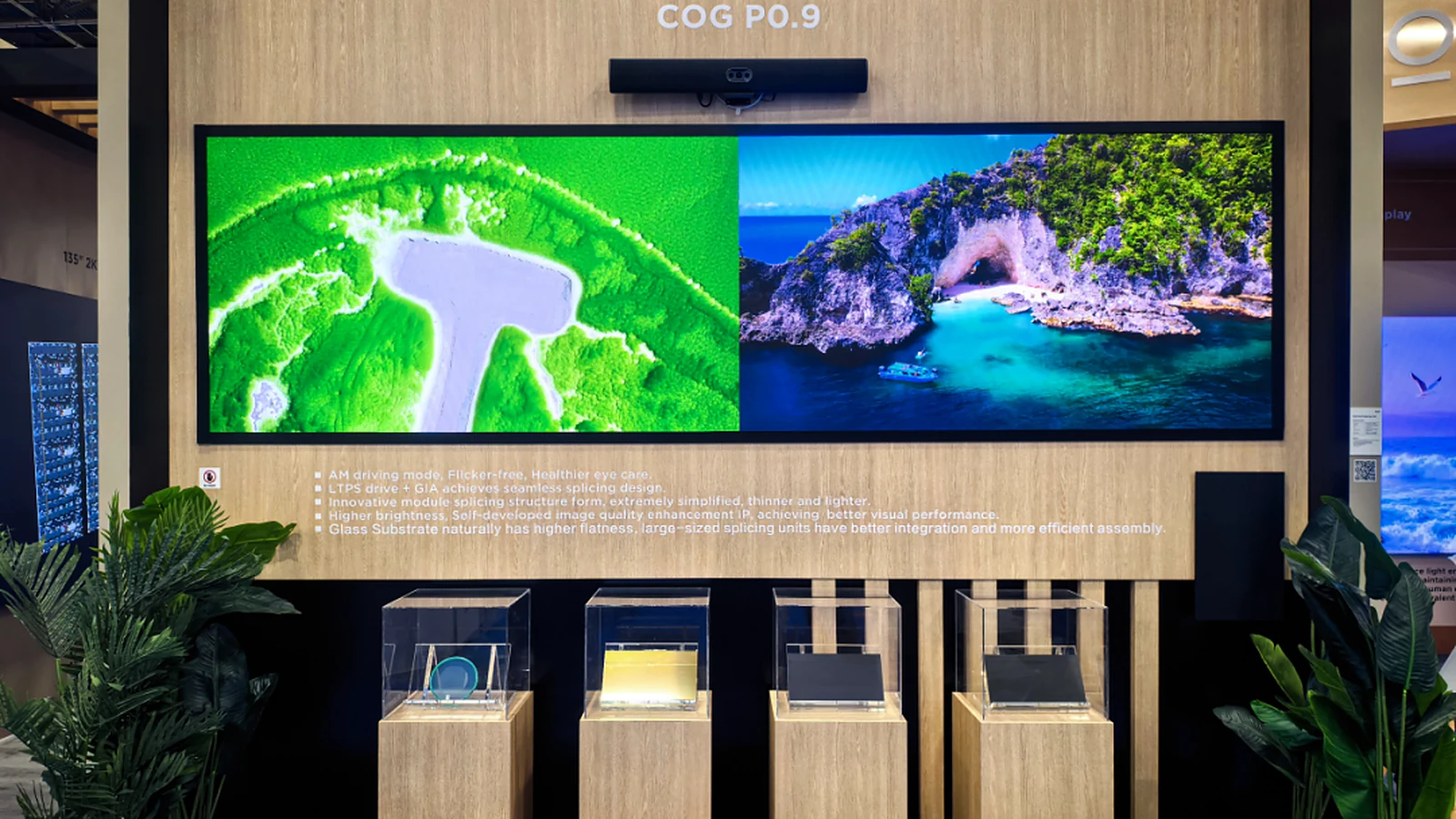
The glass substrate gives COG a distinct product form factor. By eliminating the PCB, displays can be thinner and flatter, while also being suitable for applications requiring architectural integration, large glass surfaces, or a lighter visual presence. For projects demanding display surfaces that function as a material rather than just an LED module assembly, COG offers a design direction that COB struggles to fully achieve.
Compared to MiP, COG is not merely about packaging micro-units and transferring them to a module. COG changes both the substrate carrying the chips and the control method. Therefore, it is better suited for highly demanding applications: ultra-fine pitches, high flatness, transparent displays, or designs requiring a glass surface. Readers can refer to the article BOE BYH COG Chip-on-Glass LED Display for a deeper understanding of this product line.
However, COG is not the default answer for every project. If the objective is a meeting room, studio, or control center requiring stable deployment within a controlled budget, COB or MiP might be more appropriate depending on market availability. COG should be considered when form factor, thinness, glass substrate, or true Micro-LED pitch are critical requirements, not just premium labels.
How to Choose Between SMD, COB, MiP, or COG Based on Criteria?
No single packaging technology wins in all scenarios. The right choice begins with viewing distance, content type, maintenance risks, camera requirements, spatial limitations, and product availability in Vietnam. At Luxwave, our consulting approach is to clearly explain the trade-offs, enabling clients to make informed decisions, rather than pushing every project towards the latest-sounding technology or the smallest pitch.
If prioritizing cost-effectiveness, broad supply, and ease of individual component repair, SMD remains a logical foundation, especially when viewers are not extremely close. If surface protection is needed while retaining SMD logic, GOB can be considered as a protective coating, provided it's not mislabeled as separate chip packaging. For fine-pitch displays nearing SMD limits, 4-in-1/IMD serves as a bridge towards approximately P0.7.
If prioritizing smooth images, a durable surface, minimal moiré, and commercial fine-pitch deployment, COB is a very strong option. This category is suitable for control rooms, premium meeting rooms, showrooms, and broadcast studios, where displays are viewed closely or captured by cameras. Brands like BOE MLED position COB within their premium offerings for these needs.
If the goal is a true Micro-LED roadmap, include MiP and COG in your comparison. MiP is suitable for P0.3-P0.6 pitches, durability, and individual pixel repairability. COG is appropriate when a glass substrate, active-matrix control, thinness, flatness, transparency, or pitches below P0.1 are strategic requirements. Regardless of the chosen path, the article How to Choose LED Pixel Pitch 2026 remains essential for avoiding pitches that are too small for the actual viewing distance.
Conclusion: Understand the Technology Before Selecting Configuration
Micro-LED packaging should not be understood as simply any LED display with a small pixel pitch. MiP and COG represent the two true Micro-LED packaging approaches in this classification. COB is a powerful Mini/fine-pitch foundation but still uses PCB. SMD, GOB, and 4-in-1/IMD are variations around surface-mounted components. By clearly distinguishing chip size from packaging method, buyers can avoid the most significant confusion: "COB = Micro-LED."
For practical projects, start with operational questions rather than technology names. How close will viewers be? Does the content include small text? Will the display be on camera? Is impact resistance required? What is the acceptable downtime for maintenance? Is local support available for the product? Once these questions are clear, SMD, COB, MiP, or COG become technically grounded choices, not just catalog slogans.
Pitfalls
Common mistakes
- Calling COB Micro-LED solely due to small pitch; this confuses chip size with packaging method.
- Considering GOB a distinct chip packaging type; GOB is actually a protective adhesive layer over SMD.
- Choosing technology based only on pixel pitch while ignoring surface finish, maintenance, moiré, durability, and PCB/glass substrate.
- Viewing flip-chip or common-cathode as independent packaging technologies; they are supporting architectures within COB/MiP.
FAQ
Frequently asked questions
Is COB Micro-LED?
COB should not be called Micro-LED based solely on its small pixel pitch. COB is a method of packaging chips onto a PCB, whereas Micro-LED refers to very small chip sizes, typically distinguished from Mini-LED by chip dimensions. A COB display can be very fine and high-end, but it belongs to a different packaging axis than the Micro-LED concept.
What constitutes true Micro-LED packaging?
In the practical classification of this article, true Micro-LED packaging includes MiP and COG. MiP packages RGB micro-LEDs into standardized units before transferring them to modules. COG places chips on an active-matrix glass substrate instead of a PCB. These two approaches differ from traditional SMD, GOB, 4-in-1/IMD, and COB.
How do SMD, GOB, and 4-in-1/IMD differ?
SMD uses discrete surface-mounted RGB components, allowing for easy individual repair and good cost-effectiveness. GOB is a protective adhesive layer applied over SMD, not a separate chip package. 4-in-1 or IMD integrates four pixels to enhance durability and achieve finer pitches, but it remains a bridging step based on SMD.
What are the advantages of MiP over COB?
MiP aims to combine the strengths of COB's smoothness and durability with the individual pixel repairability characteristic of SMD. Because RGB micro-LEDs are packaged into standardized units before module transfer, MiP is suitable for very fine pitches from P0.3-P0.6 and is beneficial when projects require more flexible maintenance.
How does COG differ from COB?
COB mounts chips on a board, thus relying on a PCB. COG transitions to an active-matrix glass substrate, enabling thinner, lighter, flatter displays, and potentially a more comfortable viewing experience in certain configurations. Thanks to the glass substrate and active-matrix control, COG is a true Micro-LED approach, capable of pitches below P0.1 and enabling transparent displays.
Are flip-chip and common-cathode types of packaging?
No. Flip-chip and common-cathode are supporting architectures within LED systems, not independent packaging types like SMD, COB, MiP, or COG. Flip-chip eliminates wire bonding to improve reliability and thermal performance. Common-cathode optimizes power delivery per color, reducing power consumption and heat in suitable configurations.
References
- 1.ManufacturerPixelHue Genuine
- 2.NewsPixelHue Facebook
- 3.StandardPixelHue Master Academy Curriculum
- 4.ResearchLED Packaging Technology Compendium
- 5.ManufacturerBOE MLED Glossary
- 6.ManufacturerBOE InfoComm 2025 — COB and COG