

What is BOE BYH Ultra and Where is it Positioned?
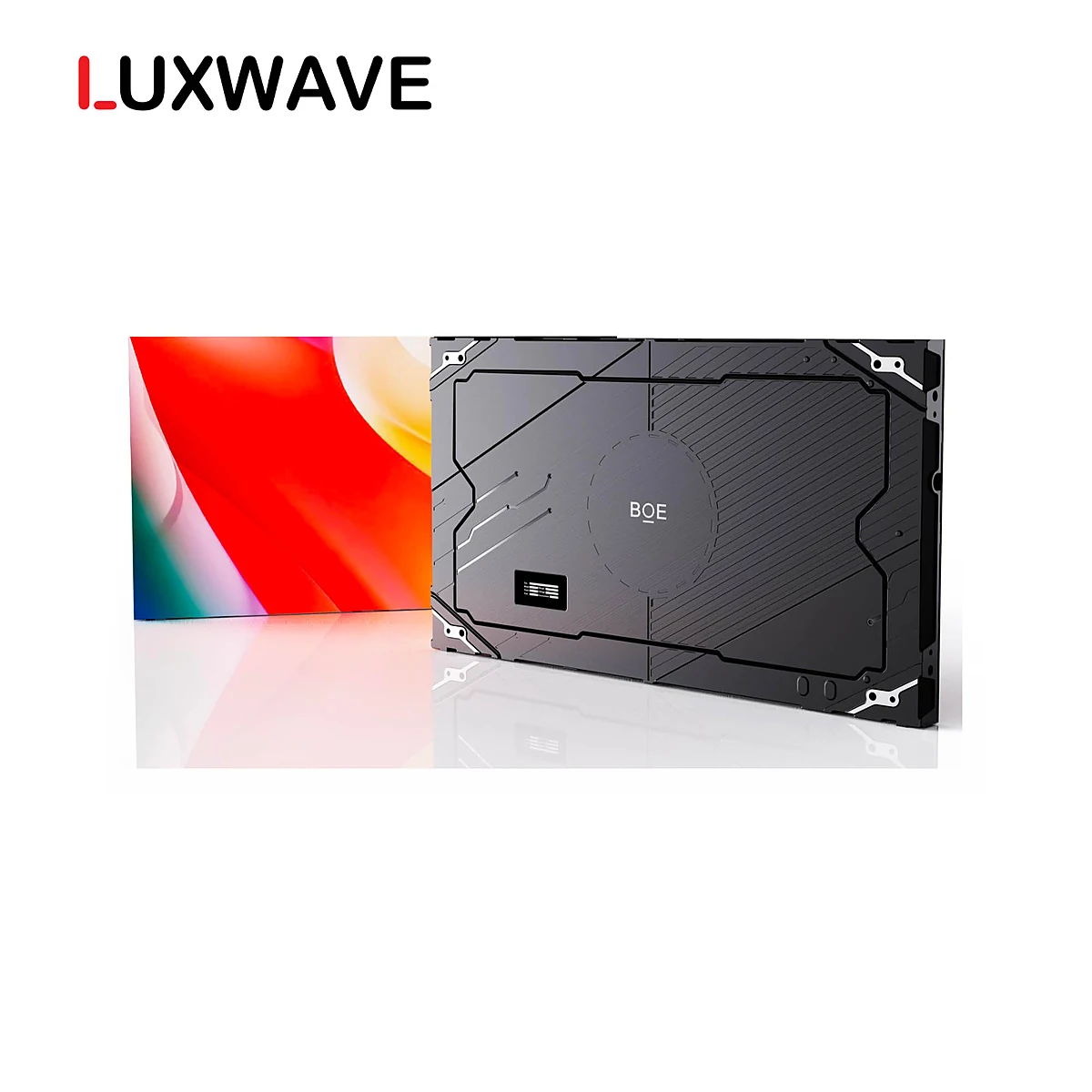
BOE BYH Ultra is BOE MLED's flagship fine-pitch COB LED display line, with the BYH009 Ultra configuration featuring a 0.9mm pitch, or 0.9375mm true pixel pitch. This is not a replacement for the BOE BYH012 deployed in Vietnam; the BYH Ultra is positioned higher, focusing on its ultra-fine COB surface, high brightness, superior contrast, and operational capabilities for spaces demanding more precise imagery than mainstream LEDs.
Essentially, the BYH Ultra utilizes Full-flip COB mini-LED technology. COB stands for Chip-on-Board, where chips are directly packaged onto the module surface and then encapsulated to create a flatter, more durable surface compared to traditional SMD (Surface Mount Device) structures with exposed components. For a deeper understanding of the fundamentals, the article What is a COB LED Display? clearly explains the differences in packaging methods, pixel pitch, and concepts like Mini-LED/MicroLED.
A notable feature is the "H" in BYH, which refers to BOE's proprietary H-type optical film. According to BOE's datasheet, this film layer incorporates an anti-glare reflective membrane and helps reduce brightness by approximately 60% in black states. For fine-pitch LED displays, black levels and surface reflectivity are as critical as peak brightness, as they determine the perceived depth in rooms with ambient lighting.
!Close-up of the BYH Ultra COB surface with anti-glare film
Which Specifications of the BYH009 Ultra Truly Stand Out?
The BYH009 Ultra boasts a well-balanced set of specifications: ≥16-bit grayscale, ≥7680Hz refresh rate, a typical brightness of 1500 cd/m² / maximum of 2000 cd/m², an ambient contrast ratio of ≥20,000:1 at approximately 10 lux, and a dark room contrast ratio of ≥1,000,000:1. The adjustable color temperature range of 2000K-15000K and a typical 99% DCI-P3 gamut indicate that the product is not just about brightness, but also about color reproduction and tonal accuracy in demanding visual environments.
In real-world working conditions, ambient contrast is often more significant than dark room contrast. Meeting rooms, studios, IOCs, or high-end lobbies rarely operate in complete darkness; therefore, the ability to maintain deep blacks under approximately 10 lux is a crucial data point. The H-type anti-glare film and the COB surface contribute to preventing washed-out blacks, ensuring that graphics, small text, and transitions between dark and bright scenes appear clearer. According to BYH Ultra documentation, the surface also uses a proprietary microstructure film to create a matte finish for anti-glare properties—with a measured glossiness of less than 10 at 85°, it's nearly non-reflective. Module seams and variations are kept below 50µm, and the anti-smudge surface is easy to clean, ensuring large displays appear seamless and clean during prolonged operation.
The 2000 cd/m² maximum brightness also places the BYH Ultra in a different category compared to many fine-pitch displays optimized for dark rooms. For instance, the LG MAGNIT 0.94mm has a typical brightness of only around 600 nits according to the manufacturer. The BYH Ultra offers a significantly wider brightness range at a similar pitch. This range is beneficial in rooms with overhead lighting, for on-camera applications, or when displaying content with a high dynamic range; however, actual operating brightness should always be calibrated to the environment, not necessarily run at maximum.
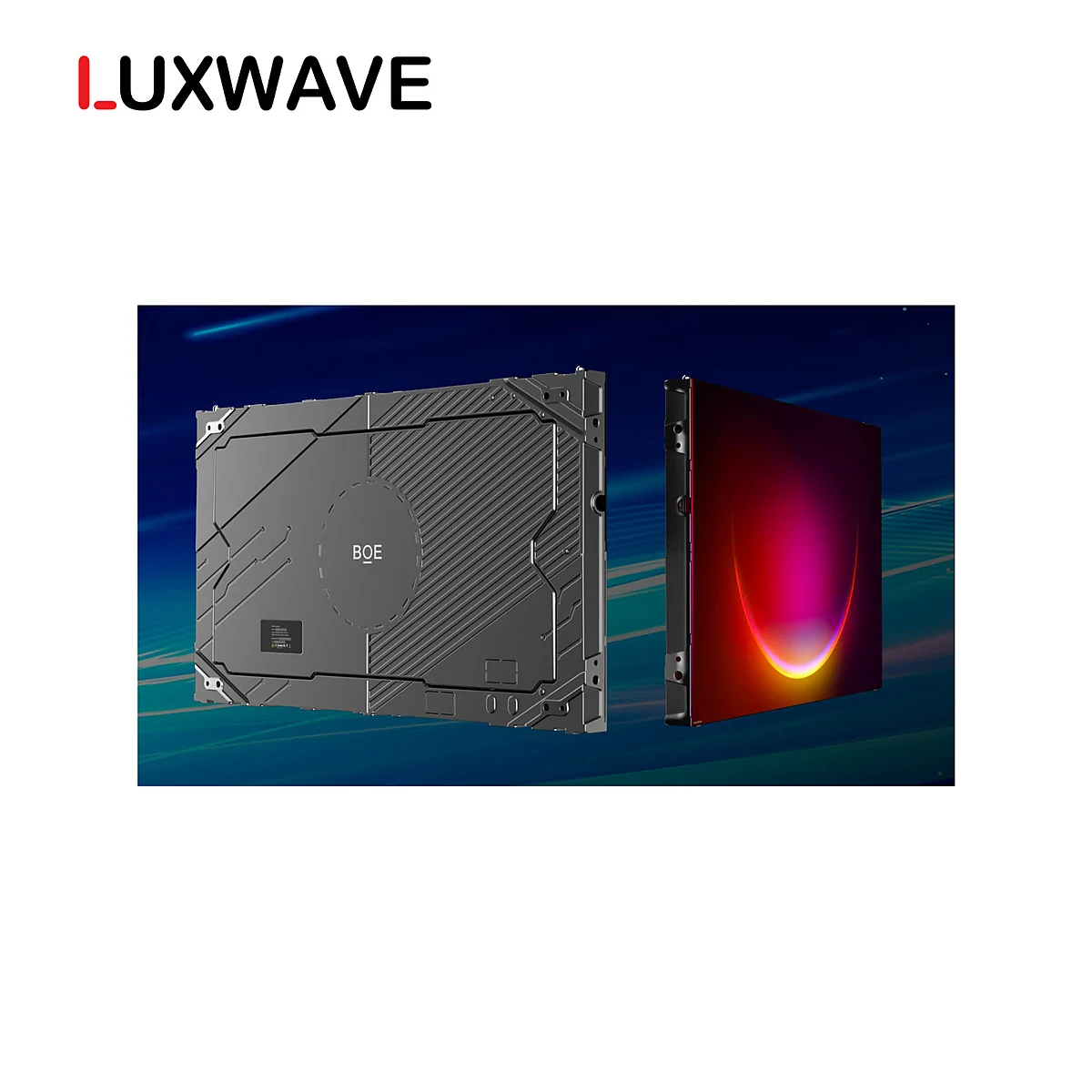
!BYH Ultra module with front magnetic maintenance

Why is BYH Ultra Suitable for Filming, Broadcast, and Studios?
For studios and broadcast applications, impressive specifications are only valuable if they enable stable camera capture. The BYH Ultra's ≥7680Hz refresh rate and ≥16-bit grayscale are directly related to flicker, banding, and the smoothness of color transitions during recording. Combined with the P0.9 pitch, the display can serve as a backdrop or a presentation surface in a broadcast studio while maintaining fine detail for close-up shots.
Moiré patterns are not solely caused by the display; they also depend on the camera's focal length, distance, sensor, aperture, displayed content, and signal scanning method. However, a high refresh rate and small pitch provide engineers with more flexibility when setting up cameras. With the BYH Ultra, the advantage lies in reducing a common set of risks associated with fine-pitch LEDs on air: scan lines, color banding, and visible pixel structure in reflective surfaces.
The typical 99% DCI-P3 color coverage is also significant for broadcast content, branding, and virtual production. A wider DCI-P3 gamut doesn't automatically mean accurate color, but it provides the space for calibration to achieve desired color targets. The datasheet also mentions per-pixel and per-module brightness and color calibration, often in conjunction with processors like Barco Infinipix. This is a noteworthy detail because, with P0.9 pitch displays, pixel and module uniformity directly impact the perceived "seamlessness" of the screen to the camera.

Why Consider BOE a Foundational Manufacturer, Not Just an Assembler?
BOE's position is what sets the BYH Ultra apart from many purely assembled LED options. According to published data, BOE is the world's number one display panel manufacturer, holding approximately 35% of the large-size panel market in 2025 (per Omdia) and is the leading supplier of MacBook displays for Apple in 2025 with about 51%. While these figures don't make the BYH Ultra an automatic choice, they demonstrate BOE's deep industrial capabilities within the display supply chain.
More importantly, BOE controls its chip and panel production chain, rather than merely sourcing components and assembling cabinets. For premium COB LED displays, stability relies not only on the current module but also on the consistency of materials, calibration processes, firmware, and the technology roadmap. BOE has been mass-producing MicroLEDs in Zhuhai since 2024 and has a roadmap for glass-based COG and MicroLED, indicating a long-term, foundational approach.
For projects in Vietnam, this factor has practical implications for technical proposals, Certificates of Origin/Quality (CO/CQ), and bid justifications. A visually impressive LED display during a demo, but lacking a clear supply chain origin, can pose risks during acceptance testing. Partnering with BOE MLED and a distributor with local after-sales support in Vietnam provides clients with a stronger basis for evaluating the equipment's lifecycle rather than just comparing initial prices.
Which Projects in Vietnam are Suitable for BYH Ultra?
The Vietnamese market is polarizing: one end features very low-cost commodity LEDs from China, and the other includes ultra-premium brands like Samsung, Leyard, or Sony. The BYH Ultra occupies a mid-to-high-end niche: it's a genuine COB product with high specifications and clear origin documentation, but at a more accessible price point for projects requiring flagship quality without the budget of global brand icons.
The most suitable segments include studios, television stations, provincial IOCs, NOC/SOCs, government auditoriums, banks, boardrooms, and luxury lobbies. These spaces share three common priorities: clean on-camera performance, durable systems for 24/7 operation, and complete CO/CQ documentation. With its epoxy-coated COB, front magnetic maintenance, and large 150×337.5mm modules, the BYH Ultra is designed to ease installation and maintenance pressures in these environments.
However, premium doesn't always mean P0.9 is the best choice. If viewers are at a distance or the primary content is large-format promotional video, a larger pixel pitch might be more appropriate. The decision should start with viewing distance, room lighting, content type, camera recording frequency, and acceptance requirements. The article COB vs. SMD Comparison 2026 also serves as a useful reference if projects are undecided between COB durability and SMD budgets.
How Does BYH Ultra Compare to LG MAGNIT, Samsung The Wall, and Sony Crystal LED?
A fair comparison requires contextualizing each product line. The LG MAGNIT 0.94mm, according to manufacturer claims, has a brightness of around 600 nits, whereas the BYH Ultra reaches a maximum of 2000 cd/m² and a refresh rate of ≥7680Hz. In brightly lit rooms or for on-camera use, the BYH Ultra's wider brightness range and refresh rate offer a distinct advantage. However, LG remains a strong display brand, so decisions should not be based on a single specification.
Samsung The Wall belongs to the ultra-premium category, featuring a 0.84mm pitch, flip-chip COB, and a very high price positioning. Sony Crystal LED focuses on premium image quality, but its 1.26/1.56mm pitches are less fine than P0.9 when considering pixel density alone. Therefore, the BYH Ultra shouldn't be described as "beating all competitors"; a more accurate positioning is a strong P0.9 COB option that balances performance, official documentation, and implementation costs.
In a real-world system, the display is only one component. The processor, signal path, backup systems, mapping, and calibration determine the rest of the display quality. For projects using high-end processors, consider the Novastar ecosystem or the knowledge base in the article What is PixelHue?. The goal is not to choose the most prominent logo, but the entire system that meets operational requirements.
Conclusion: When Should BYH Ultra Be Shortlisted?
The BOE BYH Ultra should be shortlisted when a project requires a truly premium P0.9 COB LED display with on-camera performance needs, long operating hours, and clear technical documentation. Typical scenarios include studios, IOCs, control rooms, large auditoriums, banks, executive meeting rooms, and brand lobbies. If a project only needs a large screen for distant viewing, SMD LEDs or a larger pixel pitch might be a more economical choice.
The strengths of the BYH Ultra lie in its combination of Full-flip COB mini-LED, H-type anti-glare film, ≥7680Hz refresh rate, ≥16-bit grayscale, Max 2000 cd/m² brightness, Typ 99% DCI-P3 gamut, and ≥20,000:1 ambient contrast ratio. These specifications are particularly valuable when implemented with proper lighting surveys, signal processing configurations, and meticulous calibration. Luxwave distributes with CO/CQ and local after-sales support in Vietnam, enabling clients to evaluate equipment based on its lifecycle rather than just the initial quote.
Pitfalls
Common mistakes
- Confusing BYH Ultra with BYH012: BYH012 refers to a different P1.25/P0.9 deployment, while the BYH Ultra discussed here is the BYH009 Ultra P0.9 flagship.
- Comparing prices solely by square meter while overlooking CO/CQ, datasheets, after-sales support capabilities, and 24/7 operational stability.
- Using specifications from the outdoor BYB series to describe BYH Ultra; the BYH Ultra datasheet lists a typical brightness of 1500 / maximum of 2000 cd/m².
- Selecting an ultra-fine pitch for distant viewing spaces where viewers cannot leverage the P0.9 advantage, unnecessarily increasing the budget.
FAQ
Frequently asked questions
What type of LED display is the BOE BYH Ultra?
The BOE BYH Ultra is a premium fine-pitch COB LED display line from BOE MLED, with the BYH009 Ultra P0.9 variant. It utilizes Full-flip COB mini-LED and H-type optical film, targeting close viewing applications such as studios, IOCs, control rooms, and high-end auditoriums or executive meeting rooms requiring extremely fine image detail.
How does the BYH Ultra differ from the BYH012?
The BYH Ultra in this article is the BYH009 Ultra P0.9 flagship model, distinct from the previously reviewed BYH012 deployment in Vietnam. The BYH Ultra emphasizes its H-type optical film, ≥20,000:1 ambient contrast ratio, ≥7680Hz refresh rate, and 2000 cd/m² maximum brightness. The BYH012 review should be considered a separate deployment case study and not a substitute for the Ultra's datasheet.
Is the BYH Ultra suitable for filming and broadcast?
Yes, provided the overall system is configured correctly. The ≥7680Hz refresh rate, ≥16-bit grayscale, and anti-glare COB surface contribute to more stable images when captured by cameras. However, the final result also depends on the processor, signal mapping, content, studio lighting, and on-site calibration.
Is the BOE BYH Ultra the cheapest option?
No. The BYH Ultra is positioned in the mid-to-high-end segment, intended for projects requiring P0.9 fineness, a major panel manufacturer's brand, and clear CO/CQ documentation. If the display is for distant viewing only, standard LED displays might suffice. If flagship image quality is needed with a more controlled budget than ultra-premium options, the BYH Ultra is worth considering.
Which projects in Vietnam should consider the BYH Ultra?
Suitable projects include studios, television stations, provincial IOCs, NOC/SOCs, government auditoriums, bank boardrooms, and premium lobbies. The common profile is the need for close viewing, stable operation, clean on-camera performance, and clear origin documentation for bidding or acceptance.
What should be checked before finalizing the BOE BYH Ultra?
It's advisable to verify the correct BYH009 Ultra datasheet, CO/CQ, signal processing plan, processor configuration, room lighting conditions, viewing distance, and front maintenance plan. For broadcast or control room projects, real content and camera testing are recommended over showroom demos.
References
- 1.ManufacturerBOE Technology Group — Corporate & MLED Division Introduction
- 2.StandardSID Display Week — COB / Fine-Pitch Micro-LED Technology
- 3.ManufacturerBarco Infinipix — Image Processing for Fine-Pitch LED
- 4.DatasheetBOE MLED — BYH009 Ultra Pre-Specification Rev.O 2025
- 5.ManufacturerBOE MLED COB & COG at InfoComm 2025
- 6.ResearchOmdia — BOE Leads Panel Market in 2025