

What are Nits and Why is LED Display Brightness Important?
Nit is a unit of surface brightness, indicating how much light a square meter of display emits towards the viewer. For LED displays, this metric determines the screen's ability to overcome ambient light. Higher nits mean the image is easier to see in bright environments. However, the appropriate brightness always depends on the installation location, not a single universal number. Understanding the role of nits helps you choose a display that is sufficiently clear without being wasteful.
!High-brightness outdoor LED display shown clearly under harsh daylight
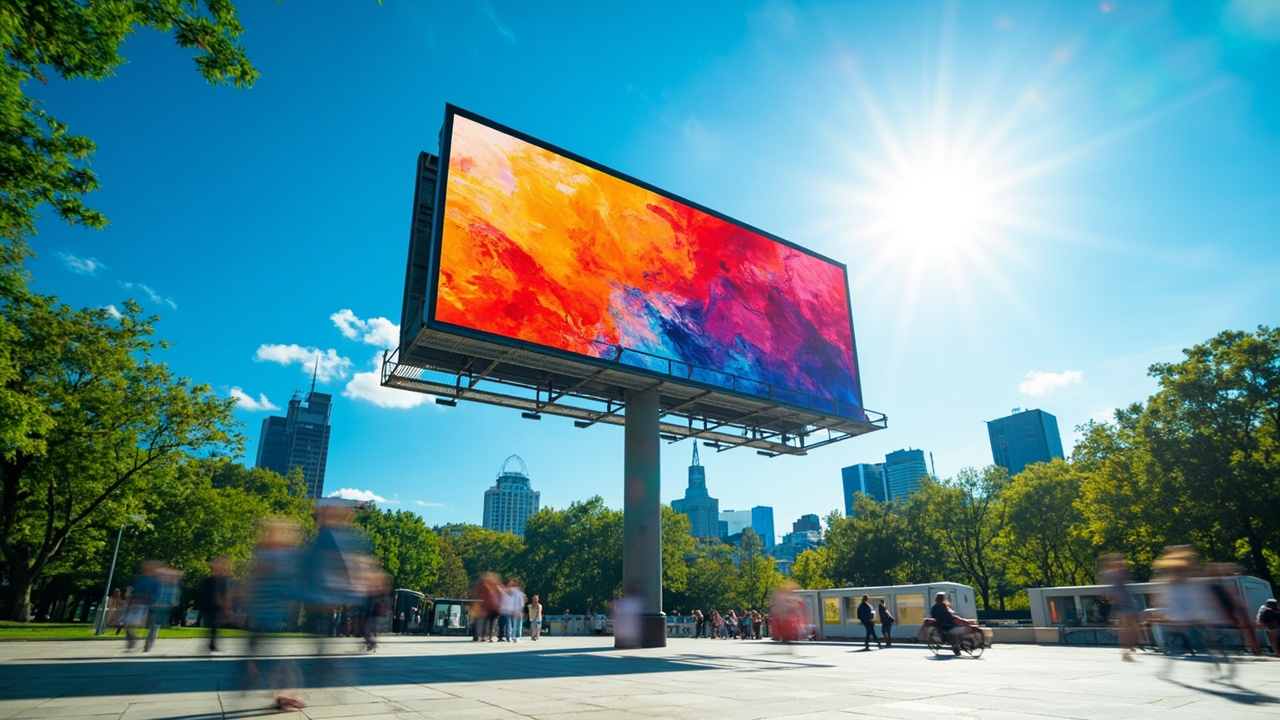
Brightness is crucial as it dictates the actual viewing experience. According to industry standards, indoor displays typically require 600–1,500 nits, while outdoor displays exposed to sunlight need significantly more, up to around 10,000 nits (BOE InfoComm 2025). This substantial difference reflects the ambient light levels the display must contend with. Therefore, brightness selection is closely tied to whether the display is installed indoors or outdoors, a topic thoroughly analyzed in the article Indoor vs. Outdoor LED: How to Choose.
How Does Brightness Differ from Contrast and Image Quality?
Brightness only indicates how much light a display emits; it doesn't directly determine image quality. A very bright display can still produce a washed-out image if its contrast, uniformity, and color depth are poor. The primary role of nits is to ensure content is clearly visible in its environment: bright enough not to be overpowered by ambient light, but not so bright as to cause glare. Therefore, when evaluating a display, brightness should be considered alongside other quality metrics, rather than in isolation and prioritized above all else.
How Many Nits Are Sufficient for Indoor LED Displays?
Indoor LED displays typically require around 600–1,500 nits, which is sufficient for most spaces (BOE InfoComm 2025). This level ensures clarity in office lighting without causing glare for nearby viewers. However, this is a broad reference range; specific indoor applications have their own ranges depending on ambient light and viewing distance. Understanding the specific range for your application helps avoid purchasing excess capacity, which incurs higher costs and can cause eye strain during continuous operation.
!Seamless indoor LED display in a naturally lit meeting room
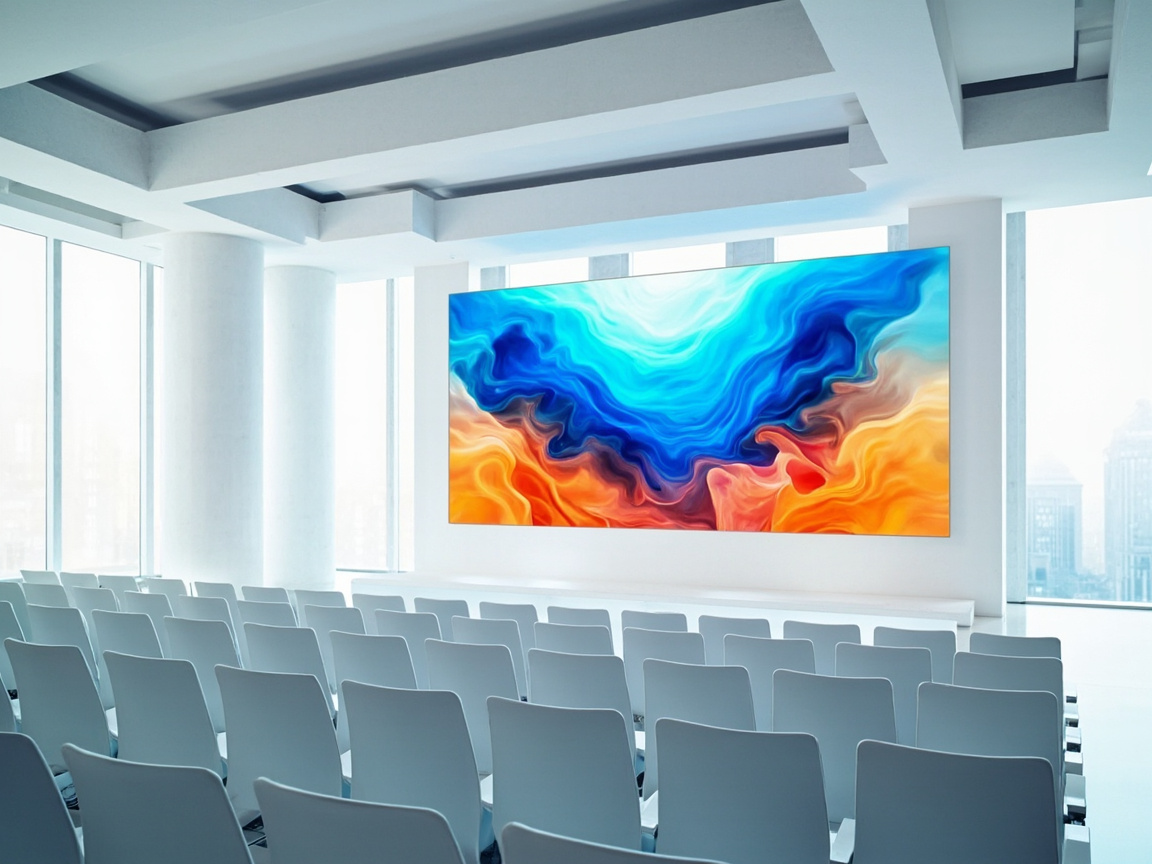
According to industry application references, meeting rooms and auditoriums fall within the 400–800 nits range, command and control centers require 600–1,200 nits, and retail spaces and showrooms need 800–1,500 nits. Educational classrooms require around 400–800 nits, medical facilities and hospitals need 400–600 nits, and LED cinemas in dark rooms only require about 100–300 nits. When surveying a meeting room or a control room, the actual nits range also depends on the amount of natural light entering the space.
Does a Room with More Natural Light Require Higher Nits?
Yes, the level of ambient light is the determining factor for the required brightness within the same room type. A completely enclosed meeting room might only need the lower end of the recommended range, while a meeting room with large windows receiving morning sun might require brightness closer to the upper end or slightly more to maintain image clarity. Therefore, surveying the actual lighting conditions at the installation site is more critical than applying a fixed number. The same product might be excessively bright in one room but just right in another, making on-site measurement before finalizing the configuration an essential step.

What Brightness (Nits) Do Outdoor LED Displays Need?
Outdoor LED displays exposed to sunlight require significantly higher brightness than indoor ones, up to around 10,000 nits, to ensure images remain visible during daylight hours (BOE InfoComm 2025). This is because the display must directly compete with sunlight, which is far brighter than indoor lighting. For the human eye to distinguish content under harsh sunlight, the brightness must be high enough to maintain perceivable contrast. This is the most fundamental difference between indoor and outdoor displays and the reason for their distinct product lines.
According to industry application references, outdoor billboards typically require 5,000 nits or more, stadium and sports venue displays range from 5,000–10,000 nits, and rental stage displays vary based on lighting conditions. When deploying a facade LED sign, the brightness must be sufficient for passing pedestrians to see clearly in midday sun, while also having the capability to dim at night to avoid glare and unnecessary power consumption. The BOE BYB Plus P4.4 series is an example of a product targeting these high-brightness applications.
Do Outdoor Displays Need Brightness Adjustment Based on Time of Day?
Yes, and this is a practical factor often overlooked. An outdoor display needs very high peak brightness during the day but only a fraction of that brightness at night. Running a display at full brightness 24/7 can cause glare for people at night, waste electricity, and accelerate brightness degradation. Video controllers and processors, such as those from NovaStar, allow for brightness calibration to adapt the display to its environment. The level of automation and its specific impact on power consumption vary by configuration and should be confirmed during project surveys.
How Should Brightness Be Selected Based on Application?
The most effective way to select brightness is to align with the application and environment, as each group has its recommended nits range based on ambient light and viewing distance. Instead of asking "how many nits are high," ask "which range does my application fall into?" This approach helps avoid two common mistakes: purchasing excessive brightness leading to glare and wasted energy, or insufficient brightness causing the image to be dim in bright environments. Industry application charts provide a good starting point before fine-tuning based on actual site surveys.
Specifically, indoor applications with controlled lighting like meeting rooms require about 400–800 nits; control rooms needing continuous clarity for many hours require 600–1,200 nits; exhibition showrooms and retail spaces need 800–1,500 nits to attract customer attention. Specialized applications like virtual production require 800–1,500 nits, while LED cinemas in dark rooms only need about 100–300 nits. Conversely, outdoor applications like billboards start from 5,000 nits and up, and stadiums require 5,000–10,000 nits. Pixel pitch and brightness are often selected together, so you may also refer to the article How to Choose LED Pixel Pitch 2026.
Why Do "Indoor" Applications Have Such Different Brightness Requirements?
Because "indoor" does not equate to a single ambient light level. An LED cinema operating in a completely dark room might only need about 100–300 nits, while a retail showroom with strong lighting and glass windows might require 800–1,500 nits for content to stand out. Control rooms need staff to clearly see data for extended periods, making the 600–1,200 nits range appropriate. Each space has different requirements for clarity, glare, and viewing duration, leading to different recommended nits ranges even within indoor settings.
Why Shouldn't You Choose an LED Display with the Highest Possible Nits?
The notion that "more nits are always better" is one of the most costly mistakes when purchasing an LED display. Brightness only needs to be sufficient for the image to be clear in the specific environment; exceeding that threshold offers no benefits and can be detrimental. Placing a very high-brightness display in a dimly lit space will cause glare and eye strain, especially for close and continuous viewing. Furthermore, operating at high brightness consumes more power and generates more heat, leading to higher operating costs and the risk of accelerated brightness degradation over time.
It's important to note that the nits values manufacturers publish are often peak values. For example, BOE states its COB indoor BYH Ultra P0.9 series achieves 2,000 nits (peak) and the outdoor BYB series reaches 10,000 nits (peak). Continuous operation near the peak value causes the display to overheat and degrade faster. Therefore, choosing a display with a brightness range that adequately covers your needs and operating it at a moderate level will result in greater longevity than forcing it to run at peak performance constantly. This principle is applied by Luxwave when advising on projects, such as the delivery of 2 BOE COB P0.9 projects in Q1 2026, where brightness was selected based on the actual installation environment rather than the maximum possible value.
How Does Excessive Brightness Affect Lifespan and Costs?
Excessive brightness impacts both lifespan and operating costs. LED chips operating at higher currents to achieve greater brightness generate more heat, and heat is a primary factor accelerating brightness degradation. A display forced to operate near its peak continuously will degrade faster than a similar display operated at moderate levels. In terms of cost, higher brightness translates to higher power consumption per hour of operation. Specific figures for brightness degradation over time and power consumption at different nits levels should be referenced from the datasheet of each product series.
How Do COB and SMD Packaging Technologies Affect Brightness?
Chip packaging technology influences how a display achieves brightness and durability, although both COB and SMD can reach high nits at the panel level. COB (Chip-on-Board) mounts multiple bare LED chips directly onto a ceramic or aluminum substrate, forming a continuous light-emitting surface with only two connection points. This offers excellent heat dissipation and enables super-fine pixel pitches below 1.0mm, which are difficult for SMD to achieve stably (BOE MLED glossary). Good heat dissipation indirectly benefits brightness by allowing the display to maintain stable brightness and last longer.
SMD (Surface-Mount Device) mounts individual LED chips onto a PCB, allowing for flexible layouts. The brightness per SMD chip is lower than COB, but at the panel level, SMD can still achieve high peak nits, making it suitable for both indoor and outdoor applications. The choice between COB and SMD therefore depends not only on brightness but also on pixel pitch, surface durability, and cost. For a more in-depth comparison of these two technologies, refer to the article COB vs. SMD Comparison 2026, and explore the fine-pitch BOE BYH COB Ultra P0.9 series for indoor applications.
Does COB Help Maintain Brighter Stability Over Time?
In principle, COB's superior heat dissipation capability is an advantage for brightness stability. Because chips are mounted directly onto a heat sink substrate as a continuous surface, heat is dissipated more effectively, allowing the chips to operate at lower temperatures compared to structures with multiple solder joints. Lower operating temperatures generally correlate with slower brightness degradation over time. However, actual stability levels also depend on the overall design, chip quality, and operating conditions. Therefore, specific figures for brightness retention over time should be referenced from the manufacturer's specifications for each product series.
Conclusion: How Many Nits Are Right for Your Needs?
There is no universal "sufficient" nits value for all LED displays; sufficiency is meeting the actual installation environment's requirements. Indoor installations like meeting rooms, control rooms, showrooms, or classrooms should select based on industry application ranges, typically from a few hundred up to 600–1,500 nits, prioritizing room light surveys before finalizing. Outdoor installations such as billboards, facades, or stadiums require significantly higher brightness, up to around 10,000 nits, with the ability to dim at night to prevent glare and save power.
Conversely, those considering "buying extra nits just to be safe" should reconsider: an outdoor display of ≥5,000 nits placed in a meeting room will only cause glare, waste energy, and incur unnecessary costs for unused capacity. A display within the correct application range offers a better experience at a reasonable cost. As a brand of Ho Gia JSC, an authorized distributor of BOE and NovaStar with a proven track record of delivered projects, Luxwave advises selecting brightness based on the specific environment and application rather than chasing maximum values.
Pitfalls
Common mistakes
- Assuming 'more nits are always better' and purchasing an outdoor display of ≥5,000 nits for an indoor meeting room — resulting in glare, wasted energy, and unnecessary costs for unused capacity.
- Selecting brightness without surveying the actual ambient lighting conditions: the same room can require very different nits levels depending on whether it has sun-facing windows or is completely enclosed.
- Forgetting that manufacturer-published nits values are often peak values — continuous operation at peak levels causes overheating, high power consumption, and rapid brightness degradation.
- Equating high brightness with image quality: contrast, uniformity, and color depth determine image beauty; nits only ensure visibility in a given environment.
- Overlooking the capability for automatic brightness adjustment based on the environment, allowing the display to run at full brightness day and night when only a fraction of that brightness is needed at night.
FAQ
Frequently asked questions
What are Nits on an LED display?
Nit is a unit of surface brightness, indicating how much light a square meter of display emits towards the viewer. Higher nits mean the image is easier to see in bright environments. On an LED display, this metric determines its ability to overcome ambient light, which is particularly crucial for outdoor installations exposed to sunlight.
How many nits are sufficient for an indoor LED display?
Indoor displays typically require around 600–1,500 nits, sufficient for most spaces like meeting rooms, showrooms, or control rooms. This level provides adequate clarity in office lighting without causing glare. Specialized rooms may require less: meeting rooms around 400–800 nits, while LED cinemas in dark rooms only need about 100–300 nits.
How many nits do outdoor LED displays need?
Outdoor displays exposed to sunlight require significantly higher brightness than indoor ones, up to around 10,000 nits, to ensure images remain visible during daylight hours. Outdoor billboards typically need 5,000 nits or more, while stadium and sports venue displays range from 5,000–10,000 nits. The reason is that the display must overcome direct sunlight to maintain perceivable contrast.
What brightness (nits) should be chosen for a meeting room LED display?
Meeting rooms and auditoriums typically fall within the 400–800 nits range according to industry application references. These are spaces with controlled lighting, and viewers are seated nearby, so moderate brightness ensures comfortable viewing without glare. If the room has many windows receiving sunlight, higher brightness might be needed; conversely, a dark room would suffice with lower levels.
Is a higher nits value always better for an LED display?
No. Brightness only needs to be sufficient for the image to be clear in the specific installation environment. Placing a display with excessively high brightness in a dimly lit space will cause glare and eye strain for viewers, consume more power, and accelerate the display's brightness degradation. Choosing nits based on the application and ambient lighting is always more sensible than chasing the maximum value.
Do COB or SMD offer higher brightness?
Both can achieve high brightness at the panel level. COB mounts multiple bare LED chips directly onto a substrate, forming a continuous light-emitting surface that dissipates heat well and achieves super-fine pixel pitches below 1.0mm, which are difficult for SMD to achieve stably. SMD mounts individual chips on a PCB; while the brightness per chip is lower than COB, at the panel level, SMD can still reach high peak nits, making both suitable for indoor and outdoor applications.
Why do outdoor LED displays need significantly higher brightness than indoor ones?
Because outdoor displays must directly compete with sunlight, which is far brighter than indoor lighting. For the human eye to distinguish content during the day, the display's brightness must be high enough to maintain contrast. This is why indoor displays typically need only 600–1,500 nits, while outdoor displays exposed to sunlight require up to around 10,000 nits.
References
- 1.ManufacturerBOE MLED — Genuine COB & SMD LED Display Series, InfoComm 2025 Specifications
- 2.ManufacturerBOE MLED glossary — COB vs. SMD Packaging Principles
- 3.ManufacturerNovaStar — Video Controllers & Processors, Brightness Calibration
- 4.ManufacturerSKV Lighting — Fine-Pitch LED Display Projects Implemented