

InfoComm 2026 takes place from June 17-19, 2026, at the Las Vegas Convention Center, not Orlando. With over 750 exhibitors, including more than 130 Chinese companies, approximately 140 display manufacturers, and around 120 LED companies, this year's exhibition demonstrates that dvLED has entered a phase of competition based on ecosystems, services, and total cost of ownership, rather than just showcasing pixel pitch. In this context, Sony and LG have chosen a clear direction: not to engage in a price war with the Chinese wave, but to position premium dvLED for enterprises, hotels, brand spaces, and executive meeting rooms.
For the Vietnamese market, this news is significant as it reflects two increasingly distinct approaches to purchasing LED screens. On one side are Japanese-Korean brands like Sony and LG, strong in product refinement, service processes, ecosystems, and brand trust. On the other side are Chinese manufacturers such as BOE, Leyard, Kinglight, and Nationstar, where MiP/COB technology is creating better price pressure for the same display requirements. This article does not rank which brand is "best," but rather poses a more practical question: how much should Vietnamese projects pay for brand and service?
!Meeting room with video conferencing display — illustration of Sony dvLED
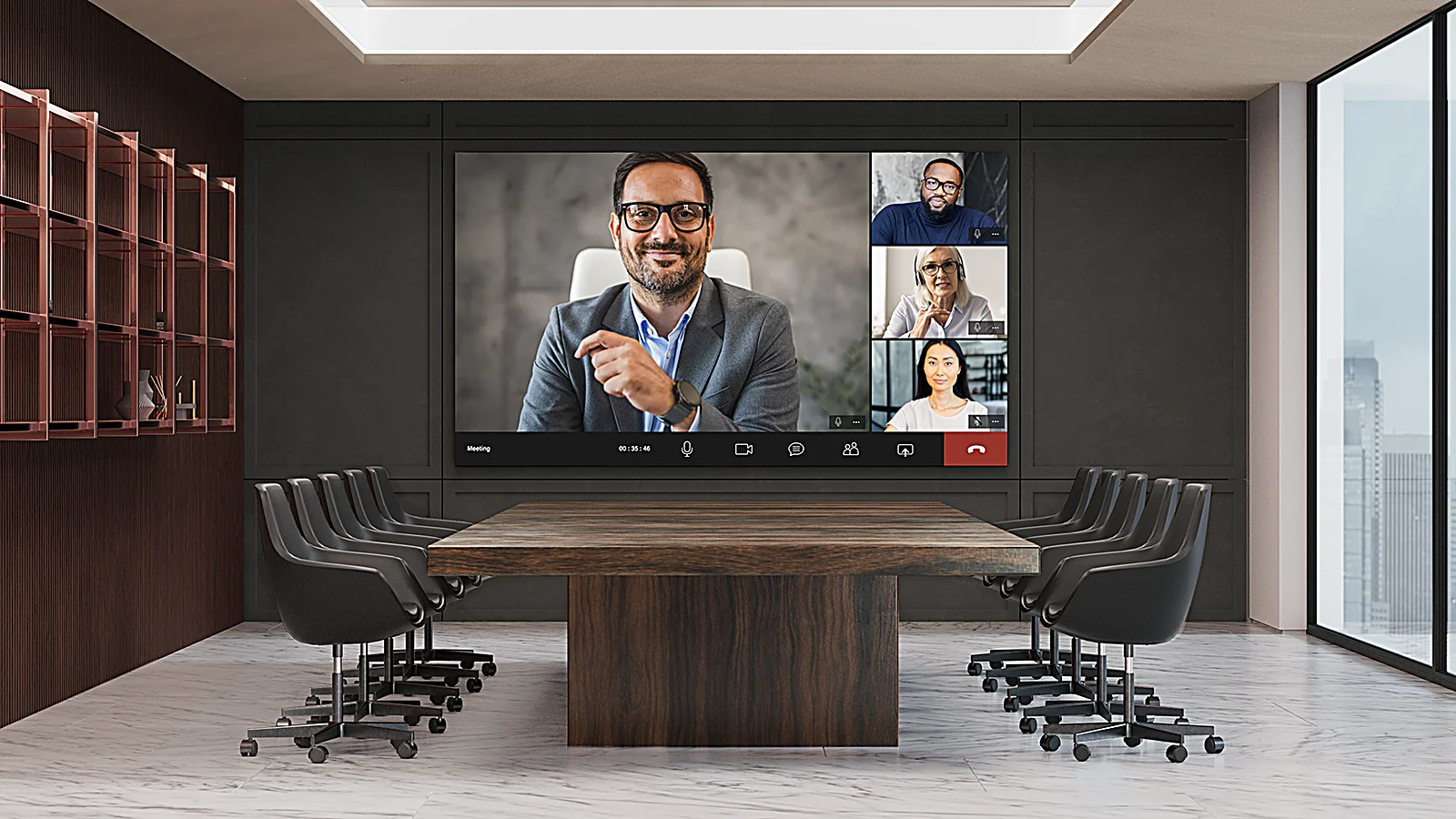
What does Sony Crystal LED UNIFY say about premium boardrooms?
Sony's message at InfoComm 2026 is quite consistent: dvLED for enterprises should not stand alone but be part of a complete pro AV ecosystem. Sony's highlights include the All-in-One 135-inch Crystal LED UNIFY, the Crystal LED S Series, the BRAVIA BZ-P Series professional displays, and the SRG-XS10/SRG-AS10 PTZ cameras (according to AVNetwork). This approach is suitable for boardrooms, enterprise experience centers, and video conferencing spaces requiring synchronized visuals, cameras, content, and operations.
The notable aspect is not just the 135-inch size of the Crystal LED UNIFY. Sony's All-in-One packaging approach indicates a desire to reduce implementation friction: fewer technical decisions, fewer separate configurations, and easier integration into corporate projects where IT or admin teams may not be LED specialists. For corporations in Vietnam, this is a real advantage. A presidential meeting room, an investor reception area, or a brand center needs more than just "brightness and sharpness"; it requires stable performance, ease of operation, and freedom from user concerns about the underlying technical aspects.
However, All-in-One solutions also have natural limitations. When room dimensions, screen aspect ratios, ceiling heights, or interior layouts do not match standard configurations, modular cabinet systems offer greater flexibility. This is why projects like meeting rooms in Vietnam need to start with viewing distance, content ratios, and daily operational workflows, rather than starting with a fixed model. If clients require a display surface that precisely matches a wall's dimensions, BOE COB or Leyard cabinet systems might be more easily optimized than standard AIOs.
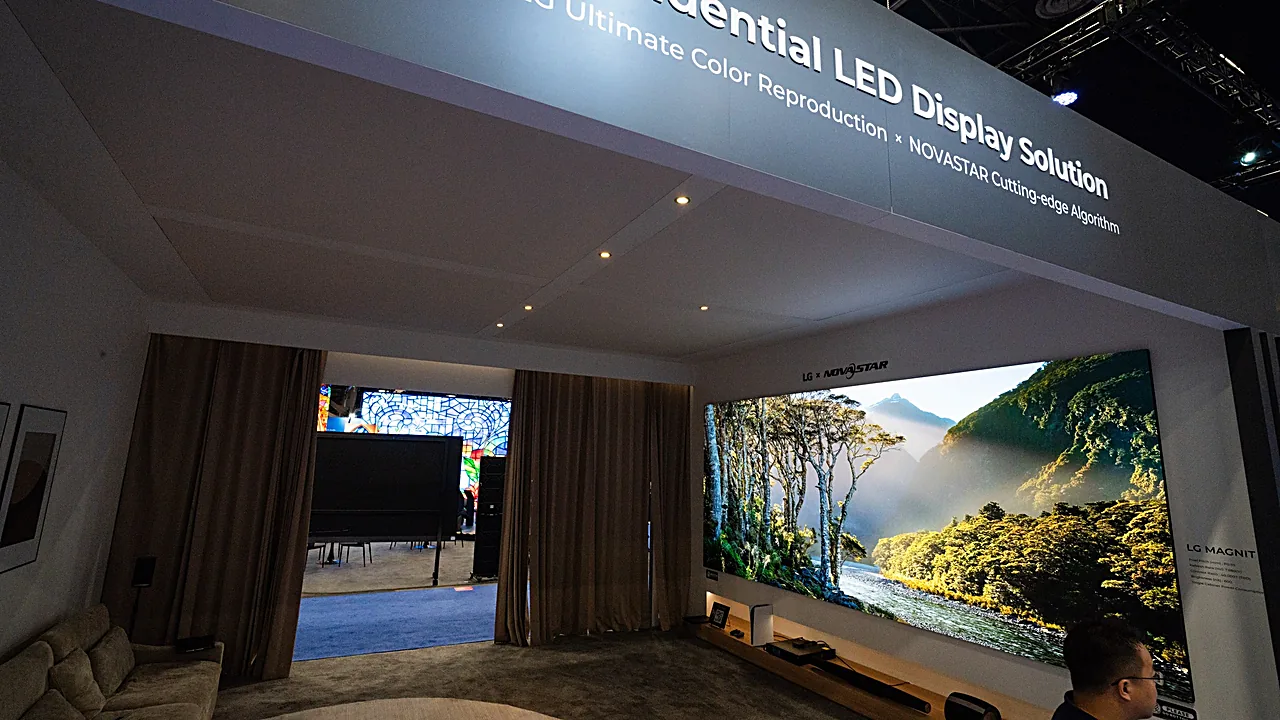
Is LG Magnit selling displays or operations?
At InfoComm 2026, LG positions Magnit within a broader narrative: Micro LED, DVLED, cloud management platforms, and professional services. InfoComm 2026 Media Day noted many companies using the exhibition to announce display, processing, and service solutions for the pro AV environment (according to Sports Video Group). For LG, the focus is not just on Magnit displays or two new indoor DVLED series, but on the ability to bundle displays, management, support, and operations into a more easily purchasable enterprise package for large clients.
This is particularly important for hotel chains, resorts, multi-story offices, or high-end retail systems. When an investor operates multiple screens in lobbies, ballrooms, convention centers, and brand experience areas, they don't just ask which screen is better; they ask who is responsible when a screen fails, who updates content, who monitors equipment status, and whether maintenance procedures disrupt operations. Cloud management platforms and comprehensive service packages enable LG to position itself at that level.
For Vietnamese customers, this serves as a reminder that premium dvLED should not be budgeted as a standalone "electronic item." If a project falls into the hospitality, lobby, or corporate space category, the costs of management, maintenance, and incident response can be as important as the screen price. LG Magnit suits buyers who want to reduce the number of responsible parties. Conversely, if the internal technical team is strong and the goal is to optimize initial investment costs, COB/MiP configurations from China might be more worth considering.
!LED image processors/controllers

Why aren't Japanese-Korean brands competing on price with Chinese manufacturers?
The broader context of InfoComm 2026 is the strong presence of Chinese companies in the LED sector. The participation of BOE, Leyard, Kinglight, and other suppliers indicates a rapid expansion of the MiP, COB, and Micro-LED supply chain, driving down prices and introducing more fine-pitch configurations to the market. With over 750 exhibitors and a significant proportion in the display/LED segment, the specifications race has become intense: smaller pitches, thinner cabinets, multi-layer image processing, and more convenient content management.
In such an environment, Sony and LG would struggle to win by competing solely on price per square meter. Their logical advantage lies in product refinement, brand recognition, equipment ecosystems, service processes, and familiarity with global enterprise clients. This is a common strategy in the pro AV industry: customers pay more to reduce purchasing and operational risks and to gain a brand that is easily approved by leadership. For representative spaces like boardrooms, brand showrooms, or 5-star hotels, this factor carries practical weight.
Conversely, Chinese manufacturers are increasingly no longer "cheap" options in the traditional sense. BOE is a major display manufacturer, Leyard has extensive experience in professional LED, and chip/packaging suppliers are pushing MiP/COB into wider commercial applications. With BOE MLED, fine-pitch COB lines like BOE COB P0.9 present a very different proposition: high display quality, better surface protection than traditional SMD, but often at a more accessible cost than Japanese-Korean configurations in the same premium segment. Therefore, the question is not "which brand wins," but rather "what risks does the customer want to mitigate with their budget."
For premium dvLED, the cost is not in the cheapest LED panel, but in the configuration with the least risk for how businesses actually operate the display daily.
Should Vietnamese customers choose brands or cost per square meter?
For Vietnamese businesses, the decision between Sony/LG and Chinese lines should start with the project's objectives. If the screen is for a corporate boardroom, a 5-star hotel lobby, or an experience center where the investor's brand needs to convey sophistication, Sony Crystal LED or LG Magnit have clear reasons for existence. Investors pay extra for peace of mind, service processes, international branding, and a well-packaged ecosystem for the corporate environment.
If the project involves large screen areas, custom dimensions, tight budget controls, or requires performance-per-cost optimization, premium Chinese lines offer advantages. BOE COB, Leyard, and other MiP/COB configurations typically allow investors to purchase more display area within the same budget, or keep the budget lower for the same pitch. This is highly practical for multi-point conference rooms, internal studios, corporate auditoriums, and projects requiring larger screens than standard AIO configurations.
A concise way to frame the decision is to divide the budget into four parts: display, signal processing, mechanical installation, and operational services. Sony/LG are generally more compelling when the service and ecosystem components are heavily weighted. BOE/Leyard are typically more convincing when the display and display area are the primary focus. Projects like VPF Meeting Room P1.5 or Optupus International Library demonstrate that for close-viewing screens, the right pitch and acceptance process can create a premium experience without necessarily opting for Japanese-Korean brands.
All-in-One or modular cabinets: Which suits which project?
All-in-One solutions are suitable for projects requiring fast deployment, standard dimensions, minimal design changes, and simple operation for the support team. The 135-inch Sony Crystal LED UNIFY is a prime example of this approach: a product packaged for integration into meeting rooms or corporate spaces without requiring the client to assemble too many separate LED system components. For many Vietnamese offices, AIOs reduce technical discussion time and simplify the procurement process.
Modular cabinets are ideal when projects require customization of size, aspect ratio, curvature, mounting structure, or when investors want to optimize individual cost components. A large LED wall in a high-rise lobby, a wide screen for an auditorium, or a showroom with a unique horizontal aspect ratio is often difficult to fit into an AIO size. In such cases, cabinets allow selection of pixel pitch, cabinet size, controller, structure, and on-site maintenance options. The article All-in-One LED Screens 2026 provides a deeper analysis of the strengths and weaknesses of AIO versus traditional modular systems.
In terms of viewing experience, both approaches can surpass LCD video walls because there are no visible seams between panels. However, the difference lies in the implementation. AIO reduces complexity, while modular cabinets increase control. If clients are considering between LED and LCD for control rooms or meeting rooms, the article COB vs LCD video wall for control rooms provides a good foundation for understanding why the seamless surface of LED is increasingly preferred in premium spaces.
Conclusion: Which direction should Vietnamese businesses choose?
Sony Crystal LED and LG Magnit at InfoComm 2026 show that premium dvLED is shifting from a panel race to an ecosystem race. Sony emphasizes boardrooms, BRAVIA, PTZ cameras, and synchronized pro AV experiences; LG highlights Magnit, Micro LED, cloud management, and professional services. Meanwhile, Chinese manufacturers exert pressure with MiP/COB, better pricing, and broader customization capabilities. Both approaches are valid when applied to the right use case.
For Vietnamese customers, the practical recommendation is not to choose based on brand nationality. Choose based on the operational risk level the business wants to reduce. If the project is for an executive meeting room, a high-end hotel lobby, or a brand space requiring global identity standards, Sony/LG are worth considering. If the project requires optimizing cost per square meter, large areas, or custom dimensions, BOE COB and other premium Chinese configurations are worth serious comparison. The article Choosing Pixel Pitch for Meeting Rooms and the news ISLE 2026: LED Trends can help place the InfoComm decision within a broader technological context.
Pitfalls
Common mistakes
- Choosing based on brand logo before finalizing operational requirements — boardroom, hotel lobby, and control room projects have very different demands.
- Comparing prices of an All-in-One screen with a custom cabinet system — these two configurations differ in installation, expansion, maintenance, and lead time.
- Overlooking image processors, cameras, management software, and after-sales services — premium dvLED is rarely just a display panel.
- Expecting Sony/LG prices to match Chinese lines — Japanese-Korean positioning typically emphasizes brand, refinement, and service over cost per square meter.
FAQ
Frequently asked questions
What is noteworthy about Sony Crystal LED UNIFY at InfoComm 2026?
Sony Crystal LED UNIFY is noteworthy because it is positioned as a 135-inch All-in-One dvLED for enterprise spaces, not just a standalone LED panel. Its strength lies in how Sony integrates the display with a pro AV ecosystem including BRAVIA BZ-P Series, SRG-XS10/SRG-AS10 PTZ cameras, and a premium meeting experience.
How does LG Magnit differ from Sony's approach?
LG Magnit at InfoComm 2026 is framed within a narrative of Micro LED, DVLED, cloud management platforms, and professional services. While Sony emphasizes the meeting room ecosystem and pro AV equipment, LG focuses on enterprise-level display operations, where IT teams need to monitor, update, and manage multiple display points.
Should Vietnamese customers choose Sony or LG over BOE/Leyard?
Sony or LG are suitable when investors require global brands, clear service processes, premium representative spaces, and consistent refinement. BOE COB or Leyard are often worth considering when projects need to optimize cost per square meter, offer dimensional flexibility, and still achieve good display quality at the same pixel pitch.
Which meeting rooms are suitable for dvLED All-in-One solutions?
dvLED All-in-One solutions are suitable for meeting rooms requiring quick installation, seamless visuals, minimal mechanical customization, and simple operational workflows. Executive boardrooms, premium video conference rooms, or corporate showroom spaces often benefit significantly. If very specific dimensions are needed, modular cabinet systems remain more flexible.
Why shouldn't one only compare the initial purchase price of premium dvLED?
The initial purchase price does not reflect the total cost of premium dvLED. Investors need to account for image processors, cameras, management software, mounting hardware, warranty, operational staff, and downtime during maintenance. A more expensive configuration might be more cost-effective if it reduces operational risks over many years.
How should BOE COB P0.9 be positioned in this choice?
BOE COB P0.9 should be considered a cost-performance optimized fine-pitch option for meeting rooms, studios, and close-viewing spaces. It does not directly replace the brand positioning of Sony or LG, but it allows Vietnamese investors to acquire a premium COB configuration within budget when large, sharp, and dimensionally flexible screens are needed.
References