

BOE MLED COG P0.9 on a glass substrate Micro-LED recently won the Best of Show award at InfoComm 2026 in Las Vegas. For the high-end LED display market, this is more than just an award announcement. It signals the direction COG is taking from technology demonstration to a product that can be discussed in projects for meeting rooms, command centers, private cinemas, and premium commercial spaces. For Luxwave, this news is also worth reading alongside the knowledge base on BOE BYH-COG Chip-on-Glass LED Displays to avoid viewing COG as just a standalone marketing term.
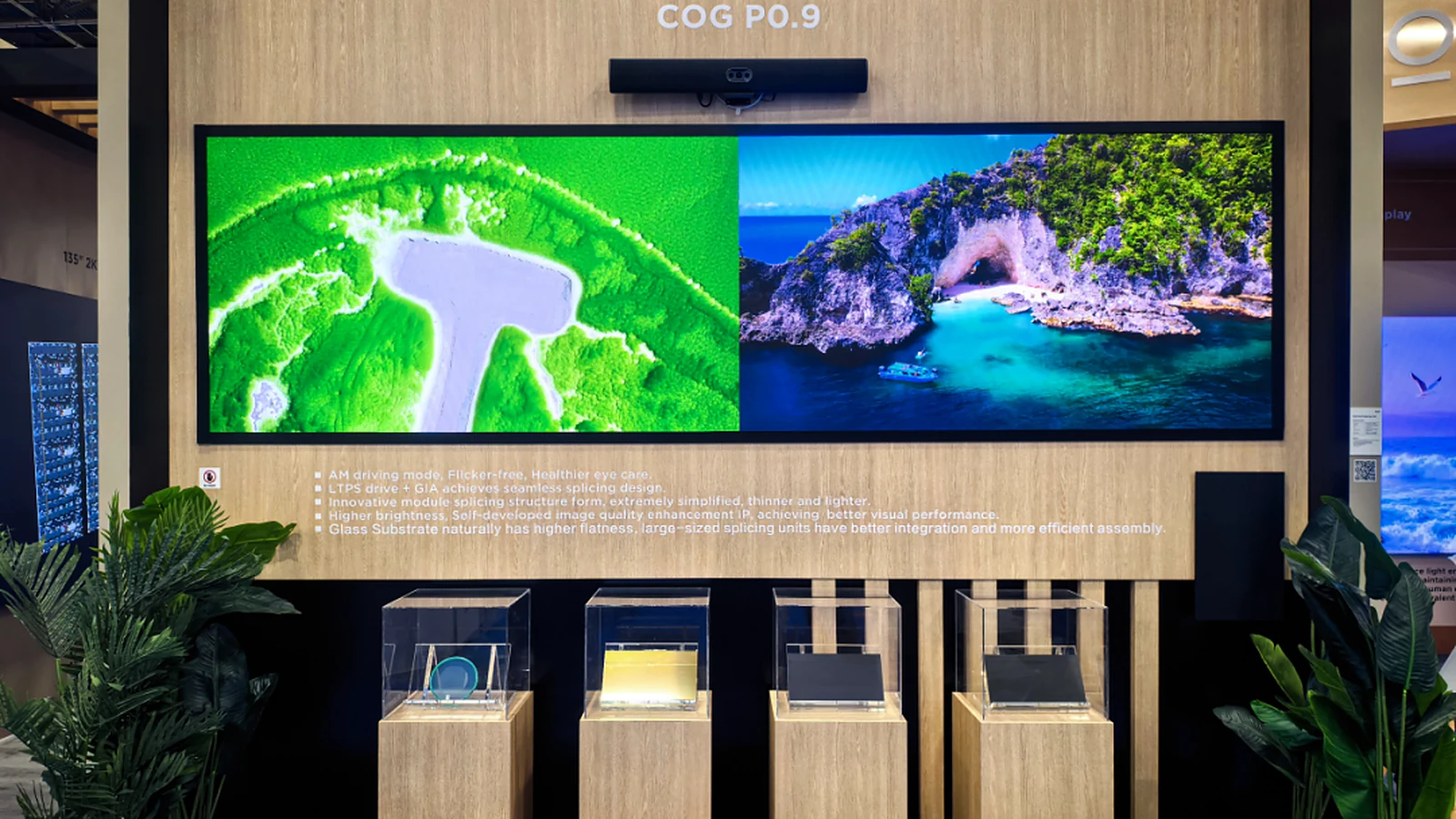
!BOE COG P0.9 Glass Substrate LED Display at InfoComm 2026
What Did COG P0.9 Win, and Why Is It Significant?
BOE MLED's COG P0.9 won the Best of Show award at InfoComm 2026, an AV industry event held in Las Vegas. The significance lies not in the award title itself, but in the product's recognition amidst major LED manufacturers seeking to integrate Micro-LED, COB, COG, and smart meeting room systems into the professional display market. For buyers in Vietnam, this is a credible signal to include COG in their evaluation list, not a reason to skip technical due diligence.
BOE has a distinct advantage as the world's leading display panel manufacturer. When a company with such a strong panel foundation brings COG to InfoComm, the narrative shifts from merely changing LED module structure to applying the glass substrate manufacturing logic of the display industry to fine-pitch LED displays. Previously, BOE also showcased a 205-inch ultra-thin HDR Micro-LED COG display at SID 2026, indicating that COG is part of the company's broader roadmap, rather than an isolated demo model.
This award news should be interpreted on two levels. The first level concerns the product: COG P0.9 boasts 3000 nits HDR brightness, a thickness of only about 5–6mm, is approximately 25% lighter per m², and significantly reduces the number of modules for a 162-inch configuration. The second level concerns strategy: BOE is positioning COG P0.9 as a platform for system solutions, integrating Micro-LED displays with Video Bars for smart meeting rooms. This approach differs from selling LED displays solely by square meter or pixel pitch.
How Does a Glass Substrate COG Display Differ from a Standard LED Display?
COG stands for Chip-on-Glass, where Micro-LED chips are placed on an active-matrix glass substrate instead of a PCB. In traditional LED displays, the PCB serves as the familiar circuit board for mounting chips, wiring, and creating modules. With COG, the glass substrate becomes an integral part of the display structure, allowing for higher precision control of the circuitry. BOE emphasizes that glass substrates offer better control over line-width and line-spacing compared to PCBs, thus supporting smaller Micro-LED pitches.
This is crucial because as the pixel pitch decreases, mechanical and electrical deviations can more easily affect image uniformity. COG not only makes displays thinner; it changes the substrate material to accommodate higher pixel densities and a more seamless surface. With LTPS drive and GIA seamless technology, BOE aims for exceptional flatness and virtually invisible seams. These are critical criteria for close-viewing displays in executive boardrooms, control centers, or product showrooms.
It's important to distinguish COG from COB. COB typically involves placing chips on a PCB and then applying a protective coating to enhance surface durability, whereas COG places chips directly onto an active-matrix glass substrate. If you need to understand COB displays before comparing, the article What is a COB LED Display? provides a suitable starting point. For BOE, COG and COB are not mutually exclusive; they represent different product directions within the same MLED ecosystem.
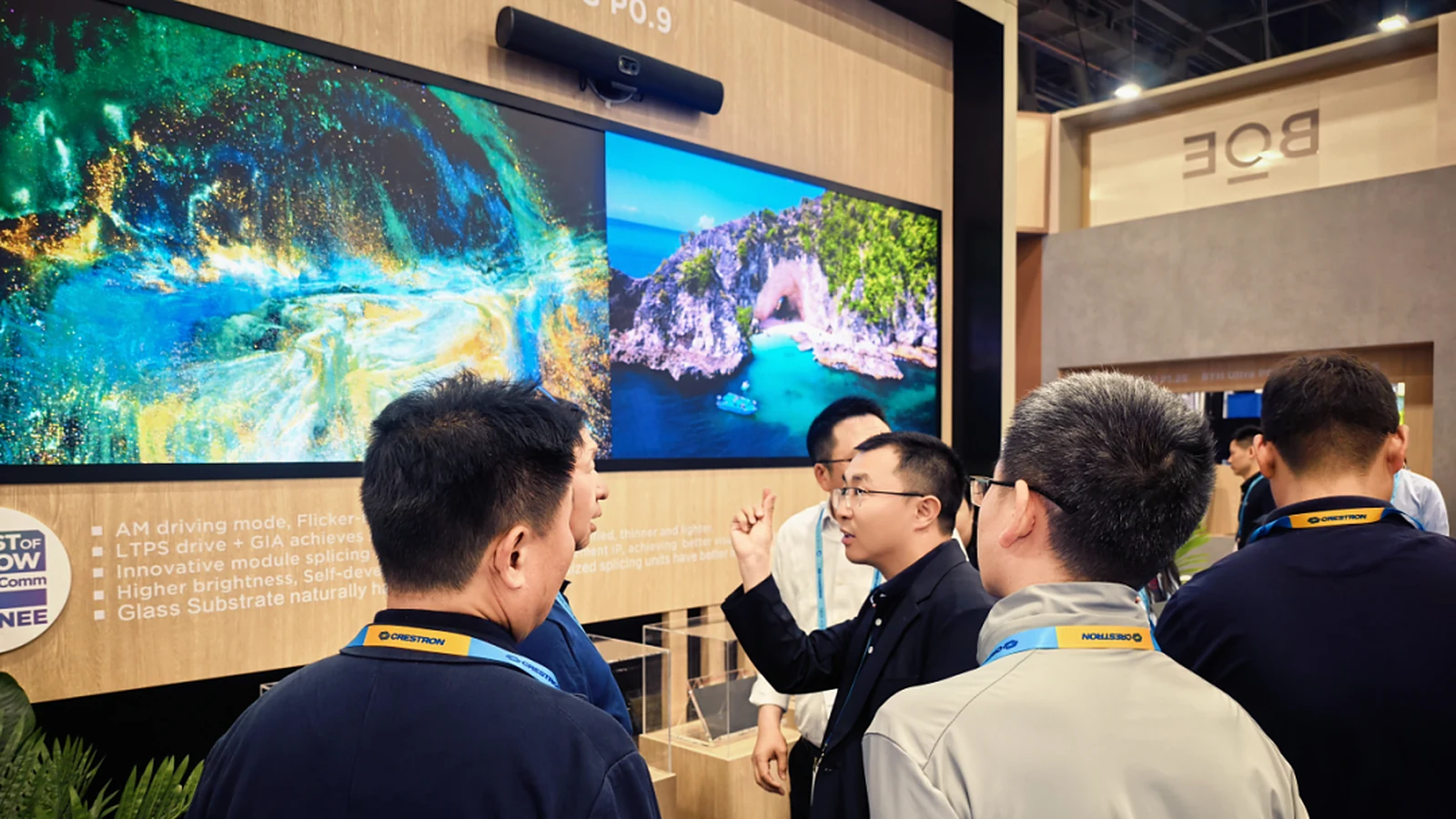
!BOE MLED Booth at InfoComm 2026

What Specifications of BOE COG P0.9 Stand Out?
BOE's published data for COG P0.9 focuses on four key areas: image quality, mechanics, installation, and visual experience. In terms of image quality, the display achieves 3000 nits HDR brightness, positioning BOE's product in the high-end category with strong luminance capabilities. Mechanically, its thickness of only about 5–6mm and a lightweight, hollow architecture make it approximately 25% lighter per m². For large-scale installations, reducing mechanical load is practically significant for framing, facades, maintenance, and transportation.
Installation specifications are also noteworthy. For a 162-inch display, BOE states that the number of modules has been reduced from 288 to 48, enabling installation five times faster. This type of data is valuable for system integrators, as installation time directly impacts labor costs, interior finishing schedules, and potential calibration errors. Fewer modules also generally simplify the processes of inspection, packaging, replacement, and acceptance, although actual project structures still need to be reviewed.
Regarding seamless display, BOE utilizes LTPS drive technology combined with GIA seamlessness to emphasize exceptional flatness and virtually invisible module seams. For fine-pitch LED displays, users often focus on the pixel pitch, but the flatness between modules and the perceived seam quality are the deciding factors for a truly premium close-viewing experience. Therefore, when demoing the BOE BYH-COG series, it's advisable to check performance with solid white, gray backgrounds, small text, fine lines, and slow-motion scenes.

Why Does BOE Claim Large Displays Are Eye-Friendly?
BOE describes the COG P0.9 as utilizing AM護眼 active-matrix drive, combined with blue light filtering and flicker reduction, to offer an eye-friendly large display experience. This statement should be understood in a technical and cautious sense: the display is designed to minimize common eye strain factors, not as an absolute medical guarantee. In high-end meeting rooms or command centers, users may view the screen for extended periods, making blue light, flicker, and image stability all impactful on operational comfort.
The active-matrix drive is a point BOE emphasizes because it controls pixels more proactively than the passive scanning structure common in many LED displays. When combined with a glass substrate, the system can achieve better light stability, with less vibration and flicker. This is particularly important for command centers, where maps, dashboards, surveillance camera feeds, and small text must be displayed continuously for long durations.
However, an eye-friendly experience is not solely attributable to COG. The set brightness level, room lighting, content background color, viewing distance, processor refresh rate, and calibration methods all influence the outcome. During acceptance testing, technical teams should use real-world content: video conferencing interfaces, data dashboards, videos, maps, and alternating bright and dark backgrounds. A display with high brightness like 3000 nits HDR still requires appropriate configuration for its intended environment, especially in enclosed meeting rooms or private cinemas.
What System Solution Do COG P0.9 and Video Bar Form?
A notable aspect of BOE's presentation at InfoComm 2026 is their focus beyond just panels. BOE positions the COG P0.9 Micro-LED combined with a Video Bar as a system solution for smart meeting rooms. The Video Bar uses a Qualcomm QCS8550 chip, supporting AI for framing and audio source localization. For business users, this means the display is not just a large visual surface but an integrated part of the collaboration experience: seeing, hearing, capturing speakers, and presenting content within the same space.
This strategy indicates BOE's shift from selling panels to selling integrated systems. This is a logical direction as high-end clients often prefer not to purchase disparate components and manage compatibility themselves. An executive meeting room requires a coordinated and stable system comprising a display, camera, microphone, signal processing, control interface, audio, and maintenance plan. If the manufacturer provides an integrated system from the outset, the design and acceptance process can be more streamlined.
For the Vietnamese market, this system-centric approach is particularly suitable for high-level meeting rooms, operational centers, corporate showrooms, and commercial complexes. Nevertheless, integration needs to be verified based on actual requirements: which meeting platform will be used, what are the signal sources, is recording necessary, how many seating positions are there, and does it need to connect with existing AV systems? For projects requiring more extensive signal processing, the knowledge base on What is PixelHue? helps procurement teams evaluate image processing capabilities independently of the panel discussion.
What Does COG vs. Samsung The Wall Mean for Vietnam?
BOE COG P0.9 is positioned in direct comparison with Samsung The Wall, as both leverage glass substrates for high-end Micro-LED displays. This is a market-relevant comparison: while the Micro-LED glass substrate display segment was previously dominated by a few ultra-premium brands, BOE's push for COG suggests that choices may expand. However, a proper comparison should not stop at the brand; it requires examining the glass substrate structure, flatness, service, certifications, warranty, and on-site deployment capabilities.
For Vietnam, the most significant impact is on how developers create their shortlists. Instead of merely asking "What is the price of a P0.9 display?", high-end projects should inquire about the display substrate, whether chips are placed on PCB or glass, if the display is suitable for close viewing, if installation reduces module risks, and if the system effectively handles real-world content. COG compels the market to elevate evaluation criteria from pixel pitch to the overall experience: image quality, mechanics, flatness, visual comfort, and system integration.
This is also why BOE's product lines should be considered side-by-side. BOE BYH Ultra COB still has its role for applications requiring COB on PCB, 2000 nits brightness, and a 20,000:1 ambient contrast ratio for brightly lit rooms. Glass substrate COG, conversely, excels in thinness, lightness, flatness, eye comfort, and the future of Micro-LED or transparent displays. At Luxwave, the appropriate consultation approach is to select based on the specific use case, rather than forcing all projects into a single technology.
Conclusion: How Should COG P0.9 Be Interpreted as a Technological Signal?
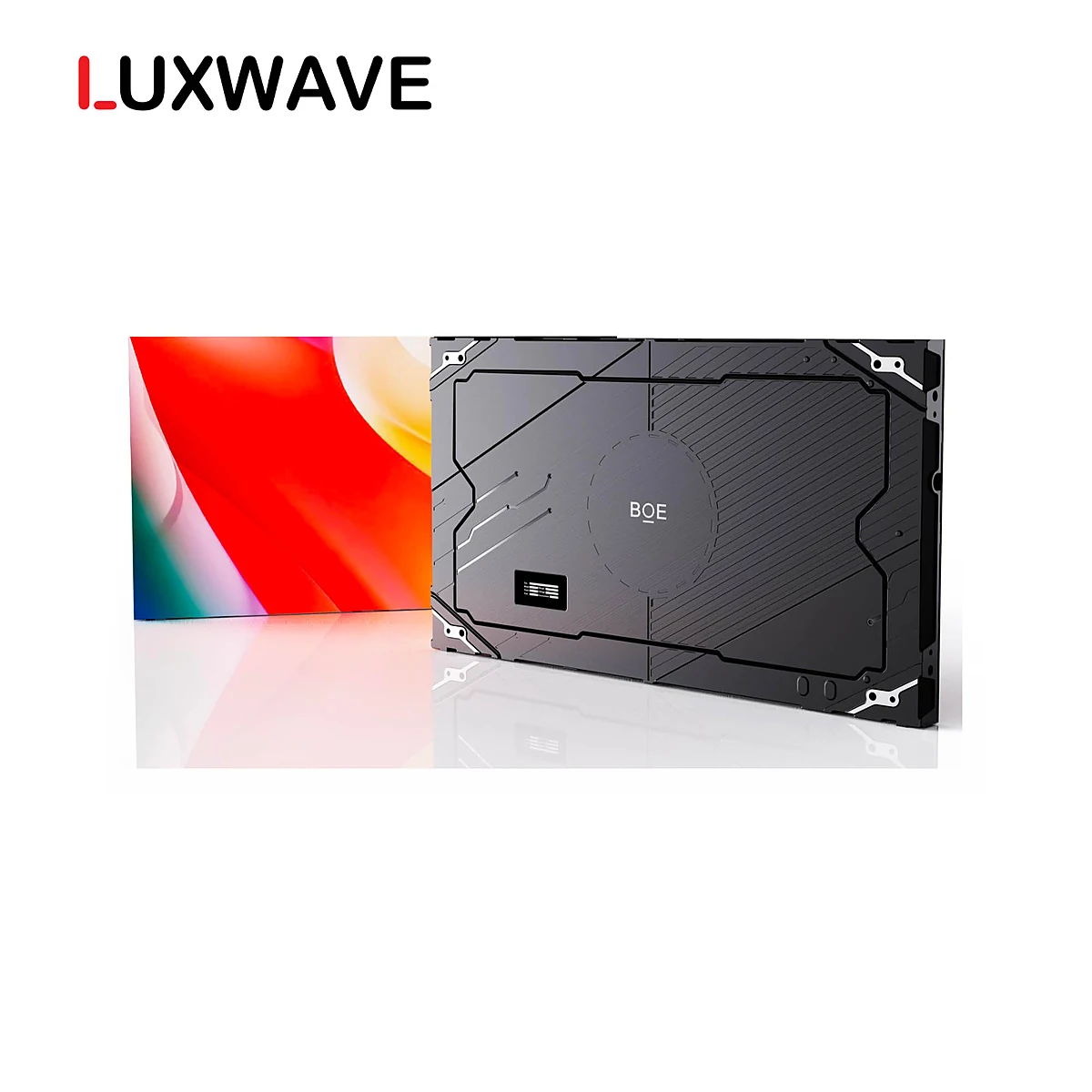
The Best of Show award at InfoComm 2026 for BOE MLED COG P0.9 serves as a reliable indicator for the direction of glass substrate LED displays. It confirms that COG has moved beyond being a concept in the Micro-LED roadmap to become a product showcased in the professional AV context. Key highlights include the active-matrix glass substrate, 3000 nits HDR brightness, a display thickness of approximately 5–6mm, a weight reduction of about 25% per m², a significantly reduced module count for a 162-inch configuration, and its positioning as a system solution with Video Bars.
For Vietnamese customers, the value of this news lies not in chasing the latest technology, but in having an additional benchmark for high-end projects. Meeting rooms, command centers, private cinemas, commercial complexes, and premium residences can consider COG P0.9 as a viable option requiring evaluation if prioritizing thin, flat, eye-friendly, and seamless large displays. Concurrently, projects should still compare COG with COB, SMD, and signal processing options based on actual room conditions.
BOE is demonstrating a clear strategy: leveraging its display panel capabilities to bring fine-pitch LED displays closer to panel manufacturing logic, and then packaging them into system solutions. This is what gives this Best of Show news value beyond just an award. To fully understand BOE's ecosystem in Vietnam, it is recommended to read the BOE MLED page and the foundational article on BOE BYH-COG Glass Substrate LED Displays before configuring technical specifications.
Pitfalls
Common mistakes
- Viewing the Best of Show award as a commitment suitable for all projects; in reality, viewing distance, room lighting, content, and signal infrastructure must still be assessed.
- Confusing COG with COB, as both belong to the high-end LED category; COG uses an active-matrix glass substrate, while COB typically places chips on a PCB and applies a protective coating.
- Focusing solely on 3000 nits HDR brightness while overlooking eye comfort, flicker reduction, flatness, module count, and installation processes.
- Comparing COG and BYH Ultra as mutually exclusive options; the two lines are complementary, with one excelling in thin-flat glass substrates and the other in high-brightness COB for bright rooms.
FAQ
Frequently asked questions
What award did BOE COG P0.9 win at InfoComm 2026?
BOE MLED COG P0.9 on a glass substrate Micro-LED won the Best of Show award at InfoComm 2026 in Las Vegas. This is a credible signal for the COG direction, as the award recognizes a product showcased at a major professional AV event, but the final display selection should still be based on specific project assessments.
How does COG differ from conventional PCB LED displays?
COG stands for Chip-on-Glass, meaning Micro-LED chips are placed on an active-matrix glass substrate instead of a PCB. The glass substrate offers more precise control over line-width and line-spacing than PCB, making it suitable for smaller Micro-LED pitches. Its main advantages are thinness, flatness, seamlessness, and strong potential for next-generation display technology.
Why does BOE emphasize eye comfort?
BOE states that COG P0.9 uses AM護眼 active-matrix drive with blue light filtering and flicker reduction. For large displays in meeting rooms, command centers, or private cinemas, viewers often look at the screen for extended periods at close distances. Therefore, light stability and visual comfort are important criteria, not just brightness.
Does COG P0.9 replace BYH Ultra COB?
COG P0.9 should not be seen as a replacement for BYH Ultra COB in all situations. Glass substrate COG excels in thinness, lightness, flatness, and eye comfort, aligning with the Micro-LED roadmap. BYH Ultra COB on PCB is superior in 2000 nits brightness and a 20,000:1 ambient contrast ratio for bright rooms. The two product lines are complementary based on the use case.
What is the role of the Video Bar in BOE's solution?
BOE positions the COG P0.9 Micro-LED combined with a Video Bar as a smart meeting room solution. The Video Bar features a Qualcomm QCS8550 chip, supporting AI for framing and audio source localization. The significance lies in BOE's shift from selling individual display panels to offering integrated systems for collaboration, presentation, and meetings.
Which Vietnamese projects should consider COG P0.9?
Projects that should consider COG P0.9 include high-end meeting rooms, command centers, private cinemas, commercial complexes, and premium home spaces. This segment requires large displays with fine images, flat surfaces, and long operational periods. However, room lighting, content, maintenance, and the video processor must be evaluated before finalizing the configuration.
References
- 1.ManufacturerBOE Technology Group — Group & MLED Division Introduction
- 2.NewsInfoComm — Best of Show 2026 Award
- 3.StandardSID Display Week — Micro-LED / Glass Substrate (Chip-on-Glass)
- 4.ManufacturerBOE MLED — COG Wins Best of Show InfoComm 2026
- 5.ManufacturerBOE MLED at ISE 2026 and InfoComm 2026
- 6.ResearchCOG/Micro-LED Technical Overview