

InfoComm 2026 took place from June 17-19, 2026, at the Las Vegas Convention Center, USA, featuring over 750 exhibitors and more than 130 Chinese companies. A quick look around the exhibition floor suggested Micro-LED was ubiquitous: Sony presented Crystal LED UNIFY, Absen discussed the M54, LG showcased Magnit, Leyard launched TruMicro, and BOE announced its COG P0.9 MicroLED combined with a Video Bar. However, for Vietnamese investors, the crucial questions are not "Is Micro-LED available?" but rather "Which configurations can be purchased, can the price be justified to the investment committee, and who provides after-sales warranty?"
This article synthesizes data from AVNetwork, Sports Video Group, and 新浪科技/Sina, contextualizing it for Vietnamese projects. Luxwave does not view Micro-LED as an immediate purchase invitation. We categorize it into three tiers: demonstration products, early commercializable all-in-one products, and the more practical COB/MiP platforms for most B2B budgets in 2026.
!High-end video wall LED displays at InfoComm 2026
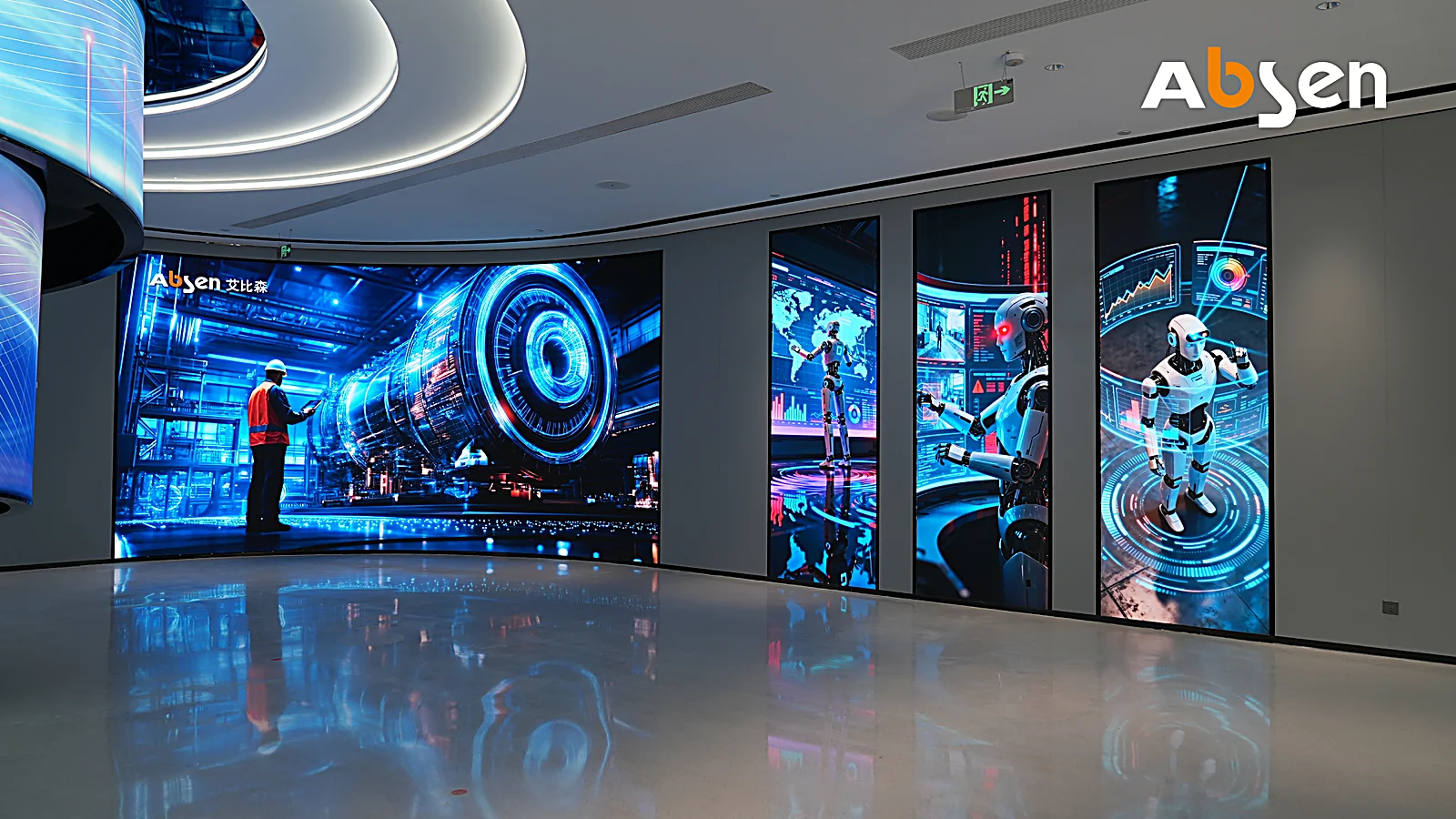
What's Truly New with Micro-LED at InfoComm 2026?
Micro-LED at InfoComm 2026 is no longer just a distant concept on a technology slide; many brands have materialized it into more concrete product forms. According to AVNetwork, Sony introduced the 135-inch all-in-one dvLED Crystal LED UNIFY, while also continuing to offer the Crystal LED S Series and BRAVIA BZ-P within its professional display ecosystem. Absen demonstrated the M54, a 54-inch 1080P Micro-LED display, offering plug-and-play connectivity via standard HDMI cables, aiming for a user experience closer to LCD. LG emphasized Micro LED, DVLED Magnit, and its cloud management platform.
The innovation lies in the packaging of the user experience. Instead of asking clients to envision a complex LED wall, brands are integrating Micro-LED into "buy-as-an-appliance" configurations: fixed sizes, clear installation processes, familiar HDMI signals, management software, and accompanying warranty packages. This approach is highly significant for meeting rooms, boardrooms, and high-end showrooms where users desire a seamless large display without the operational complexity of a stage system.
However, its prominent presence at InfoComm does not equate to mass-market availability. All-in-one products like the Sony UNIFY or Absen M54 are more accessible due to their pre-packaged nature, but true Micro-LED chips remain expensive, difficult to customize or scale, and require market-specific commercial terms. For Vietnamese projects, the first question should not be "Is Micro-LED available?" but rather "Is there an official quotation, delivery time, spare parts availability, and a warranty process in Vietnam for that specific model?"
Why Distinguish Between Demos and Commercially Available Products?
On the exhibition floor, a visually stunning Micro-LED display might merely prove technological capability, not its suitability for commercial budgets. InfoComm serves as a platform for brands to showcase flagship products, prototypes, lab samples, and configurations for virtual production or specialized clients. While these configurations may be real and deliver exceptional image quality, they differ from products available for small-batch orders, timely delivery, maintenance with readily available parts, and project acceptance in Vietnam.
This is a common point of confusion for investors when reading exhibition news. A "Micro-LED" label can encompass various realities: true micro-LED chips, high-density MiP, small-pitch COB, or an all-in-one system under a proprietary brand name. The articles What is MiP Micro LED in Package and Mini-LED vs. Micro-LED further explain these distinctions. In quotations, the technology label is insufficient; model number, packaging structure, module size, alternative solutions, and warranty conditions are essential.
!BOE MLED/Micro-LED Display at InfoComm 2026
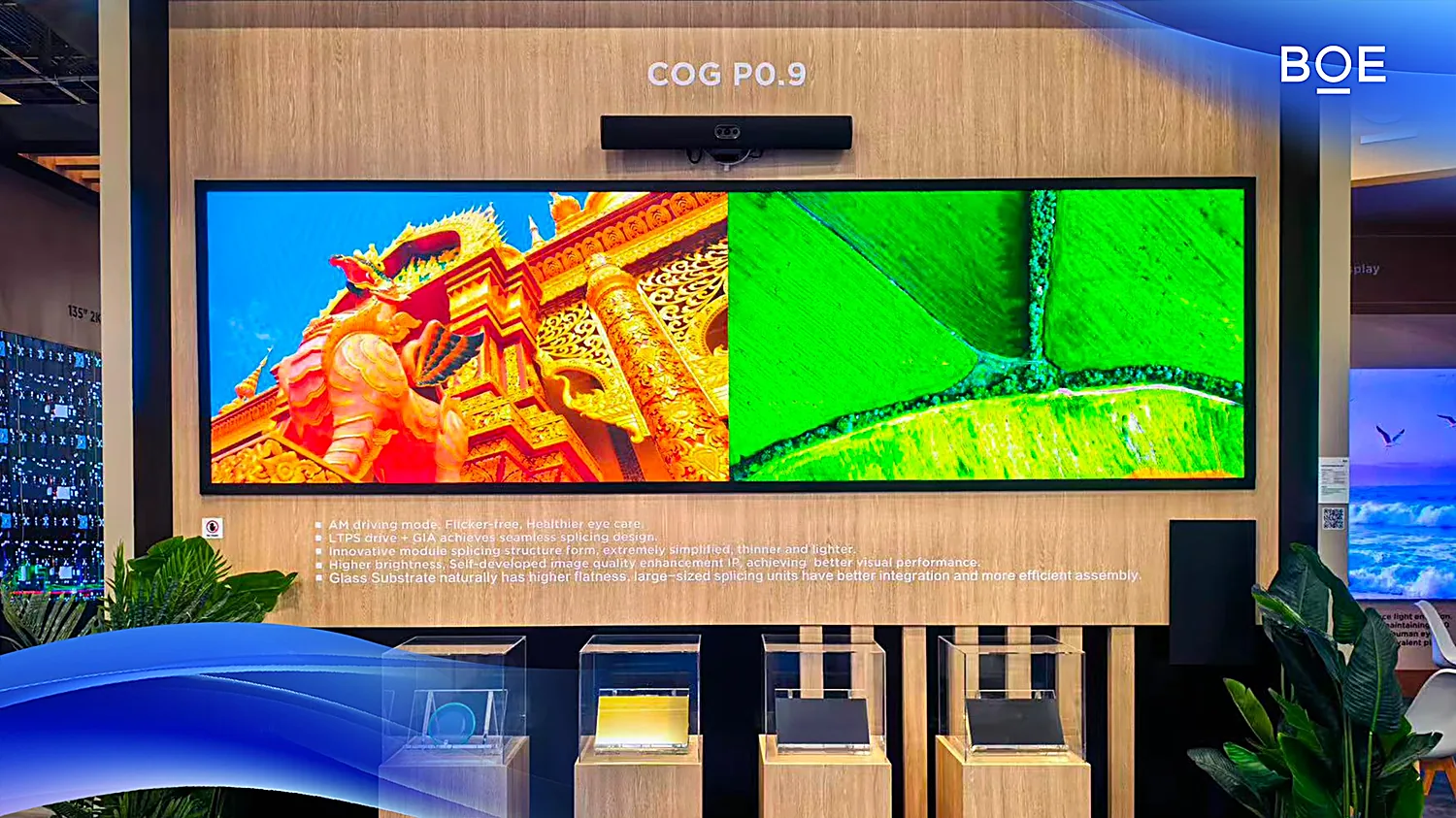
According to 新浪科技/Sina, BOE launched its COG P0.9 MicroLED on glass substrate and an integrated Video Bar for meetings at InfoComm 2026. This data is noteworthy as it connects two trends: glass substrate for high density and all-in-one solutions for meeting rooms. However, for actual projects, it's still necessary to inquire about available commercial configurations, pricing per square meter, minimum order quantities, and lead times. "Launch" signals technological advancement; "purchasable, installable, and serviceable" are the criteria for budgeting.
For Micro-LED in 2026, the correct question is not whether a manufacturer can demonstrate it, but whether clients can purchase a configuration with sufficiently clear pricing, lead time, and warranty.

Which Vietnamese Clients Benefit from All-in-One Micro-LED?
All-in-one Micro-LED represents the most promising category for Vietnam due to its simplified procurement process. The 135-inch Sony Crystal LED UNIFY and the 54-inch Absen M54 1080P demonstrate an approach distinct from traditional video walls: the display is packaged as a complete system with standardized size, signal input, and installation procedures. The plug-and-play capability of the Absen M54 via standard HDMI cables is particularly noteworthy, bringing its operational experience closer to LCD than customizable LED cabinets.
Ideal clients include executive boardrooms, technology showrooms, experience centers, product demo rooms, and certain exhibition showrooms requiring a "monolithic, quickly installable, high-image-quality" display. They may not prioritize centimeter-level size customization but seek a complete product with minimal integration risks and stable user experience. For businesses accustomed to purchasing large commercial LCDs, all-in-one Micro-LED offers a logical bridge to seamless LED displays.
However, all-in-one solutions have limitations. They are not optimal for projects requiring very large areas, specific aspect ratios, tight budgets, or flexible future expansion. In such cases, COB or fine-pitch SMD video walls remain more balanced options. For meeting and training rooms, COB configurations like BOE COB P0.9 or BOE BYH012 COB P1.25 are often sufficiently dense, easier to maintain, and offer more predictable pricing.
How Expensive is Micro-LED, and How Should Quotes Be Requested?
It is inadvisable to settle on a general price for Micro-LED without specifying the model, size, system architecture, and commercial terms. More reliable data is qualitative: true Micro-LED chips remain in the very high-cost category, minimum orders are typically large, lead times require verification, and warranty costs must be factored in from the outset. Most "Micro-LED" products encountered in commercial projects in 2026 will likely be MiP or high-density COB solutions, offering more practical manufacturing and replacement processes.
When requesting a quote, start with the price per square meter or the price for the complete system, then proceed to five key information areas: minimum order quantity, lead time, spare parts, warranty conditions, and post-installation calibration responsibilities. If a supplier can only provide exhibition images or technology names without addressing these points, the configuration is not solid enough for budgeting. For Luxwave, a proper quote should clarify whether the client is purchasing a commercial product or a custom configuration.
Costs should also be weighed against actual utility value. A corporate boardroom might justify a premium for a high-end all-in-one display due to its image quality, symbolic value, and stable meeting experience. However, a retail store, reception area, or standard training room might achieve better results with mature fine-pitch COB or SMD technology. For projects requiring local Vietnamese references, the Optupus International Library case study demonstrates that stable commercial technology is often as important as chip novelty.
Why COB P0.9 Remains the Balanced Choice for 2026?
COB P0.9 and above continue to offer a more balanced solution for most Vietnamese projects in 2026, having moved beyond the demonstration phase. While not pure Micro-LED in the sense of bare micro-chips, COB addresses the critical concerns of close-viewing applications: a flat surface, superior durability compared to SMD at small pitches, fine image quality, and clearer commercial deployment potential. The article What is a COB LED Display can serve as a technical foundation before comparing quotes.
For BOE MLED, COB series like the BOE COB P0.9 and BOE BYH012 COB P1.25 are suitable for high-end meeting rooms, small studios, showrooms, training centers, and certain control rooms. They may not offer the "cutting-edge" effect of flagship Micro-LEDs but are easier to justify in investment proposals: the focus is on viewing distance resolution, surface durability, warranty service, and total cost of ownership. For many procurement committees, these are stronger arguments than the technology name alone.
This does not diminish the value of Micro-LED. Leyard's TruMicro with 20um Micro-LED sub-pixels, BOE's emphasis on COG P0.9 MicroLED, and Sony and Absen's push for all-in-one solutions all signal a clear long-term direction. However, for projects requiring deployment in 2026, the logical choice is typically a commercial configuration first, followed by experimental technology. Investors might consider Micro-LED for upgrade plans or strategic demo rooms, while primary operational displays should rely on configurations with managed risks.
Conclusion: When to Buy, When to Wait?
Micro-LED at InfoComm 2026 has moved beyond the "just heard about it" phase into "products available for quotation." Sony Crystal LED UNIFY, Absen M54, LG Magnit, Leyard TruMicro, and BOE COG P0.9 MicroLED are strong indicators of rapid market progress. However, for Vietnam, the pragmatic conclusion is that Micro-LED should not yet be the default choice for all B2B projects. It suits premium client segments with clear visual objectives, ample budgets, and a willingness to undergo more rigorous due diligence.
If a business requires a display for meetings, showrooms, or experience centers in 2026, consider a three-tiered approach. The safe tier includes commercial COB solutions from brands with established distribution and warranty channels. The experimental tier involves MiP or Micro-LED configurations that suppliers can substantiate with specific models, pricing, and lead times. The flagship tier comprises all-in-one Micro-LED or custom-designed systems for iconic spaces. This segmentation helps prevent budgets from being swayed by exhibition hype.
As an authorized distributor, Luxwave prioritizes post-handover operational considerations: Is the display suitable for the viewing distance? Is it easy for daily use? Are spare parts replaceable? Is the total cost transparent? Trends from InfoComm should be evaluated alongside lessons from ISLE 2026 and local warranty capabilities in Vietnam. Only when the four key questions—price/m², minimum order quantity, lead time, and warranty—are clearly answered does Micro-LED truly transition from the exhibition floor to commercial projects.
Pitfalls
Common mistakes
- Equating all Micro-LED labels as the same product type — many commercially available products are actually MiP or high-density COB, not true bare Micro-LED chips in the technical sense.
- Using InfoComm demo units as direct price references — lab, virtual production, or flagship configurations often have large minimum order quantities and specific lead times.
- Inquiring only about screen size without asking for price per square meter, system architecture, spare parts, and warranty conditions in Vietnam.
- Choosing Micro-LED for standard meeting rooms when COB P0.9 or P1.25 adequately meets viewing distance, content, and budget requirements more effectively.
FAQ
Frequently asked questions
Is Micro-LED available for commercial projects in Vietnam yet?
It is available in certain high-end or all-in-one configurations, but Micro-LED should not yet be considered a mainstream option. For Vietnamese projects in 2026, investors must clarify the commercial model, price/m², minimum order quantity, lead time, and warranty. If the need is for standard meeting rooms, showrooms, or boardrooms, COB P0.9 or P1.25 are often easier to budget for.
How does an all-in-one Micro-LED display differ from a cabinet-assembled Micro-LED screen?
An all-in-one Micro-LED display is pre-packaged as a complete system, typically including the panel, signal processing, frame, and standardized installation process. Cabinet-assembled screens offer more flexibility in size but require more complex design, calibration, and maintenance. Therefore, all-in-one solutions are better suited for boardrooms or showrooms aiming for rapid deployment.
What is the difference between true Micro-LED, MiP, and COB?
True Micro-LED uses self-emissive micro-chips as direct pixels, without relying on traditional LED packages. MiP encapsulates micro-chips into very small packages for easier manufacturing and repair, while COB applies chips directly under a protective layer. When requesting quotes, it's essential to ask suppliers to specify the packaging technology to avoid confusion with brand names.
Why is Micro-LED still expensive despite its presence at InfoComm 2026?
Micro-LED remains expensive due to the complex processes involved in creating, sorting, transferring, repairing micro-chips, and color calibration, which are more intricate than for mainstream commercial LEDs. Beyond panel costs, projects also incur expenses for processing systems, spare parts, installation, and warranty. As production volume increases, prices may decrease, but cautious budgeting is still necessary for 2026.
Which projects in Vietnam should consider Micro-LED first?
Micro-LED should be prioritized for high-tech showrooms, corporate boardrooms, experience centers, R&D labs, virtual production, or spaces demanding extremely high image quality with a substantial budget. For standard corporate meeting rooms, retail, or training facilities, commercial COB solutions are generally more practical due to easier warranty and cost control.
What should be asked when receiving a Micro-LED quote?
At a minimum, investors should inquire about five key areas: the actual packaging technology, price per square meter or per system, minimum order quantity, lead time, and the warranty policy in Vietnam. Additionally, ask about spare parts, color calibration procedures, power requirements, and the distributor's responsibility for pixel defects.
References
- 1.NewsAVNetwork — Sony InfoComm 2026 Preview
- 2.NewsSports Video Group — InfoComm 2026 Media Day
- 3.News新浪科技 — BOE InfoComm 2026
- 4.ManufacturerBOE — MLED