

InfoComm 2026, held from June 17-19, 2026, at the Las Vegas Convention Center, USA, is a significant event. Among over 750 exhibitors and more than 130 Chinese companies, with themes like Agentic AI, IPMX, MiP/Micro-LED, the transparent LED display segment carves out its niche. It competes not on highest resolution, but on transforming glass surfaces, walkways, and experience floors into dynamic media layers.
This article synthesizes information from 新浪科技/Sina regarding BOE BTX-TP, Leyard, and 芯映光电, contextualizing it for the Vietnamese market. For Luxwave, the crucial questions are not about which concept garners the most attention at a booth, but when such technology will arrive in Vietnam, which projects it suits, and how to estimate costs to manage client expectations between transparent and opaque LED displays.
!Leyard's booth featuring creative LED display concepts at InfoComm 2026
What Direction is Transparent LED Taking, as Seen at InfoComm 2026?
Transparent LED displays at InfoComm 2026 signal the display industry's expansion beyond traditional flat screens into architectural surfaces and commercial experiences. Instead of solely focusing on screen size or pixel pitch, booths posed new questions: Can content appear on glass while maintaining visibility through it? Can it be viewed from both sides? Can it be integrated into interactive floors? For the Vietnamese market, this is a crucial signal for showrooms and exhibitions, high-end retail, and glass facades.
According to 新浪科技/Sina, InfoComm 2026 featured BOE's BTX-TP in the transparent LED category, while Leyard debuted concepts for transparent, double-sided, and floor LED displays. The common thread among these innovations is that they don't replace opaque LED screens entirely but rather open up new display opportunities: glass doors, lobbies, walkways, photo zones, display counters, and facades. While ISLE 2026 emphasized the widespread adoption of Chinese technology, InfoComm showcased how these technologies are packaged for the AV and premium commercial experience markets.
For distributors, the post-exhibition challenge is to filter concepts from deployable configurations. An impressive transparent display at a booth only becomes a viable project with sufficient data on transparency, weight, mounting, control systems, backlighting, and suitable content. This is why Luxwave consistently views transparent LED as a design layer within the overall space, not an independent device that can be placed anywhere effectively.
What Does BOE BTX-TP Say About the New Generation of Transparent LED?
BOE BTX-TP exemplifies the commercialization trend of transparent LED displays at InfoComm 2026. According to 新浪科技/Sina, this model boasts an ultra-slim 68mm cabinet, weighs 8kg, and offers a maximum transparency of 72%. These specifications indicate a design focus not on creating an ultra-sharp opaque screen, but on minimizing obstruction on the glass surface: slimmer to occupy less space, lighter for easier structural calculations, and higher transparency for continued visibility through showrooms or storefronts.
!Thin BOE screen displaying vibrant content
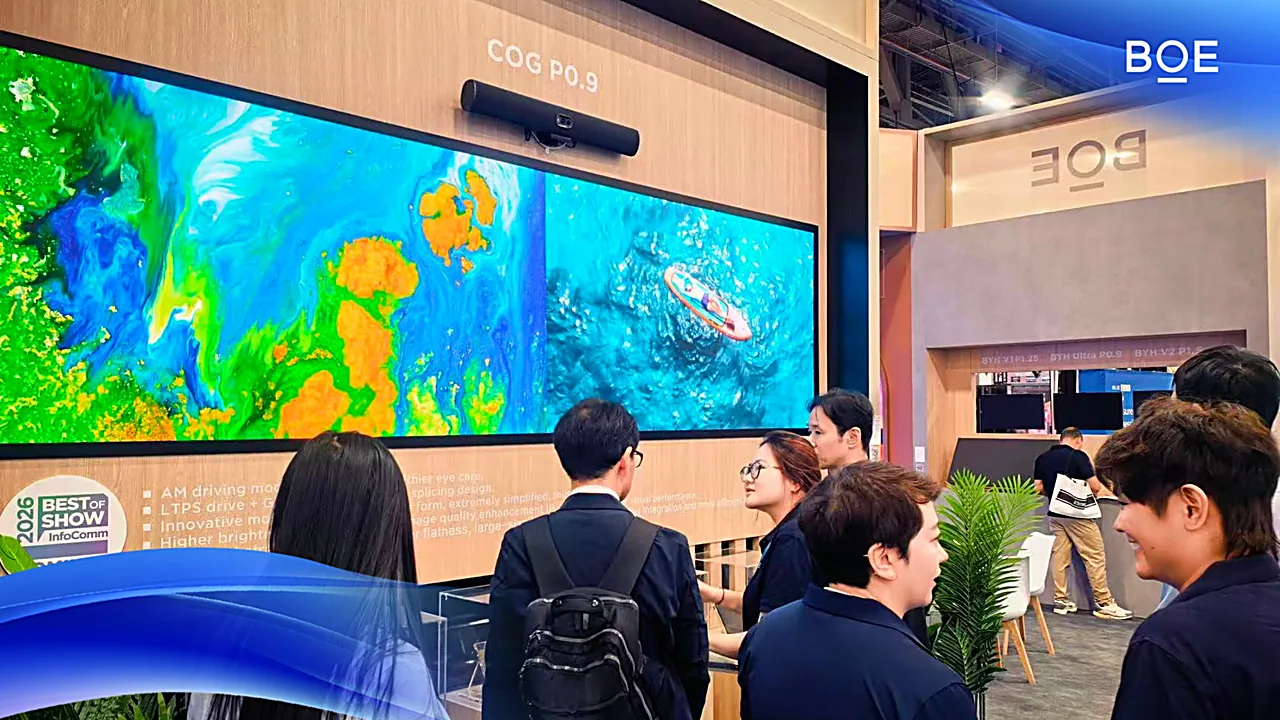
Scenarios presented for BOE BTX-TP include retail glass doors and automotive showrooms—places where customers need to see the actual products behind the glass. In the retail sector, transparent LED can display motion graphics, campaign messages, or product visuals without turning the store into a solid wall. For automotive showrooms, the glass display can serve as a backdrop for exhibited vehicles while maintaining spatial depth and natural light.
BOE also mentioned IoT digital signage matrices for windows and remotely controlled information boards. For the Vietnamese market, this detail is as noteworthy as the panels themselves, as many retail chains and showrooms require scheduled content updates, template changes for campaigns, and remote status monitoring. A transparent LED system that is visually striking but difficult to update will quickly lose its operational value within months.

How Does Leyard Expand Concepts for Transparent, Double-Sided, and Floor LED?
Leyard at InfoComm 2026 pushed the boundaries of creative LED beyond single panes of glass. According to 新浪科技/Sina, the company debuted concepts for transparent, double-sided, and floor LED displays. These three categories serve a common logic: modern commercial spaces no longer have a single fixed viewing direction like a conference room; instead, they involve people passing through, pausing, recording videos, and viewing from both inside and outside. Displays, therefore, must become integral to the spatial journey.
Double-sided LED is suitable for high-traffic areas with two-way flow, such as mall entrances, hotel corridors, exhibition booths, or suspended signs in atriums. Instead of mechanically mounting two screens back-to-back, the double-sided concept suggests a more integrated solution for content viewed from both directions. Floor LED opens up another category of experiences: pathways, interactive zones, small stages, photo areas, or focal points in hospitality.
However, the more creative the LED concept, the earlier it needs to be integrated into the design. A floor display requires calculations for load capacity, friction, maintenance, and content viewed from above. A double-sided display needs consideration for light direction, viewing angles, heat, and content synchronization. A transparent display requires assessment of the background and glass reflections. Therefore, for Vietnamese projects, Luxwave often recommends incorporating creative LED during the architectural concept or interior design phase, rather than adding it as a decorative element at the project's end.
Transparent LED displays are most effective when serving as a visual effect layer on glass; forcing them to be primary content screens means paying for transparency while being disappointed by the lack of clarity.
Can Internal-IP and MiP Technologies Make Transparent Displays Smoother?
The transparent LED segment at InfoComm 2026 included not only complete panels but also signals from component chains. According to 新浪科技/Sina, 芯映光电 introduced an internal-IP transparent solution, the SY-ADBIC2121-T, focusing on uniformity and signal transmission after a break point, alongside the SY-AMBIC1010-P, a full-flip MiP internal-IP type supporting P2 and below. This data indicates the industry's effort to maintain high transparency while improving image quality, especially in configurations requiring smaller pixel pitches.
From a technical standpoint, transparent displays inherently face a conflict: achieving transparency requires gaps, while a smooth image demands higher pixel density. MiP and internal-IP solutions can optimize pixel placement, control, and protection within limited spaces, but they do not eliminate the trade-off principle. Even with support for P2 and below, investors must still consider: viewing distance, whether the content is large-scale effects or small text, and the brightness of the background.
This is where the distinction between technological signals and purchasing decisions becomes important. MiP in transparent LED represents a promising area for improvement, but cost estimations for 2026 should still be based on commercial configurations, actual samples, and warranty conditions in Vietnam. If a project requires genuinely smooth images at close distances, opaque LED or COB displays offer clearer advantages. For glass-based effects, transparent lines like Muxwave M Series or Muxwave S Series are the appropriate options for comparison.
Which Applications in Vietnam Should Consider Transparent LED?
In Vietnam, transparent LED is most suitable for spaces where the glass surface is integral to the brand experience: automotive showrooms, high-end stores, hotel lobbies, exhibition booths, and building facades. These locations aim to attract attention from afar, create a modern ambiance, and maintain visual openness. When used correctly, transparent displays allow dynamic content to appear on glass while customers can still see the products, interiors, or activities behind it.
In exhibition showrooms, transparent LED can serve as a welcome layer, a product launch effect, or a moving backdrop before the display area. For retail, it suits seasonal campaigns, synchronizing with information boards and IoT digital signage for rapid content changes. In hotels and resorts, transparent displays in lobbies can create focal points without obscuring the architecture. For facades, it is ideal when building owners want to preserve the building's light and views.
A practical consideration is that transparent projects often require custom content. Videos with excessive detail, small text, or complex bright backgrounds will not perform well. Content should feature large areas, clear motion, good contrast, and utilize negative space. Experience from opaque LED projects like Ecopark P2.5 indoor shows that the right configuration is only half the equation; the other half involves content, viewing distance, and how users interact with the display daily.
Why Not Expect Transparent LED to Be Like Opaque LED Screens?
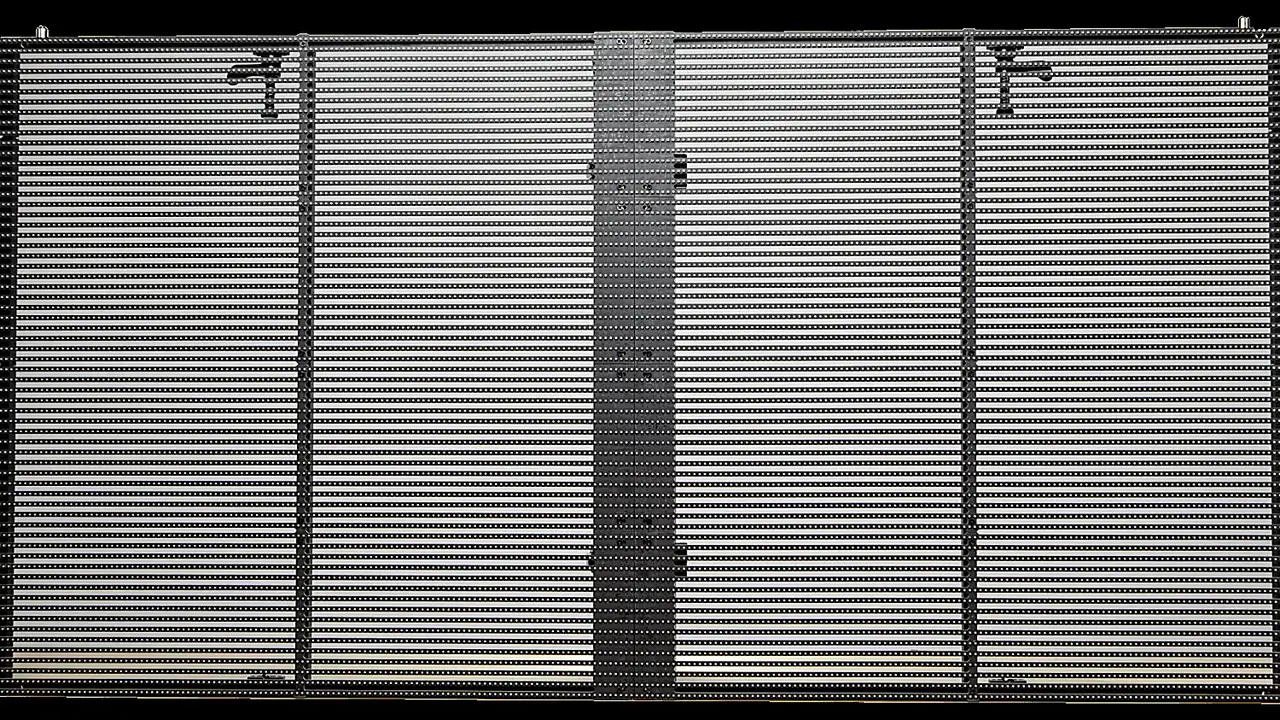
The principle of transparent LED displays involves using sparse pixel density and gaps between LED strips to allow light and vision to pass through. This principle offers advantages like thinness, openness, and non-obstruction of glass, but also limitations: perceived brightness and clarity are typically lower than opaque LED screens of the same size. Therefore, transparent LED should be viewed as a visual effect layer or an architectural communication medium, not a primary screen for content requiring close reading.
A common mistake is treating high transparency ratios as an absolute winning metric. Higher transparency often means less illuminated surface area, potentially reducing image smoothness and "density." Conversely, increasing pixel density for a smoother image reduces transparency, diminishing the glass's advantage. Investors should request demos with actual content, at realistic viewing distances, and under lighting conditions similar to the installation site, rather than relying solely on booth videos.
For spaces demanding high image quality, compare directly with opaque LED screens. A conference room, control center, or data presentation area requires clarity, contrast, and stability different from a retail storefront. The article What is a Transparent LED Screen explains the principles in more detail, while What is a 3D LED Screen without Glasses helps differentiate transparent LED from other creative effects often grouped together in brochures.
Conclusion: Who Should Follow This Concept Segment After InfoComm 2026?
Following InfoComm 2026, the groups that should monitor transparent and creative LED are investors with glass spaces, clear customer traffic, and a need to create brand highlights: showrooms, high-end retail, hotels, shopping malls, office buildings, and exhibition booths. Groups that should not prioritize them include conference rooms, classrooms, control centers, or areas requiring small text readability. For such spaces, opaque LED screens are still more likely to meet expectations for brightness, clarity, and content control.
From the perspective of an authorized distributor, Luxwave views the data from BOE, Leyard, and 芯映 at InfoComm as signals to prepare its portfolio, not as calls for immediate purchase. BOE BTX-TP indicates a trend towards slim, light, high-transparency panels; Leyard shows creative LED expanding into more surfaces; 芯映 suggests MiP and internal-IP components may improve smoothness in the future. Upon arrival in Vietnam, the questions remain: where to install, who is the audience, at what distance, what content, and how will it be operated?
For projects involving glass surfaces and clear communication objectives, Luxwave can advise on the Muxwave line as a transparent LED implementation option, while also considering the BOE MLED ecosystem and creative solutions from Leyard for more premium requirements. Accurate cost estimation involves clearly separating expenses for panels, structure, control, content, maintenance, and potential backlighting issues. When these factors are considered from the outset, transparent LED displays can become a worthwhile experiential layer, rather than just a visually appealing but difficult-to-approve effect.
Pitfalls
Common mistakes
- Expecting clarity like opaque LED screens: Transparent LED uses sparse pixel density and gaps for see-through capability, making it unsuitable as a primary screen for small text, data charts, or conference room presentations.
- Overlooking background lighting: Glass surfaces with intense sunlight, overly bright backgrounds, or strong reflections can reduce content contrast, even if transparency specs look impressive on the show floor.
- Choosing technology before context: Transparent, double-sided, or floor LED displays are only effective when the customer journey, viewing angles, and motion content are designed from the start.
- Forgetting the content control system: Retail glass points or showroom chains require remote management, broadcast scheduling, and status checks, not just panel installation followed by manual video playback.
FAQ
Frequently asked questions
Where is InfoComm 2026 taking place, and why does this article focus on transparent LED?
InfoComm 2026 is being held from June 17-19, 2026, at the Las Vegas Convention Center, USA. This year's event features over 750 exhibitors, including more than 130 Chinese companies showcasing MiP, Micro-LED, and transparent LED technologies. As Vietnam imports many devices from this supply chain, concepts presented at InfoComm offer early insights for upcoming showroom, retail, and facade projects in the country.
What is noteworthy about BOE BTX-TP at InfoComm 2026?
According to 新浪科技/Sina, BOE BTX-TP is a transparent LED display emphasizing three specifications: an ultra-slim 68mm cabinet, 8kg weight, and up to 72% transparency. The product is positioned for retail glass doors and automotive showrooms, where owners want to display dynamic content while maintaining visibility through the glass.
What innovative LED concepts did Leyard introduce?
According to 新浪科技/Sina, Leyard debuted concepts for transparent, double-sided, and floor LED displays at InfoComm 2026. These concepts go beyond traditional flat wall-mounted screens, targeting commercial spaces with multiple viewing points: glass surfaces, walkways, experience floors, and product demonstration areas.
Can transparent LED screens replace opaque LED screens?
Transparent LED screens should not replace opaque LED screens for primary content. Their principle involves sparse pixel density and gaps between LED strips to allow light passage, resulting in lower brightness and clarity compared to opaque screens. They are best suited as an effect layer on glass, not for displaying small text, meeting slides, or detailed data charts.
Which Vietnamese projects are suitable for transparent LED?
Suitable applications include glass surfaces in showrooms, high-end stores, hotel lobbies, exhibition booths, and building facades where maintaining visual openness is desired. Investors should consider transparent LED when the goal is visual impact while preserving transparency. For clarity, high brightness, or close-up content, opaque LED screens remain the more appropriate choice.
What role does Muxwave play in the transparent display segment?
Muxwave is a brand distributed by Luxwave for the transparent display segment, offering series like the M Series and S Series for various installation types. When consulting, Luxwave typically starts by assessing the glass surface, viewing distance, ambient light, and content operation strategy before finalizing the product line, rather than selecting a configuration based solely on an attractive transparency figure.
References