

What did InfoComm 2026 say about event rental LED screens?
InfoComm 2026, held from June 17-19, 2026, at the Las Vegas Convention Center, USA, not Orlando. With over 750 exhibitors and more than 130 Chinese companies, this year's exhibition highlighted the event rental LED screen market moving away from the "which screen is cheaper" narrative towards operational challenges: lighter weight, faster setup, better camera performance, and greater flexibility in stage design. This is a significant signal for event stage solutions in Vietnam.
!Leyard DirectLight curved LED screen display area for stages and events
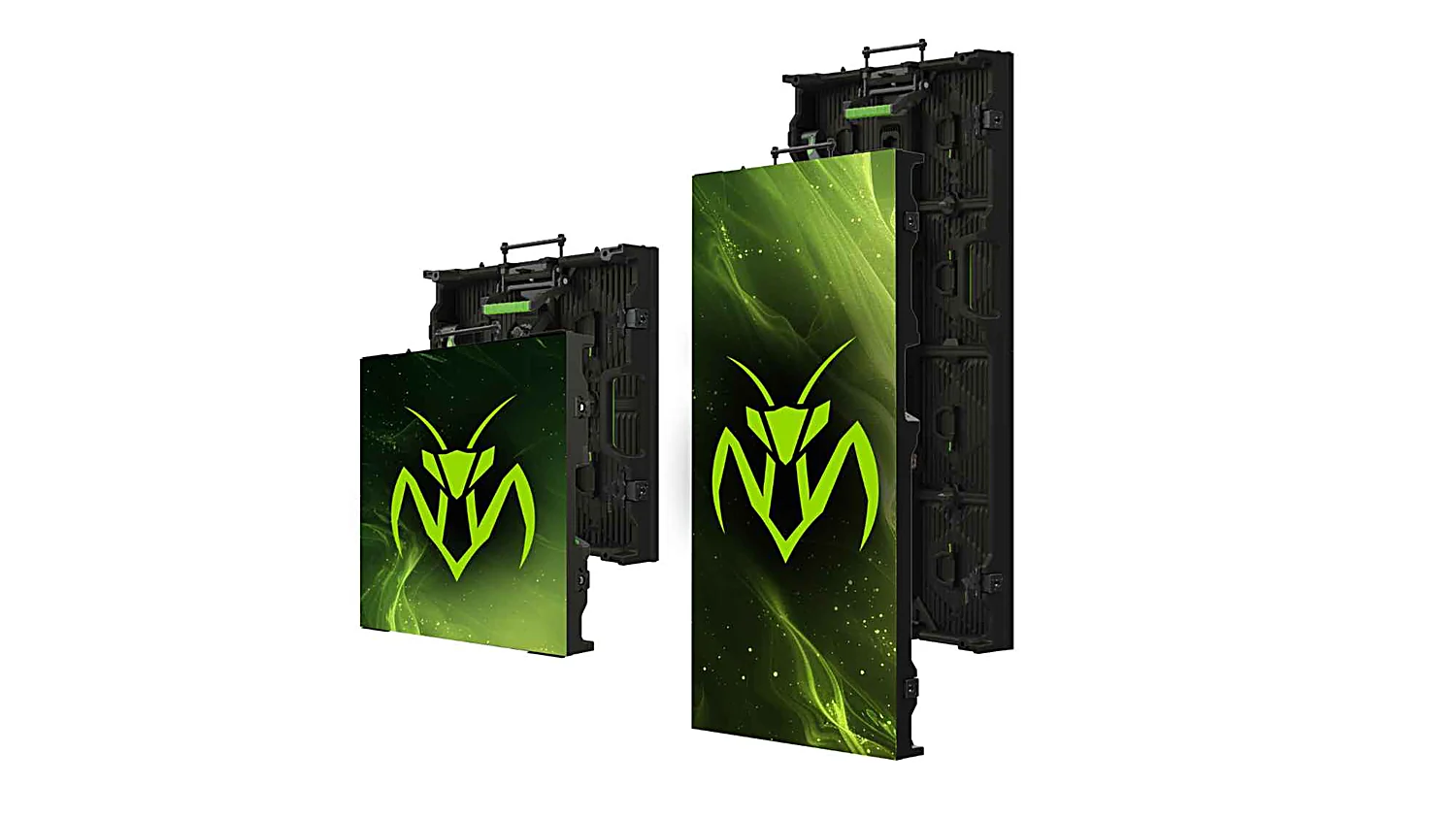
Information from Sina regarding Leyard, from invidis about ROE Visual, and from Sina about Rayto indicates a fairly unified direction: rental cabinets must reduce weight and handling time while improving image quality for camera capture. For concerts, galas, launch events, e-sports, commercial livestreams, or broadcast studios, true costs extend beyond the initial purchase price. They also encompass the number of personnel required for setup, installation hours, module failure rates after transport, and the ability to resolve issues before the event starts.
For LED rental, a good cabinet is one that requires minimal technician intervention for setup, is fast to erect, and delivers a flat, clean image when the camera rolls.
In Vietnam, the practical lesson is that rental companies should view LED rental screens as operational assets, not just inventory purchased by the square meter. If each event requires fewer staff, less setup time, and fewer spare modules, the total cost of ownership will decrease even if the purchase price isn't the lowest. Conversely, an inexpensive but heavy screen with slow locking mechanisms or easily damaged edges can erode profit margins show after show.
How does Leyard Mantis set a new rental standard?
Leyard Mantis was a notable rental highlight at InfoComm 2026. According to 新浪科技/Sina, this series features a lightweight magnesium chassis, supports one-handed tool-free installation, and offers pixel pitches of 1.5/1.9/2.6mm with a maximum refresh rate of 7680Hz. Applications mentioned include concerts, events, broadcast, and virtual production. These specifications are not just for show at the Leyard booth; they directly address the pain points of the rental market.
The lightweight magnesium chassis solves transportation and rigging challenges. In events, every kilogram on a cabinet translates to costs for vehicles, labor, trussing, motors, setup time, and safety concerns. The one-handed, tool-free installation mechanism reduces repetitive tasks for technicians, especially when setting up large screens overnight or dismantling them immediately after an event. This is an operational advantage, not just a mechanical convenience.
The 1.5/1.9/2.6mm pixel pitches indicate that high-end indoor rental is moving closer to close-viewing scenarios: conferences, launch events, studios, stages with close-up cameras, and virtual production. For Vietnamese companies, not every show requires such small pitches, but this trend shows that clients increasingly demand smoother images for front-row attendees and on camera feeds. For a versatile rental configuration within the Luxwave ecosystem, consider BOE BTY-B P2.9 rental as a starting point for stage applications.
The maximum refresh rate of 7680Hz is also a significant signal. The article LED Refresh Rate of 3840Hz for Camera Recording explained why screens that look fine to the naked eye can exhibit scan lines when captured by a camera. For stages with live streaming, multicam setups, or recap filming, a high refresh rate is no longer a secondary specification. It directly determines whether the LED screen behind speakers, singers, or products becomes a clean backdrop or a source of visual noise.

Why are curved screens and quick locks becoming major selling points?
Curved screens are not new, but InfoComm 2026 shows that forming mechanisms are becoming more prevalent in rental applications rather than being exclusive to fixed installations. According to invidis, ROE Visual introduced the Meru-C curved LED screen at their booth C5339 during their 20th anniversary, featuring on-site angle adjustment; the company also mentioned the Vanish Air for rental, alongside the Denali and Coral series. The key highlight is on-site adjustability, as events are always dynamic and adapt to the actual stage setup.
!LED poster screen with World Cup 2026 content at the Rayto booth
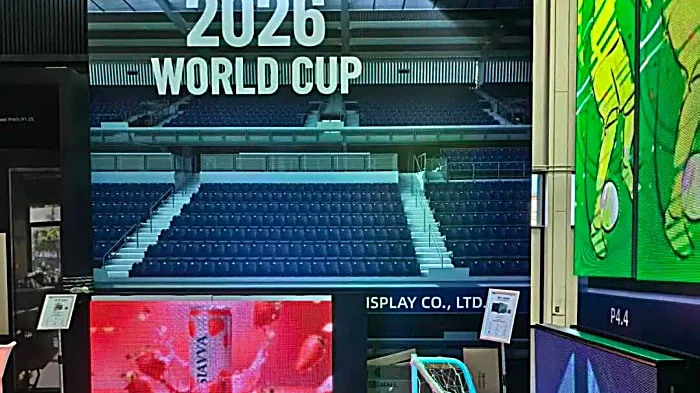
For rental companies, curved screens open up new revenue streams: arched backdrops for concerts, immersive exhibition booths, car launch stages, fashion runways, or interactive zones in shopping malls. These services are typically sold based on concept, design, and operation, not just screen area. Therefore, profit margins can be better if the rental team controls the rigging, content, mapping, and setup time.
Rayto is also moving in this direction for outdoor and rental segments. According to 新浪科技/Sina, Rayto 锐拓 at booth C9957 introduced the LEX II outdoor rental with IP65 front and rear, and arc locks for curved configurations; alongside it were the FEX II rental and TES II PRO with a thickness of 96mm, weight of 24kg, and brightness of 10000 nits. These specifications indicate that outdoor stages require weather resistance, geometric flexibility, and sufficient brightness for challenging environments.
However, curved screens are only worthwhile if sold as a complete solution. Arc locks enable cabinet shaping, but they don't inherently solve distorted content, viewing angles, rigging structures, or signal mapping. Vietnamese rental companies should factor in the costs of visual design, technical setup, and rehearsal time. If curved functionality is purchased but still sold like a flat screen by the square meter, the investment advantage will be nullified.
What IP65, brightness, and durability do outdoor rental screens need?
Outdoor rental is the segment most prone to hidden costs, as screens must withstand weather, endure frequent transport, and operate during event hours with limited repair windows. The Rayto LEX II's IP65 rating for both front and rear is a notable example, as the rear of the cabinet is often exposed to rain splash, humidity, power cables, and technical handling. For outdoor stages, a bright and beautiful front view alone is insufficient for assessing operational risks.
Brightness levels should also be context-dependent. The TES II PRO's 10000 nits is mentioned, but not all stages require operation at this level. Daytime events, fan zones, public squares, stadiums, or areas with direct sunlight need higher brightness reserves. Evening events, however, require reduced brightness to avoid dazzling the audience and to maintain natural skin tones on camera. Therefore, nit specifications must be paired with the control system, event schedule, and an operator who understands calibration.
Edge/corner durability is a very practical criterion for rental. Cabinets can fail not during playback, but when loaded onto trucks, moved through elevators, placed on concrete floors, or rigged in low light. This is why criteria such as weight per square meter, quick locks, front-accessible modules, protective corners, and readily available spare parts are as important as pixel pitch. A small dead pixel on the screen edge during a dress rehearsal can create significant pressure for the technical team.
Kinglight/晶台 is mentioned in the context of rental components with its 2-in-1 solution to mitigate risks like LED detachment, cold solder joints, and whiteout during high-frequency disassembly scenarios. From a distributor's perspective, this information highlights that rental durability extends beyond the cabinet itself. It also encompasses the quality of the LED package, solder joints, masks, protective coatings, and the packaging process between shows.
How should Vietnamese rental companies calculate TCO?
The TCO for LED rental screens in Vietnam should be calculated over their operational lifecycle, not just based on the purchase invoice. A screen system must endure multiple events, various locations, different loading crews, and diverse electrical conditions. If failure rates are low, module replacement is fast, setup requires fewer personnel, and camera performance is stable, that screen system can generate better profits than a cheaper configuration that causes the technical team to spend hours on troubleshooting.
A practical calculation begins with labor costs and time. Lightweight cabinets and tool-free mechanisms reduce the number of setup personnel, decrease rental hours for trussing or motors, and shorten venue occupancy time. For commercial shows, an hour less of setup time can allow the event organizer more time for rehearsals, content runs, and camera tests. This value may not always appear on the screen quote, but it is clearly reflected in the post-event profit margin.
The second cost category involves failures and spare parts. Rental screens should have readily available modules, power supplies, receiving cards, cables, and accessories in stock or accompanying the event. When clients are running a gala, launch event, or livestream, a minor failure must be resolved within minutes. The Optupus International Library case study, while not a rental project, illustrates the same principle: a robust LED system requires clear technical processes and after-sales support, not just equipment delivery.
The third category is the ability to sell higher-value services. Standard flat screens are highly susceptible to price wars. Curved screens, high refresh rates, camera-friendly output, and rapid setup enable rental companies to offer premium stage packages, temporary studios, exhibition booths, or activations with immersive elements. The article Event Rental LED Screens provides a checklist for basic configurations; trends from InfoComm 2026 suggest this checklist is being upgraded with smart mechanics and superior image quality.
Conclusion: Which trends to follow now, and which to wait for?
Trends to follow immediately include lightweight cabinets, quick locks, refresh rates suitable for cameras, rapid module replacement capabilities, and clear outdoor IP ratings. These factors directly impact setup hours, failure rates, livestream quality, and operational costs per show. For the Vietnamese market, these criteria are more practical than chasing overly high display specifications that few clients are willing to pay extra for.
Trends to consider selectively include curved screens and very small pixel pitches for rental. Curved screens are worth investing in if the company has clients in stage, exhibition, brand activation, or if the content is compelling enough to sell differentiated concepts. Small pixel pitches are worthwhile when frequently serving close-up audiences, broadcast, studios, or virtual production. If the primary client base is outdoor stages viewed from a distance, budget should prioritize brightness, IP rating, durability, and setup speed.
Compared to broader trends at ISLE 2026, InfoComm 2026 offers a more pragmatic message for rental: the winning technology is the one that reduces on-site risks for event teams. Luxwave, as an authorized distributor in Vietnam, will evaluate new rental lines based on three questions: Does it reduce TCO? Is the camera performance clean? Does it enable the rental company to offer higher-value services? If the answer is yes to all, then it's a trend worth including in budget forecasts.
Pitfalls
Common mistakes
- Focusing solely on purchase price per square meter while ignoring TCO — heavy cabinets, slow locks, or high failure rates will inflate labor, transportation, and maintenance costs after a few event seasons.
- Choosing low refresh rates for stages with live streaming — screens that look fine to the eye can exhibit scan lines, flickering, or banding on bright backgrounds when captured by a camera.
- Assuming IP65 is sufficient for all outdoor applications — it's crucial to assess front, rear, power cables, signal connections, drainage, and shielding measures based on actual rain and wind conditions.
- Purchasing curved screens without considering content and accessories — arc locks only create the shape; rental teams still need appropriate rigging, mapping, and visuals to sell high-value services.
- Underestimating edge/corner durability — rental screens are subjected to impacts during packing, transport, and rigging, making rapid module replacement as important as screen resolution. The ability to quickly replace modules is as critical as screen sharpness.
FAQ
Frequently asked questions
Where is InfoComm 2026 taking place, and what are the key highlights for LED rental?
InfoComm 2026 is held from June 17-19, 2026, at the Las Vegas Convention Center, USA, featuring over 750 exhibitors and more than 130 Chinese companies. For LED rental, key highlights include lightweight cabinets, fast setup, high refresh rates, IP65 outdoor ratings, and curved configuration capabilities for event stages.
What types of events is the Leyard Mantis suitable for?
The Leyard Mantis is a rental series targeting concerts, events, broadcast, and virtual production. Announced specifications include a lightweight magnesium chassis, one-handed tool-free installation, pixel pitches of 1.5/1.9/2.6mm, and a maximum refresh rate of 7680Hz. For the Vietnamese market, suitable applications include high-end stages with cameras and demanding setup/dismantle schedules.
Why is a high refresh rate important for rental LED screens?
A high refresh rate helps reduce scan lines, flickering, and banding when LED screens appear in live streaming, broadcast, or recap footage captured by cameras. For professional rentals, a threshold of 3840Hz is generally the first specification to inquire about; higher rates like 7680Hz provide an additional margin of safety for various camera types and shutter speeds.
Are IP65-rated LED rental screens essential for outdoor events?
Outdoor events should prioritize screens with clear weather resistance capabilities, and IP65 front and rear ratings are important criteria for outdoor rental cabinets. However, IP rating does not replace on-site assessment: technical teams must still consider rain direction, drainage, power cables, signal connections, shielding, and operational duration under actual conditions.
Is investing in curved screen configurations worthwhile for rental companies?
Curved screen configurations are worth considering if rental companies aim to offer differentiated stage services such as arched backdrops, exhibition booths, launch events, or immersive visuals. The value lies not just in the cabinet's arc locks; it also requires frame design, mapping, motion graphics content, and a technical team skilled in rapid setup and precise calibration.
What criteria should Vietnamese rental companies use to select screens?
Selection should be based on total cost of ownership rather than just purchase price: weight per square meter, setup/dismantle speed, edge/corner durability, camera refresh rate compatibility, outdoor IP rating, rapid spare part replacement, and low failure rates after multiple transports. A higher initial investment may prove more economical by reducing labor and downtime.
References