

InfoComm 2026 takes place from June 17-19, 2026, at the Las Vegas Convention Center, USA, featuring over 750 exhibitors and more than 130 Chinese companies. Amidst themes of Agentic AI, IPMX, MiP, and Micro-LED dominating the exhibition floor, Leyard chose to highlight core LED technologies rather than just erecting a large screen for attention. According to Sina Technology, the company globally launched EverPixel and TruMicro, while also showcasing DirectLight series, Mantis rental products, and several new LED concepts. This article analyzes Leyard's announcements, their true significance for projects in Vietnam, and points requiring verification before budgeting.
!Leyard's 21by9 curved LED wall booth at InfoComm 2026 Las Vegas
What Did Leyard Announce at InfoComm 2026?
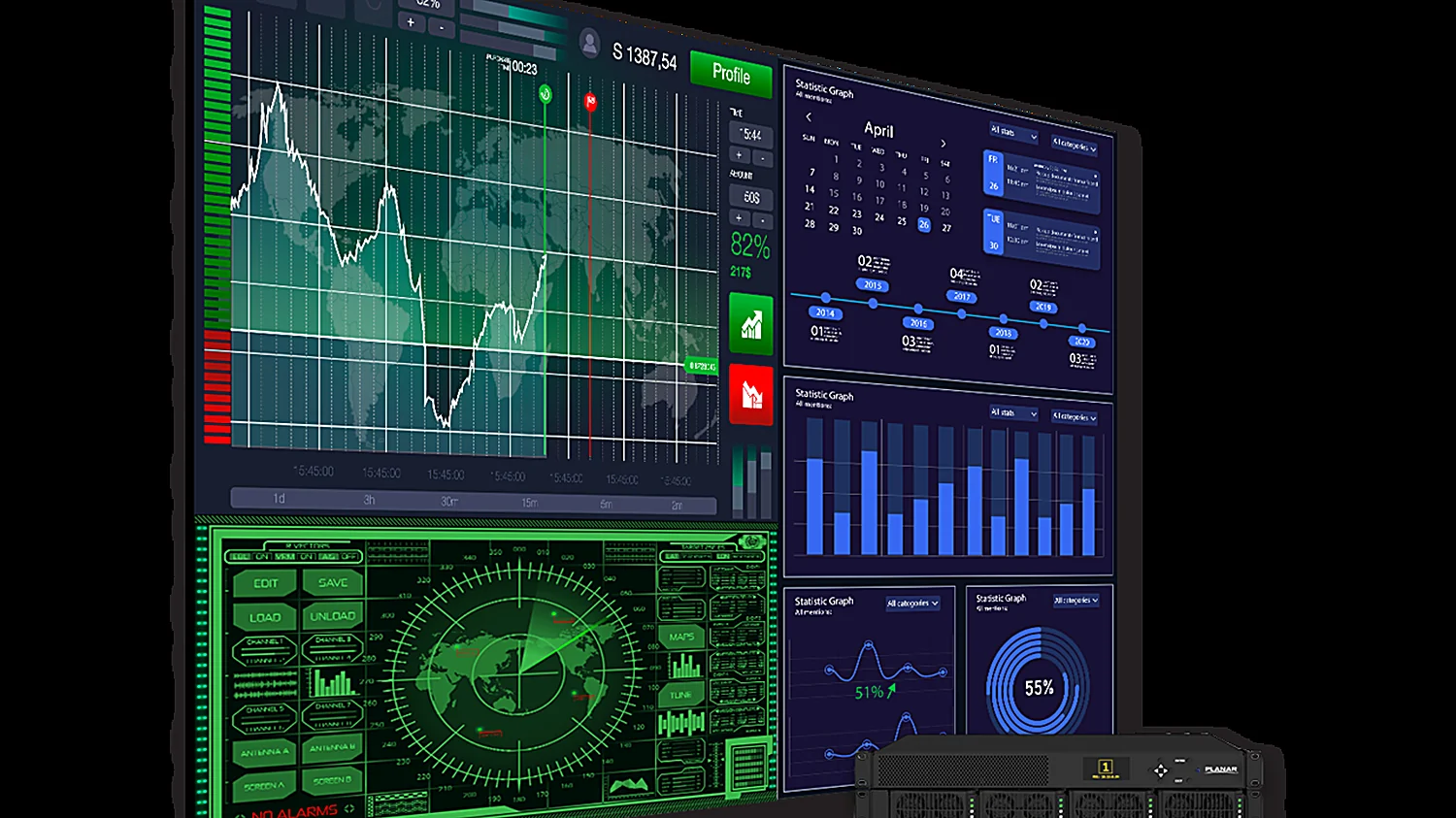
Leyard globally announced two proprietary core LED technologies, EverPixel and TruMicro, at InfoComm 2026, according to Sina Technology. Concurrently, the company showcased the Cobra 0.6mm, Komodo 0.7mm, and the full DirectLight series in flat, curved, 4K, 5K, and 8K configurations. For Vietnamese clients following the premium LED segment, the noteworthy information lies not just in product names, but in how Leyard is addressing pixel durability, ultra-fine pixel pitches, and image quality for displays used at close viewing distances or near cameras.
This event also indicates that InfoComm is no longer solely a stage for large-format LED displays. The 2026 exhibition placed significant emphasis on manufacturing processes, chip packaging, AV system integration capabilities, and long-term operational reliability. AVNetwork also identified LED as a prominent product category at InfoComm 2026, reflecting the expanding B2B demand from auditoriums and boardrooms to studios and events. For Luxwave, the key is to analyze which technologies might become commercially available in Vietnam and which should be viewed as directional indicators.
Therefore, this article does not present EverPixel or TruMicro as immediate purchase recommendations. These announcements should be read as a technology roadmap: Leyard is working to reduce the risk of pixel failure in small pitches, improve Micro-LED color transitions, and broaden application ranges from premium meeting rooms to event stages. For actual projects, the subsequent questions always concern pricing, lead times, warranty policies, and local maintenance capabilities in Vietnam.
What is EverPixel and Why Focus on Pixel Durability?
EverPixel is a Leyard technology described as a fundamental restructuring of LED design: abandoning traditional LED base designs, simplifying structure and processes, doubling the number of RGB sub-pixels, incorporating redundant architecture, using direct chip bonding instead of gold or copper wires, and employing a 5-sided illumination design. According to Leyard's announcement at InfoComm 2026, EverPixel's objectives are to enhance pixel failure resistance from a structural foundation, improve luminous efficiency, and widen viewing angles. This set of improvements is particularly crucial for small-pitch displays, where a single dead pixel is easily noticeable.
In conventional LED displays, the risk of pixel failure stems not only from the chip itself but also from connection pathways, surface impacts, heat, humidity, and the transportation process. As pitch sizes decrease, component density increases, and the likelihood of detecting defects with the naked eye rises. Therefore, Leyard's emphasis on sub-pixel redundancy and direct chip bonding indicates a focus on operational issues, not just display performance. For spaces like executive boardrooms, experience centers, showrooms, or control rooms, pixel durability directly impacts maintenance costs and post-handover downtime.
For small-pitch LED displays, the question is not just "what is the resolution?", but "after two years of operation, will the image remain uniform and easy to maintain?"
However, it's essential to distinguish between announced specifications and actual project performance. EverPixel has just been introduced by Leyard at the exhibition, so customers should inquire about which configurations are commercialized, the module replacement policy, whether demo units are available locally, and the actual lead times. This is also how Luxwave typically advises when comparing various premium platforms, including Leyard and COB series like BOE COB P0.9.
!Leyard DirectLight display area with visitors

What Problems Does TruMicro Solve for Micro-LED?
TruMicro is Leyard's announced technology for ultra-fine 20-micron Micro-LED sub-pixels, with components arranged more densely to achieve smoother color transitions and reduce color shift and separation. This is noteworthy because the Micro-LED race is not just about making smaller pixels, but also about maintaining stable color as viewers change angles, cameras shift position, or content transitions through gradients. On very small pitch DirectLight displays, minor color inaccuracies can be much more apparent than on large outdoor LED screens.
To visualize, Micro-LED can offer higher pixel densities and better near-field display potential, but it also presents significant challenges in color uniformity, defect rates, and manufacturing costs. TruMicro, as described by Leyard, focuses on 20-micron sub-pixels and component arrangement to reduce the perception of color separation. This aligns with the industry's general trend, as analyzed by Luxwave in the article What's the Difference Between Mini-LED and Micro-LED: small chip technology is only valuable when accompanied by sufficiently stable packaging and calibration processes.
For the Vietnamese market, TruMicro should currently be viewed as a high-end technology requiring verification based on specific configurations. A boardroom, studio, or control room project doesn't necessarily need the latest Micro-LED to achieve excellent visual results. In many cases, small-pitch COB already offers a good balance of sharpness, durability, and cost, especially when viewers are seated several meters away. The key development to watch is how technologies like TruMicro enter stable production, raising the image quality standards for the premium segment and pressuring prices down for more commercialized lines.
What's Noteworthy About Mantis and Premium Rental?
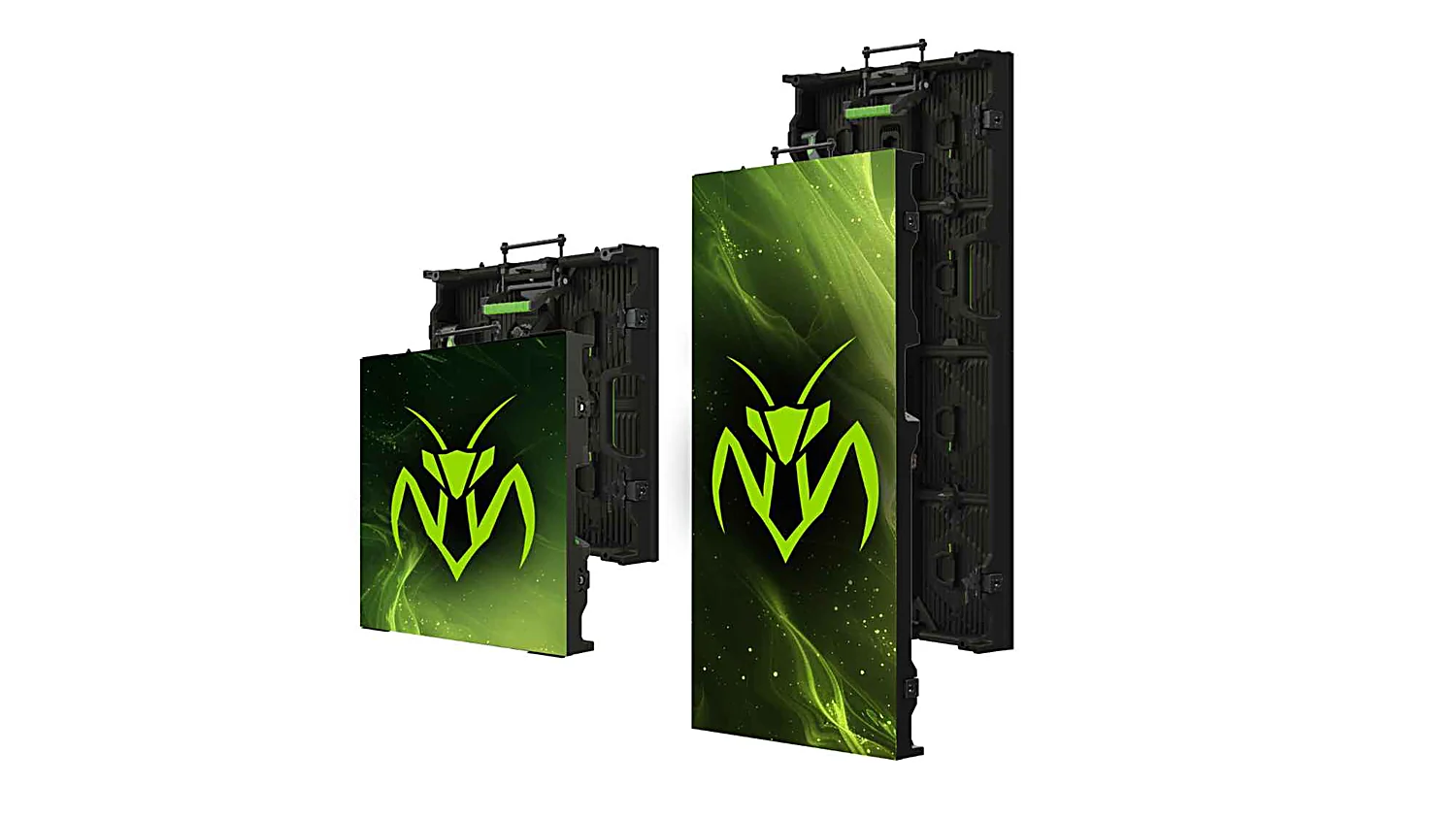
In addition to EverPixel and TruMicro, Leyard highlighted Mantis as its star rental product at InfoComm 2026. According to the company's announcement, Mantis features a lightweight magnesium body, allows for one-handed, tool-free installation, offers pixel pitch options of 1.5/1.9/2.6mm, and a maximum refresh rate of 7680Hz. This set of specifications indicates Mantis is positioned for applications demanding rapid deployment, smooth imagery, and excellent camera performance, such as concerts, corporate events, broadcast, and virtual production.
In the Vietnamese market, premium rental differs significantly from standard rental. A display for an internal conference might prioritize cost and basic mechanical durability, but screens for live streaming, music stages, or filming require attention to refresh rate, skin tones, moiré patterns, cabinet flatness, and rapid troubleshooting. Therefore, specifications like tool-free installation or a lightweight magnesium body have practical operational significance: reducing setup time, minimizing staffing needs, and mitigating schedule delays in time-sensitive events.
However, a maximum refresh rate of 7680Hz does not automatically guarantee perfect camera footage. The results also depend on the LED processor, signal receiving configuration, shutter speed, stage lighting, content, and color calibration. Investors or rental companies should read the article LED Refresh Rate 3840Hz and Camera Shooting to understand why high specifications are beneficial but cannot replace a well-designed system. If building a rental fleet, the article LED Rental Screens for Events can help differentiate actual needs from marketing specifications.
How Should New LED Concepts Be Understood?
Leyard also introduced concepts for transparent LED, double-sided LED, and floor LED for the first time, alongside the 21by9, UltraRes P, Simplicity E, and CarbonLight CLI Flex series. This product group suggests the industry's development direction lies not only in increasing resolution but also in more flexible display formats for commercial spaces, exhibitions, stages, and brand experiences. For Vietnamese clients, it's important to view these concepts as design tools, not direct replacements for standard flat LED panels.
Transparent LED is suitable for showroom glass facades, retail stores, or exhibition areas where see-through visibility is desired. Double-sided LED can be useful in high-traffic areas where content needs to be displayed on both sides. Floor LED serves stages, interactive experiences, or exhibition areas where viewers walk directly on the display surface. Each type requires its own structure, content, and maintenance procedures. Implementing them solely because they are "novel" can easily increase costs without a guaranteed proportional increase in communication effectiveness.
The practical perspective is that concepts should follow use cases. A shopping mall might need transparent LED for its facade, but a meeting room requires a stable flat panel. A stage might use floor LED for visual depth, but a training hall needs legibility and long-term durability. Reference projects like Optupus International Library demonstrate that when the primary goals are learning, presentation, and close viewing, a stable small-pitch configuration is often more critical than novel effects.
How Should Vietnamese Clients Budget?
With information from InfoComm 2026, a reasonable budgeting approach is to divide projects into three categories: widely commercialized technologies, premium technologies requiring verification, and concepts needing custom design. Leyard's EverPixel, TruMicro, and Mantis are strong indicators for the premium segment, but purchasing decisions in Vietnam must still address four key questions: Is the product readily available or custom-ordered? What is the price per square meter or per system? What is the lead time? And who is responsible for on-site warranty service in case of pixel or module failures?
For meeting rooms, boardrooms, and studios, clients should compare the total cost across various small-pitch platforms rather than focusing solely on the newest technology. BOE MLED and BOE COB P0.9 exemplify the commercial COB approach for close viewing needs, while Leyard's DirectLight and EverPixel technology show the premium segment continuing to raise standards for pixel durability. For broadcast studios, real-world camera tests are essential before finalization, as color, refresh rate, and moiré must be evaluated under specific lighting conditions.
For rental and stage applications, budgeting must include flight cases, installation personnel, module replacement speed, processors, rigging systems, and wear-and-tear costs due to transportation. A series like Mantis, as announced by Leyard, is attractive due to its lightweight magnesium body, one-handed installation, and high refresh rate, but purchasing companies still need to calculate utilization frequency to determine the payback period. For projects referencing industry trends, consider reading ISLE 2026: 5 LED Display Trends Shaping the Market to place InfoComm within the broader 2026 landscape.
Conclusion: Who Should Follow EverPixel and TruMicro?
EverPixel and TruMicro are most relevant for clients investing in high-end, close-viewing LED displays requiring stable image performance over many years: executive boardrooms, technology showrooms, studios, control rooms, premium rental, and virtual production. According to Leyard's announcements at InfoComm 2026, these two technologies directly target pixel durability, ultra-fine Micro-LEDs, and image uniformity. This is the correct direction for the industry, but it is not sufficient to replace the commercial due diligence required before purchase.
For the majority of Vietnamese projects in 2026, the best decision remains selecting configurations based on viewing distance, operating conditions, camera requirements, and total lifetime cost. New technologies from Leyard provide the market with more choices and drive innovation across the industry, including for the rapidly commercializing COB platforms. However, when preparing tender documents or quotations, always request suppliers to specify the model, product availability, warranty policy, lead time, and local maintenance plan in Vietnam. This is the correct, neutral, and risk-reducing approach for investors.
Pitfalls
Common mistakes
- Treating technologies launched at trade shows as immediately available products — inquire about commercial configurations, pricing, minimum order quantities, and lead times before finalizing budgets.
- Comparing only pixel pitch while neglecting pixel durability — close-viewing or rental projects must account for risks of dead pixels, impacts, transportation, and module replacement time.
- Using maximum refresh rate as the sole criterion — camera shooting performance also depends on the processor, signal receiving configuration, color calibration, and on-site lighting.
- Incorporating transparent, double-sided, or floor LED into designs without suitable content — these concepts require specific display scenarios and structural considerations.
FAQ
Frequently asked questions
What is Leyard's EverPixel?
EverPixel is a core LED technology Leyard globally launched at InfoComm 2026. According to Leyard, this technology abandons traditional LED base designs, simplifies structure, doubles RGB sub-pixels, uses redundant architecture, features direct chip bonding, and employs a 5-sided illumination design to enhance pixel durability and viewing angles.
How does TruMicro differ from conventional Micro-LED?
TruMicro is the name Leyard uses for its 20-micron ultra-fine Micro-LED sub-pixel technology announced at InfoComm 2026. The emphasis is not solely on size, but on the denser arrangement of components for smoother color transitions and reduced color shift or separation on very small pitch displays.
What type of events is Mantis suitable for?
Mantis is a rental series highlighted by Leyard at InfoComm 2026, targeting concerts, events, broadcast, and virtual production. According to the company's announcement, the product features a lightweight magnesium body, one-handed tool-free installation, pixel pitches of 1.5/1.9/2.6mm, and a maximum refresh rate of 7680Hz, making it suitable for environments requiring quick setup and camera shooting.
Should Vietnamese clients include EverPixel in their budgets immediately?
Vietnamese clients should view EverPixel as a technological indicator for the premium segment, not automatically include it in budgets as an available configuration. For actual purchases, it's necessary to inquire with the distributor about commercial availability, pricing, delivery times, warranty policies, and module replacement capabilities in Vietnam.
What is the relationship between EverPixel and COB, specifically the BOE COB P0.9 option?
EverPixel is a Leyard technology announced for its DirectLight series, while the BOE COB P0.9 is another commercial option in the premium small-pitch LED category. When comparing, clients should consider the same factors: viewing distance, surface durability, maintenance capabilities, lead time, and total cost, rather than just comparing technology names.
Does a 7680Hz refresh rate guarantee flicker-free camera footage?
A maximum refresh rate of 7680Hz is a notable specification for rental and broadcast applications, but it is not the sole condition for stable camera shooting. The results also depend on the processor configuration, actual scan rate, camera, shutter speed, stage lighting, and on-site color calibration.
References