

InfoComm 2026 will take place from June 17 to 19, 2026, at the Las Vegas Convention Center, USA, not Orlando. This year's event gathered over 750 exhibitors, including more than 130 Chinese companies, focusing on Agentic AI, IPMX for AV-over-IP, MiP, and Micro-LED technologies.
For the Vietnamese market, where most LED displays originate from China's supply chain, the products showcased in Las Vegas often serve as early indicators for the range of offerings expected in the next 12-24 months.
This article does not rank booths or translate press releases. Luxwave has distilled six trends with practical implications for Vietnamese investors: which technologies are ready for immediate budgeting, which require monitoring, and when patience is the right strategy. Exhibition data is compiled from 新浪科技/Sina, AVNetwork, and the official InfoComm website. Recommendations reflect a distributor's perspective on consulting for meeting rooms, showrooms, auditoriums, and events in Vietnam.
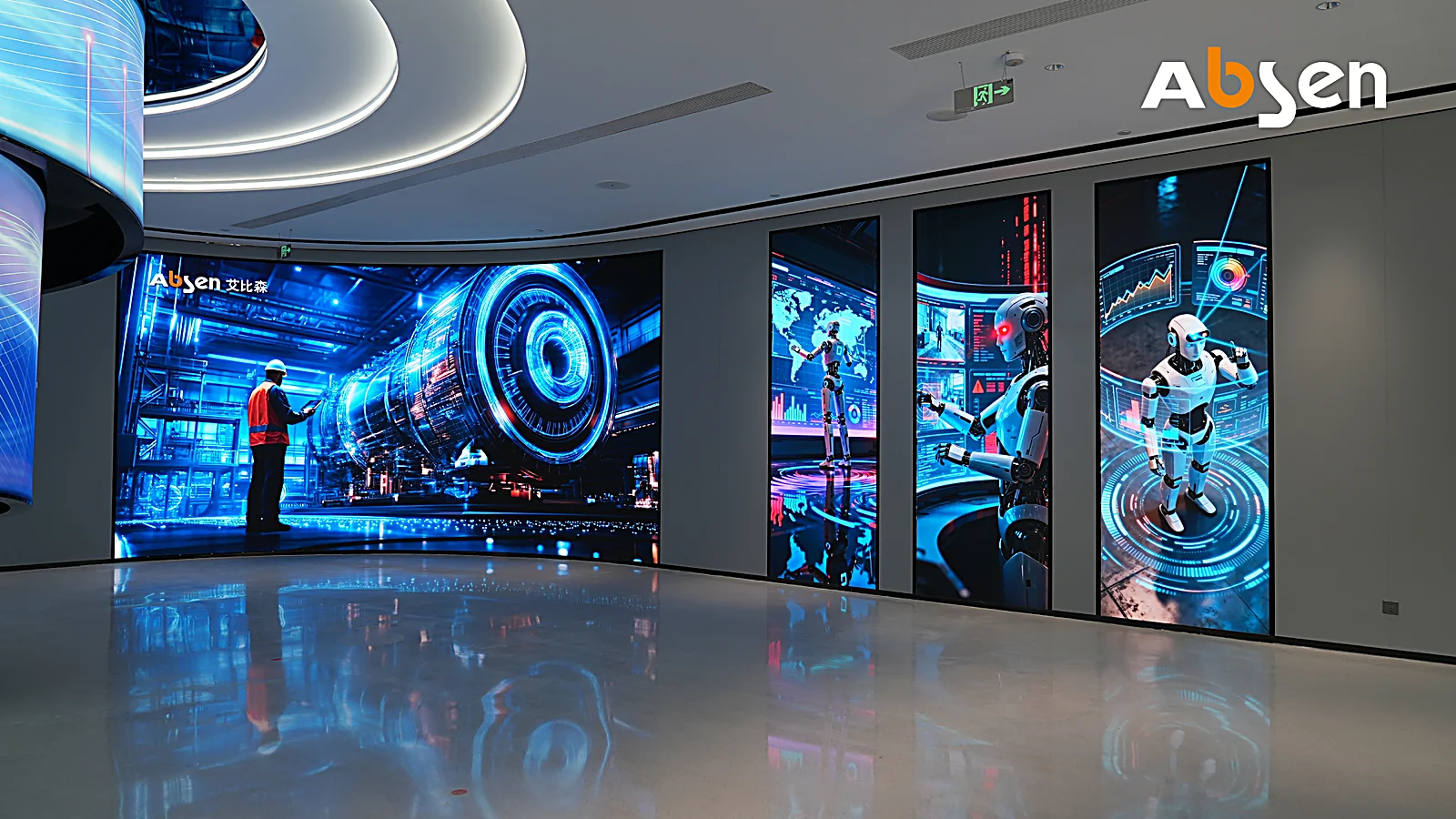
!Immersive video wall LED display array at the InfoComm 2026 Las Vegas booth
What is InfoComm 2026 Saying About the LED Supply Chain?
The LED industry at InfoComm 2026 is moving beyond just size and brightness, shifting focus to chip packaging, system integration, and performance in professional AV environments. The significant presence of Chinese companies in Las Vegas is particularly relevant for Vietnam, as commercial products typically follow international launches by one to two years. If the ISLE 2026 article signaled trends from Guangzhou, InfoComm serves as a testbed in a more premium AV market.
Notably, these trends are interconnected. MiP enables flexible production for ultra-fine pitch; COB brings fine-pitch to practical project segments; Micro-LED represents a long-term technological goal; all-in-one solutions make LED displays more accessible for meeting rooms; and IPMX and Agentic AI highlight the need for displays to integrate into ecosystems for control, content management, and smart conferencing. Vietnamese investors don't need to chase every trend simultaneously but should understand these directions to avoid budgeting for soon-to-be-obsolete configurations.
For Luxwave, the most critical question after an exhibition isn't "what's the latest?" but rather "is the new technology stable enough for warranty service in Vietnam?" A high-quality LED product for corporate projects requires three layers: a commercially sourced panel with clear origins, a compatible processing unit and operating software, and a distribution channel with replacement parts. Lacking any of these can turn impressive booth specifications into acceptance risks.

Why is MiP Gaining Traction in Ultra-Fine Pitch?
MiP, or Micro LED in Package, is one of the clearest signals from InfoComm 2026. According to 新浪科技/Sina, Kinglight, Nationstar, and 芯映 are all advancing their MiP P0.4-P1.2 ranges, targeting ultra-fine pixel pitches for close-viewing displays that demand sharp images and high uniformity. Essentially, MiP packages micro-chips into small modules, utilizing assembly lines similar to traditional LEDs, offering potential for balancing pixel density with mass production capabilities.
!BOE MLED display showcasing high-contrast nature content
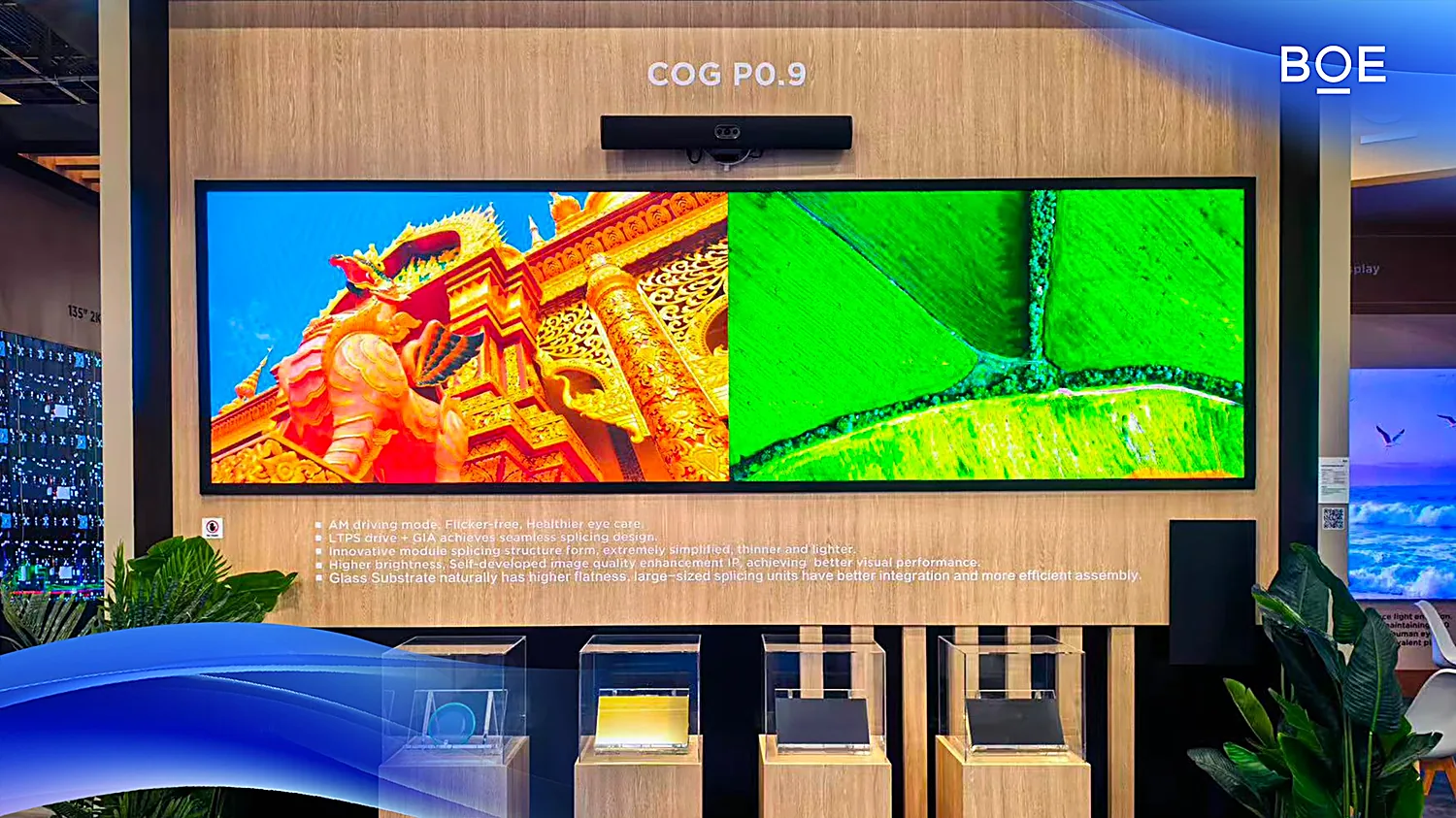
For the Vietnamese market, MiP should currently be viewed as a directional signal rather than a default choice for all projects. Control rooms, studios, or high-end boardrooms might be interested if ultra-fine pitch and a substantial budget are available. However, most meeting rooms still require consideration of viewing distance, actual resolution, and maintenance costs. When viewers are several meters away, a switch to P0.4 or P0.6 doesn't automatically provide commensurate value.
Compared to COB, MiP is attractive for its potential to scale production for very small pitches, but the commercial ecosystem in Vietnam needs more time to mature. COB is currently easier to specify due to readily available products, established installation processes, experienced technical teams, and clearer acceptance documentation. Therefore, if budgeting for 2026 requires firm decisions, investors should ask suppliers to clearly separate two options: a commercial COB configuration for immediate deployment and a MiP configuration as an upgrade or experimental option.

Has Micro-LED Reached Commercial Viability?
Micro-LED at InfoComm 2026 is closer to commercialization, but "closer" does not mean "mainstream." According to data from Sina, Leyard launched TruMicro with 20um sub-pixels, Sony demonstrated Crystal LED, and Absen presented the M54, a 54-inch 1080P Micro-LED display with HDMI input. These products indicate that Micro-LED is moving beyond purely lab environments into more conceivable configurations for businesses, education, and high-end entertainment.
!Leyard booth with a 21:9 aspect ratio LED display at InfoComm 2026
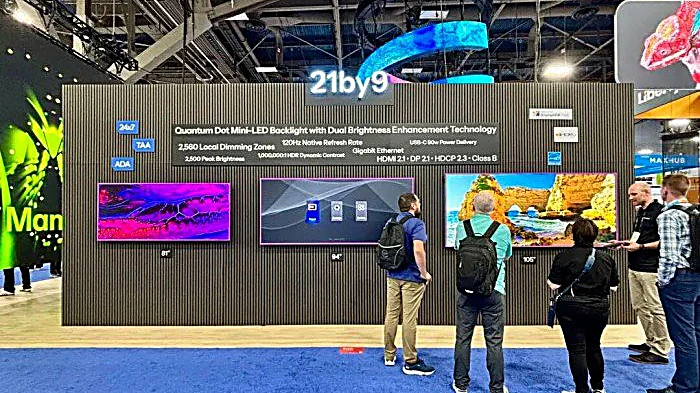
However, Vietnamese investors should approach this trend with budget discipline. Micro-LED offers long-term advantages in contrast, pixel density, and seamless large-screen creation, but commercial viability also involves cost, spare parts, failure rates, lead times, and local maintenance capabilities. For most projects needing displays in 2026, fine-pitch COB solutions like BOE COB P0.9 will be easier to justify to investment committees due to their established configurations and alignment with current needs.
To avoid terminological confusion, it's crucial to distinguish between direct-view Micro-LED displays and Mini-LED used in TVs or high-end LCDs. Micro-LED emits light pixel by pixel, whereas Mini-LED typically serves as a backlight for LCDs. The Mini-LED vs Micro-LED article explains this difference in detail. In tender documents, suppliers should be required to specify the packaging technology, pixel pitch, commercial status, and module replacement plan, rather than using a generic "Micro-LED" label.
Will All-in-One LED Replace LCDs in Meeting Rooms?
All-in-one solutions represent a significant trend because they directly address how businesses procure displays. At InfoComm 2026, configurations like Sony Crystal LED UNIFY 135-inch and BOE COG P0.9 integrated with Video Bars showcased LED displays evolving into complete meeting room devices, not just cabinet walls requiring specialized technical teams. This direction aligns with businesses seeking large, seamless displays with minimal bezels and an operational experience similar to large-format LCDs.
In Vietnam, all-in-one LED displays are particularly relevant for boardrooms, training centers, council meeting rooms, and showrooms requiring frequent presentations. The benefits extend beyond size to reduced installation complexity: displays, signal processing, cameras, or video bars, and control systems can be designed as a unified package. For projects like Optupus International Library, the practical lesson is that end-user experience is as critical as panel specifications: quick startup, stable conferencing, clear text, and non-disruptive maintenance.
A point of caution is that all-in-one solutions are not automatically cheaper than LCDs or traditional video walls. For smaller rooms with close viewing distances and simple display needs, commercial LCDs may suffice. For large-format, seamless visuals, frequent camera use, and a desire to avoid bezels, all-in-one LED displays become compelling. When comparing, consider integrated audio, cameras, control systems, warranties, content management software, and operator training.
For Vietnamese projects in 2026, the most valuable technology is not the newest on the exhibition floor, but rather what can be reliably accepted, warrantied, and operated within the client's actual workflow.
How Will COB Proliferation Change Fine-Pitch Selection?
COB is the most mature trend among the six highlighted at InfoComm 2026. According to Sina, the BOE BYH Ultra P0.9 was introduced with a 7680Hz refresh rate, 2000 nits brightness, and a 20000:1 contrast ratio. These specifications are noteworthy for close-viewing applications, video conferencing, camera shoots, or spaces requiring smooth visuals. Unlike traditional SMD, COB features a protective coating over the chip surface, resulting in a flatter screen, reduced LED damage, and an improved seamless appearance for close viewing.
Crucially for the Vietnamese market, COB is no longer exclusively a "ultra-premium" option. As manufacturers like BOE expand their MLED/COB ranges, investors have more practical fine-pitch options for executive boardrooms, control rooms, small studios, and exhibition showrooms. For the same objective of displaying text, data charts, and video calls, COB P0.9 is often a more considered choice than attempting to achieve extremely small pitches with less common technologies.
However, COB does not replace SMD in all scenarios. SMD or commercial LED lines like BOE BSL P1.9 remain relevant for lobbies, retail spaces, medium-sized auditoriums, and longer-distance viewing screens where cost per square meter is a major factor. The correct selection process starts with viewing distance, content, camera presence, and then determines the packaging technology. The COB vs SMD article can serve as a checklist when comparing quotes.
Should Transparent LED and Lightweight Rental Be Adopted or Waited For?
Transparent LED, dual-sided concepts, floor screens, and lightweight rental solutions represent trends that open up new applications but can be misapplied if judged solely by their exhibition booth effects. According to Sina, BOE BTX-TP features a 68mm thickness, 8kg weight, and 72% transparency, while Leyard showcased transparent, dual-sided, and floor displays. In the event sector, Leyard Mantis uses a magnesium structure, allows one-handed assembly, and boasts a refresh rate up to 7680Hz; Rayto TES II PRO is noted for its 24kg weight and 10000 nits brightness.
For Vietnam, transparent LED should be considered for projects with clear contexts: showroom glass facades, hotel lobbies, high-end retail areas, exhibition booths, or building facades where visibility is essential. It is not intended as a primary display for small text, data charts, or presentation meetings. If the goal is to create a brand identity layer on glass, transparent screens can be highly effective; if the objective is viewing slides and numbers, solid LED screens or fine-pitch COB remain more appropriate.
Lightweight rental and energy efficiency directly concern event organizers. Lightweight cabinets reduce setup time, labor, and transportation risks; high brightness improves outdoor stage visibility; high refresh rates ensure cleaner camera footage for live streaming. However, rental quotes should encompass the entire operation: rental days, technical staff, power supply, rigging, weather considerations, equipment insurance, and backup plans. For stages, review event stage solutions and the LED screens for event rentals article before finalizing configurations.
Conclusion: What Should Vietnamese Investors Prioritize?
InfoComm 2026 demonstrates that LED displays are entering a more mature phase: chip technology is advancing rapidly, but true value lies in packaging these into solutions that are easy to purchase, accept, and operate. For the Vietnamese market over the next 12-24 months, reasonable priorities include adopting fine-pitch COB and all-in-one solutions for close-viewing spaces, monitoring MiP and Micro-LED for long-term plans, and implementing transparent LED or lightweight rental only when the application is clearly defined.
If budgeting for 2026, investors need not postpone all projects awaiting cheaper Micro-LED. A more practical approach is to segment needs into three categories. Meeting rooms, boardrooms, studios, and control centers should consider commercial COB from BOE MLED or equivalent configurations. Showrooms, exhibitions, and brand lobbies can explore transparent LED or creative LED for accentuation. Event projects should prioritize lightweight cabinets, high refresh rates, appropriate brightness, and experienced technical teams.
As an authorized distributor, Luxwave views InfoComm as a directional map, not an immediate shopping list. Brands like Leyard show the premium segment expanding rapidly; BOE demonstrates that COB/MLED are closer to commercial projects. What investors truly need is a configuration that matches their requirements, has a clear origin, transparent budgeting, and a local warranty roadmap in Vietnam. This is how exhibition trends transform into a stable LED system post-handover.
Pitfalls
Common mistakes
- Viewing InfoComm demo products as immediately mainstream, while many MiP or Micro-LED configurations still require verification of commercial status, lead times, and warranty conditions.
- Selecting displays based solely on pixel pitch while overlooking packaging surface, refresh rate, brightness, processing capabilities, and calibration, leading to unmet expectations for close-viewing or camera applications.
- Replacing LCDs with all-in-one LED displays without assessing the room's power infrastructure, audio, camera, control systems, and daily user operations.
- Choosing transparent LED for small text content or as a primary display, despite its suitability for glass-mounted effects, showrooms, and exhibition areas.
- Calculating rental costs based on cabinets alone, neglecting labor for setup/dismantling, power consumption, outdoor brightness requirements, and transportation risks.
FAQ
Frequently asked questions
Where is InfoComm 2026 taking place, and what is its relevance to LED displays in Vietnam?
InfoComm 2026 is held from June 17-19, 2026, at the Las Vegas Convention Center, USA. The exhibition features over 750 exhibitors, including more than 130 Chinese companies, making the trends showcased directly relevant to Vietnam, where the majority of LED displays are imported from the Chinese supply chain.
Will MiP replace COB in fine-pitch LED projects in 2026?
MiP is emerging in ultra-fine pitch due to its flexible packaging, but this does not mean it will immediately replace COB in mainstream projects. For Vietnamese meeting rooms, boardrooms, and showrooms in 2026, COB remains easier to budget for due to its commercial availability, established warranty services, and familiar technical implementation.
Should Micro-LED be purchased for corporate meeting rooms now?
Micro-LED is worth monitoring but is not yet a default choice for corporate meeting rooms. The technology is moving closer to commercialization with demonstrations at InfoComm 2026, but investors still need to assess pricing, lead times, module maintenance, and spare parts availability before including it in their budgets.
How does an All-in-One LED display differ from a large-format LCD?
An All-in-One LED display integrates display, signal processing, and control into a single unit, designed for quick installation like a large meeting display. Compared to large-format LCDs, LED offers more seamless scalability, but factors like brightness, viewing distance, audio, and operational workflows need careful evaluation.
Which projects in Vietnam is BOE COB P0.9 suitable for?
BOE COB P0.9 is suitable for close-viewing environments such as boardrooms, high-end meeting rooms, control rooms, studios, and showrooms requiring a seamless surface. For projects with longer viewing distances or tighter budgets, investors might consider larger pitches like BOE BSL P1.9 to optimize costs.
Can transparent LED replace conventional LED screens?
Transparent LED should not be considered a direct replacement for conventional LED screens. It is best suited for showroom glass facades, lobbies, exhibition booths, and brand effect layers, as it maintains see-through visibility. For content with small text, detailed images, or meeting presentations, solid LED screens remain more appropriate.
References