

LED displays are entering a new era post-2026: smaller pixels, thinner glass substrates, more practical transparent structures, and more deployable all-in-one systems. However, this is not a story of "new technology emerging means old technology disappearing." For B2B investors, it's crucial to understand which technologies are mature enough for project integration, which should be monitored, and which should only be used when there's a clear design or operational justification.
Luxwave views these trends from the perspective of deployment in Vietnam. A high-quality LED display involves not just the chip, but also the image processor, content, power, thermal management, warranty service, and daily operational capabilities. Therefore, when reading about Micro-LED, glass substrate COG, or transparent displays, businesses should compare them against commercially available options like COB, MiP, and professional processing systems like PixelHue.
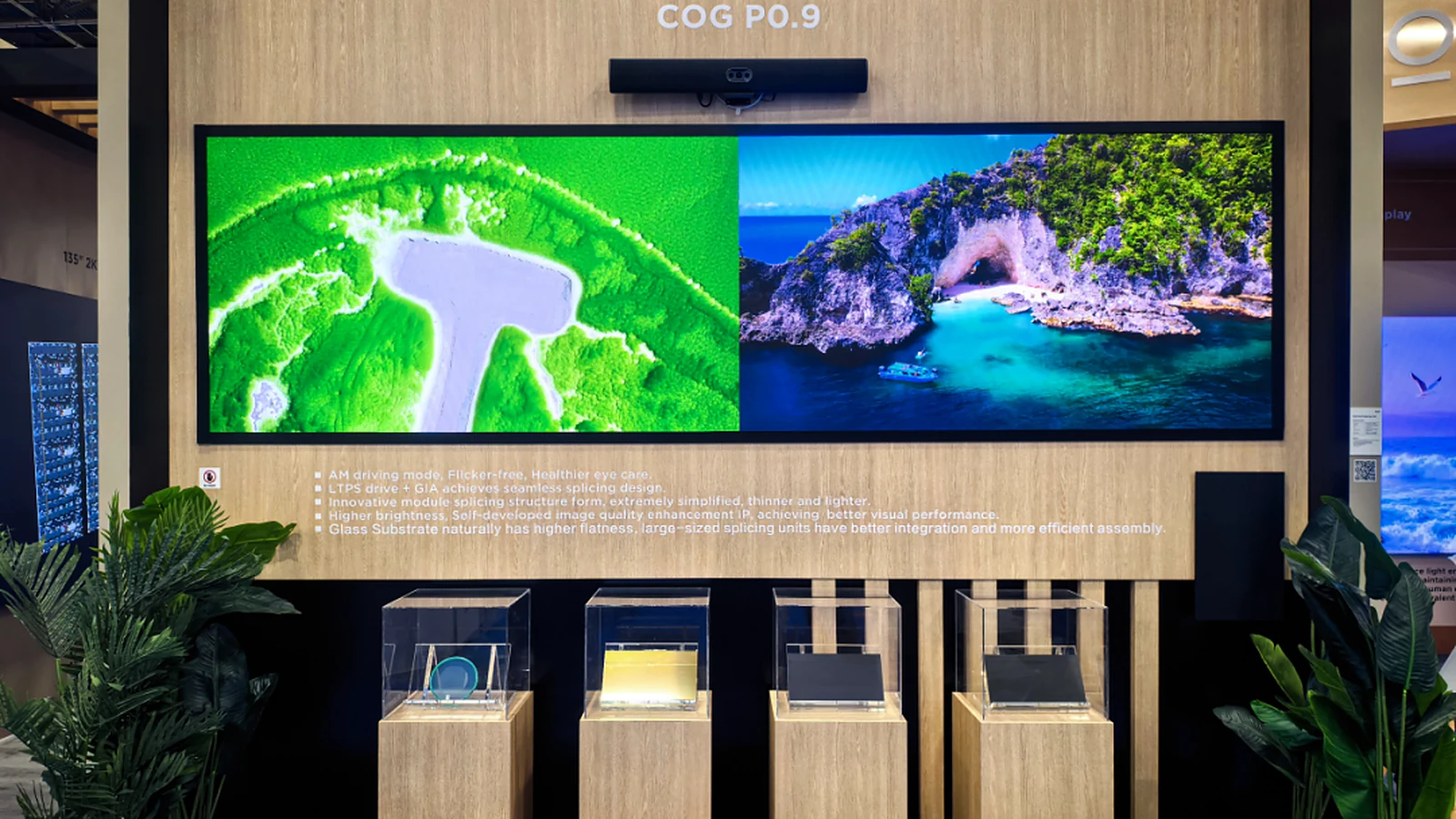
!BOE COG glass substrate LED display — a future direction
Why is the Future of LED Displays More Than Just Micro-LED?
Micro-LED is often seen as the ultimate goal because each pixel is a tiny light source, self-emissive, and capable of high density. However, the future of LED displays cannot be reduced to a single technology label. In reality, the market is moving in multiple parallel directions: COB continues to shrink towards P0.4, MiP makes the P0.3-P0.6 range more mainstream, while COG/Micro-LED targets sub-P0.1 resolutions in glass or silicon substrate structures. Each path addresses different challenges in manufacturing, repair, cost, and image quality.
The key point is that businesses don't need to wait for a "day Micro-LED replaces everything" to make decisions. Control rooms, studios, showrooms, retail spaces, auditoriums, and architectural facades have different requirements. A glass substrate COG LED display might be suitable where thinness, flatness, and seamlessness are needed; MiP is ideal for smaller pitches while maintaining commercial viability; COB is suitable for many indoor applications with close viewing distances.
Therefore, when evaluating trends, the right question isn't "which technology is the newest," but rather "which technology addresses the specific risks of the project." These risks could include very close viewing distances, continuous operation, preemptive maintenance requirements, load limits, on-camera performance, or the aesthetic appeal of the glass surface. The technology's name is only valuable if it demonstrably reduces these risks.
How Will Glass Substrate COG Revolutionize Seamless Large Displays?
COG, or Chip-on-Glass, integrates LED chips onto an active-matrix glass substrate instead of a traditional PCB. This approach is significant because the glass becomes not just a protective front layer, but also the electrical and mechanical substrate for the display system. When combined with active-matrix driving, COG paves the way for thinner, flatter, lighter, and more seamless large displays. This is why glass substrates are considered a primary direction for next-generation large displays, especially in the professional display segment.
For buyers, the benefits of COG should be translated into project language: flatness when joined, overall thickness, load-bearing capacity, surface feel, geometric stability, and the potential for all-in-one structures. BOE has integrated COG into its MLED roadmap, mass-produced MicroLED in Zhuhai in 2024, showcased a 205-inch ultra-thin COG HDR Micro-LED at SID 2026, and presented a P0.9 COG that won Best of Show at InfoComm 2026. These indicators suggest that glass substrates are no longer confined to laboratory research.
However, COG is not automatically suitable for every project. COB on PCB still benefits from a familiar supply chain and can be a logical choice when prioritizing brightness, module replaceability, or lifecycle cost. COG becomes more compelling in spaces requiring thin designs, refined surfaces, high seamlessness, or preparation for Micro-LED and transparent display roadmaps. Investors should read the article BOE BYH-COG Glass Substrate before comparing COG and COB quotes.
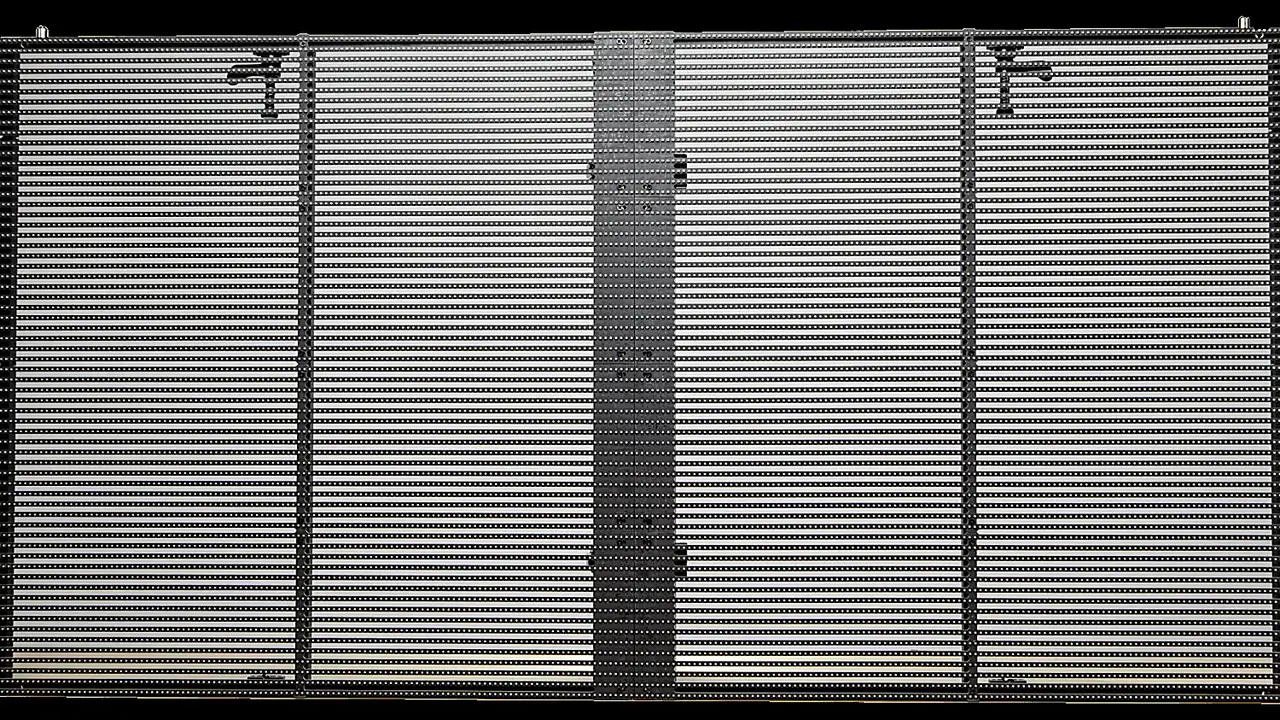
!Transparent LED display at an exhibition

Where Will Transparent LED Displays Make an Impact?
Transparent LED displays have a different development logic than conventional video walls. They don't just replace a display surface; they change how displays interact with architecture, glass, and light. As transparent technology advances and the cost of transparent Micro-LED decreases, key application areas will include architectural facades, retail glass windows, showrooms, experience centers, and spaces where maintaining see-through depth is desired. These are areas where traditional LCD or opaque LED displays often detract from the sense of openness.
In retail, transparent displays allow brands to project content onto glass surfaces without blocking the view of products. In architecture, they can transform facades into display channels while retaining some degree of light transmission. In showrooms, they can create floating information layers in front of physical products, suitable for cars, technology equipment, model real estate, or experience centers. The article What is Muxwave Transparent LED Display delves deeper into understanding transparency, brightness, and installation structures.
A crucial consideration is that transparent displays should not be chosen solely for their novelty. Content must be designed with the background objects in mind; brightness must be balanced with ambient light; suspension systems, power, glass cleaning, and maintenance must be factored in from the outset. If the background is too cluttered, contrast will suffer, diminishing the display's effectiveness.

Do All-in-One Systems and Glass Substrates Simplify Deployment?
All-in-one systems are becoming increasingly popular because they reduce the complexity of LED projects. Instead of designing individual cabinets, frames, power supplies, controllers, and calibration processes for a custom system, all-in-one displays integrate multiple components into a more complete product. When combined with glass substrates, thin designs, and seamless structures, all-in-one solutions become an attractive direction for meeting rooms, boardrooms, small control centers, premium training rooms, and showrooms requiring compact deployment.
The benefits extend beyond quick installation. For B2B clients, all-in-one systems reduce the number of technical decisions to manage: aspect ratios are more standardized, processing systems are more integrated, acceptance testing is clearer, and the operational experience is closer to commercial display devices. This is particularly important when the end-users are not LED technicians. A display system for meetings, training, or presentations needs to be reliably operational daily, rather than just impressive on delivery day.
!All-in-One monolithic LED display
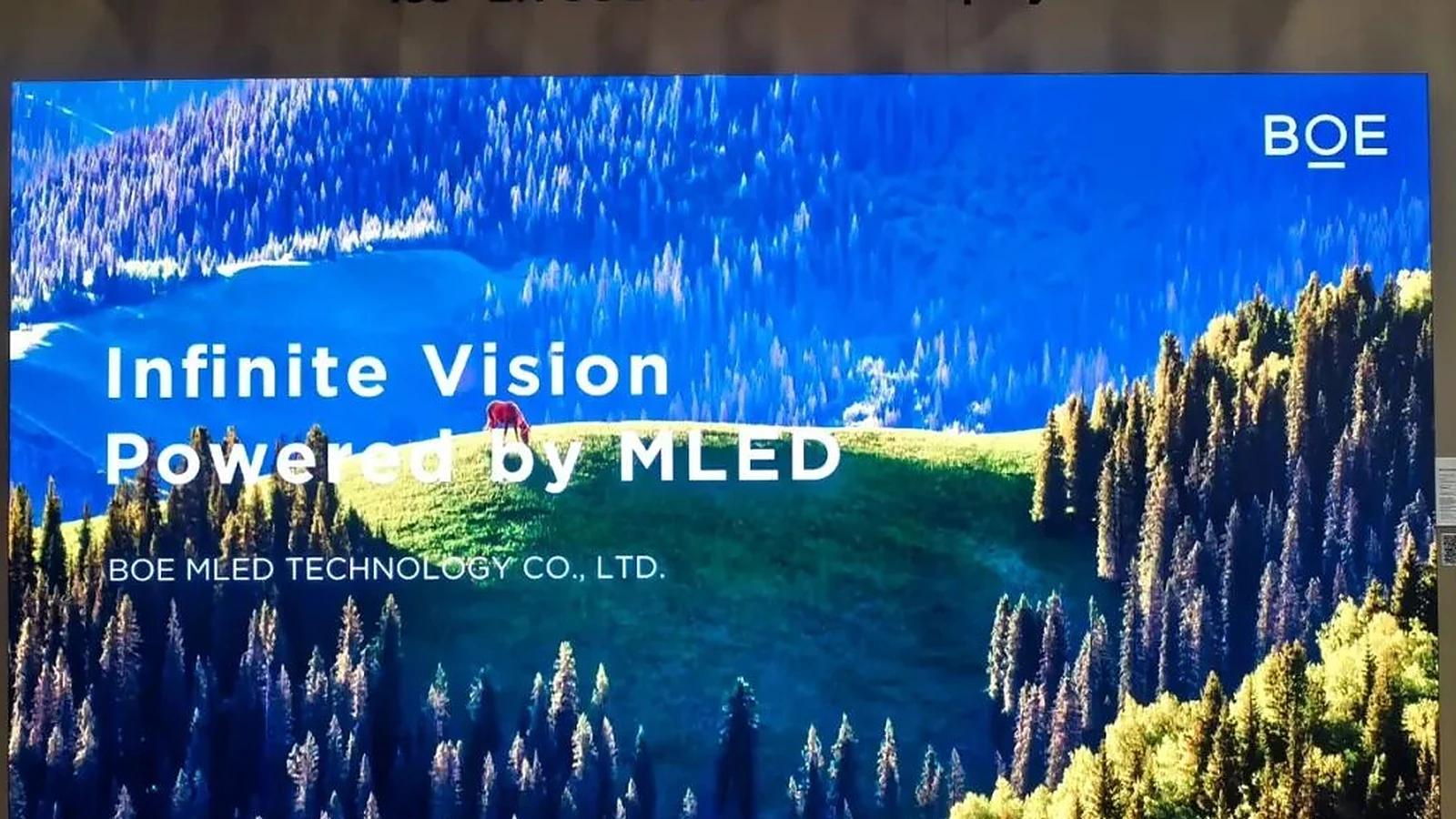
However, all-in-one systems do not replace custom video walls in all scenarios. If a project requires non-standard sizes, very wide aspect ratios, curves, stages, broadcast studios, or large facades, traditional modular systems offer greater flexibility. For multiple signal sources, layered visuals, or complex scene transitions, processors like PixelHue remain a critical part of the system. Products within the PixelHue family, such as PixelHue Q8, PixelHue P10, PixelHue P20, and PixelHue P80, should be evaluated based on signal scale, not just the display itself.
What are the Bottlenecks Hindering True Micro-LED Commercialization?
The difficulty in widespread commercialization of true Micro-LED is not due to a lack of concept, but rather the extreme manufacturing challenges at scale. The first bottleneck is mass transfer: precisely placing millions of microscopic die onto the display substrate at micrometer accuracy. The second bottleneck is yield: production must achieve extremely low defect rates, as even a small percentage of defects results in numerous pixels requiring repair on large displays. The industry currently notes a requirement for yields above 99.99%, while many processes still hover around 99.5-99.8%.
The third bottleneck is wavelength uniformity. With microscopic LEDs, minor variations in color, brightness, or efficiency can become apparent across a large display surface. This necessitates more complex sorting, calibration, repair, and testing steps. This is why true Micro-LED remains in the premium price category and is not yet a default option for all projects. MiP serves as a bridge by integrating small chips into packages that are easier to test, replace, and commercialize compared to direct bare-chip transfer.
This is also why Luxwave advises businesses against chasing technological FOMO. If a project requires stable deployment, commercial MiP, COB, or COG might be more appropriate choices. If the project is a flagship, lab, technology showroom, or iconic space, Micro-LED might be worth considering. The article Commercial Micro-LED at InfoComm 2026 further analyzes how to distinguish between demo products and orderable configurations.
How Should Businesses Time Their Investments?
Investment timing should start with the intended use case, not with technology news. If the display is for daily operations like command centers, broadcast studios, meeting rooms, training facilities, or sales showrooms, the key factors are stability, warranty, replaceability, power consumption, and content. If the display is an architectural highlight or a brand communication tool, transparent displays, COG, or early-stage Micro-LED might be considered, but with clear technical specifications and warranty commitments.
A practical approach is to divide options into three tiers. The mature tier includes COB, certain MiP configurations, and established LED systems with clear warranty channels. The expanding tier includes glass substrate COG, premium all-in-one systems, and smaller-pitch MiP. The strategic tier includes true Micro-LED, transparent Micro-LED, and LEDoS for AR/VR/HUD. For the strategic tier, businesses should monitor, conduct controlled experiments, and invest only when the benefits clearly outweigh the deployment risks.
ESG factors should also be integrated into the timing decision. Self-emissive LEDs, common-cathode designs, and glass substrates can significantly reduce power consumption in many scenarios and lessen the thermal load on operating spaces. However, these benefits must be calculated based on the set brightness, usage duration, and actual content. A project with clear electrical specifications, a suitable processor, and a sound operational policy will be more sustainable than a decision based solely on "green technology" messaging.
Conclusion: What Roadmap Should the Near Future Follow?
The future of LED displays post-2026 is a multi-layered roadmap. COB will continue its strong commercial role in indoor fine-pitch applications; MiP will serve as a bridge to make smaller pitches more mainstream; glass substrate COG will open avenues for thin, flat, light, and seamless displays; true Micro-LED will advance towards very high densities; and transparent displays will accelerate in architecture, glass facades, and showrooms. There is no single correct choice for every project, nor is there a reason to purchase based on a fear of missing out.
For Vietnamese businesses, a sensible approach is to evaluate technology based on timing. For short-term deployment needs, prioritize configurations with proven warranty, components, and operational track records. For mid-term preparation, explore COG, MiP, and all-in-one systems. To lead in brand image, incorporate Micro-LED or transparent displays into controlled pilot projects. News like BOE COG P0.9 Best of Show InfoComm 2026 are positive signals but do not replace project-specific due diligence.
Luxwave, as a premium LED brand under Ho Gia JSC and an authorized PixelHue distributor in Vietnam, prioritizes helping clients make the right choice over the newest one. When comparing glass substrates, processing systems, transparent displays, or brands, you can start with BOE MLED, PixelHue, and the article How to Choose LED Pixel Pitch 2026. A good decision is one that can be justified by viewing needs, operation, power consumption, warranty, and usage lifecycle.
Pitfalls
Common mistakes
- Considering all products labeled Micro-LED as the same technological level; in reality, MiP, COB, COG, and true Micro-LED chips have different commercial maturity.
- Investing based on exhibition hype without clarifying yield, module replaceability, color calibration, and warranty availability in Vietnam.
- Choosing transparent displays solely for their novelty, while overlooking content, background lighting, viewing angles, and facade maintenance requirements.
- Evaluating ESG solely on power saving claims, without considering operating brightness, usage duration, power source, heat dissipation, and system lifespan.
FAQ
Frequently asked questions
Will Micro-LED completely replace current LED displays?
It should not be understood as an immediate replacement. True Micro-LED has potential in pixel density, brightness, and durability, but production costs, mass transfer, and yield remain bottlenecks. In many B2B projects, COB, MiP, and COG will coexist as each technology offers a unique balance of quality, warranty, and budget.
What role does MiP play in the transition to Micro-LED?
MiP serves as a crucial bridge by packaging very small chips into units that are easier to manufacture, test, and replace than true Micro-LED chips. As P0.3-P0.6 pitches become more common, MiP helps the market approach Micro-LED quality without bearing the full risks of mass transfer and yield inherent in pure Micro-LED production.
Which projects are suitable for transparent LED displays post-2026?
Transparent displays are suitable for architectural facades, retail glass windows, showrooms, experience centers, and spaces where maintaining see-through visibility is important. However, their effectiveness strongly depends on content, background lighting, viewing distance, and installation structure. Businesses should view these as spatial design solutions, not just another type of LED screen.
How does glass substrate COG differ from traditional COB?
COG places chips on an active-matrix glass substrate, whereas COB typically mounts chips on a PCB and then applies a protective coating. Glass substrates enable thinner, flatter, lighter, and more seamless displays, paving the way for Micro-LED and transparent applications. COB still holds commercial advantages in many projects due to its familiar supply chain and maintenance procedures.
Should businesses wait for Micro-LED costs to decrease before investing?
Waiting is advisable if the need is not urgent or if the project primarily aims to leverage new technology for branding. If businesses require displays for immediate daily operations, sales, training, or control functions, it's better to choose more mature technologies like COB, MiP, or commercial COG. The right decision balances the usage lifecycle, warranty, and deployment timeline.
How should the power efficiency of new-generation LEDs be evaluated?
Power efficiency is not solely determined by the technology name. It's essential to consider the self-emissive mechanism, common-cathode design, glass substrate, set brightness, displayed content, operating duration, and heat dissipation. For B2B clients, ESG benefits should be quantified based on actual usage scenarios rather than relying solely on manufacturer marketing claims.
References
- 1.ManufacturerGenuine PixelHue
- 2.NewsPixelHue Facebook
- 3.StandardPixelHue Master Academy (PMA) Curriculum
- 4.ResearchConsolidated Trends in Micro-LED/Transparent Displays 2025-2026
- 5.ManufacturerBOE MLED
- 6.NewsSID Display Week 2026