
On this page
- What is an IP Rating and Why is it Important for Outdoor LEDs?
- What is IP65 and Why is it the Common Outdoor Standard in Vietnam?
- When is it Necessary to Upgrade to IP66?
- Is IP67 Actually Necessary for LED Displays?
- Why Does Incorrect IP Rating Installation Void Warranties?
- How to Verify a Product's Actual IP Rating?
- Conclusion: Choose the Right IP Rating for the Environment
What is an IP Rating and Why is it Important for Outdoor LEDs?
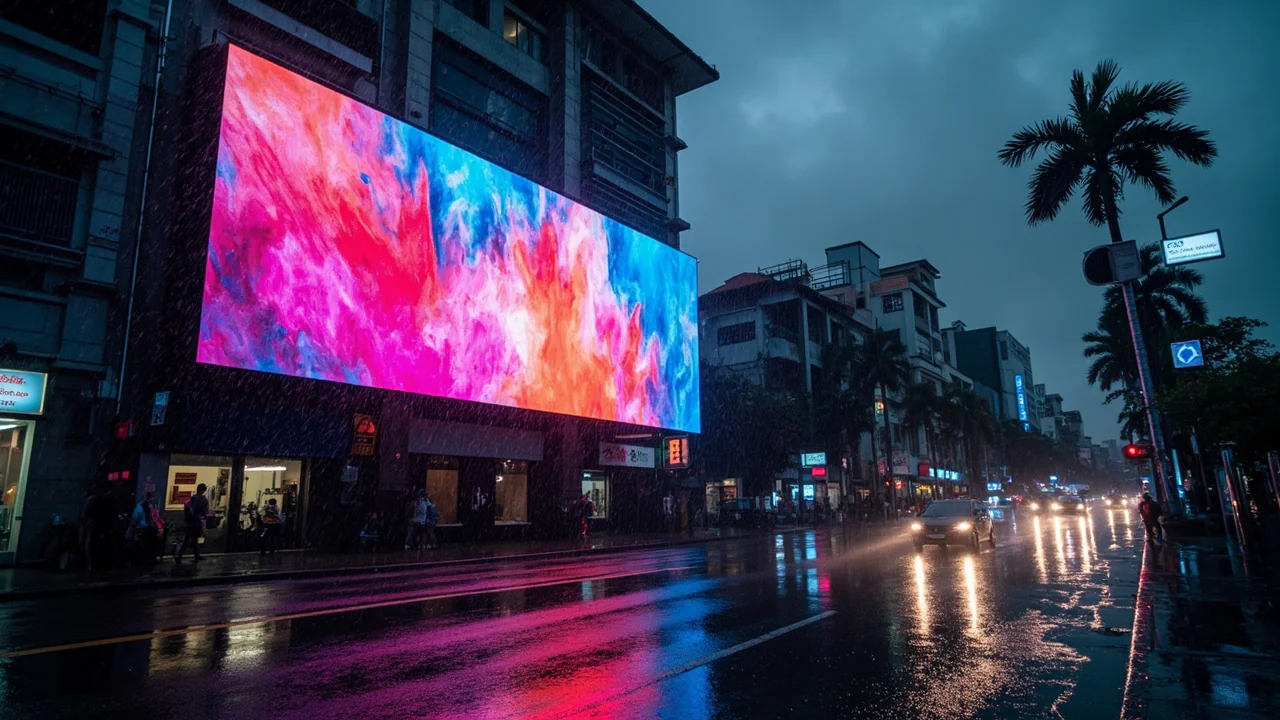
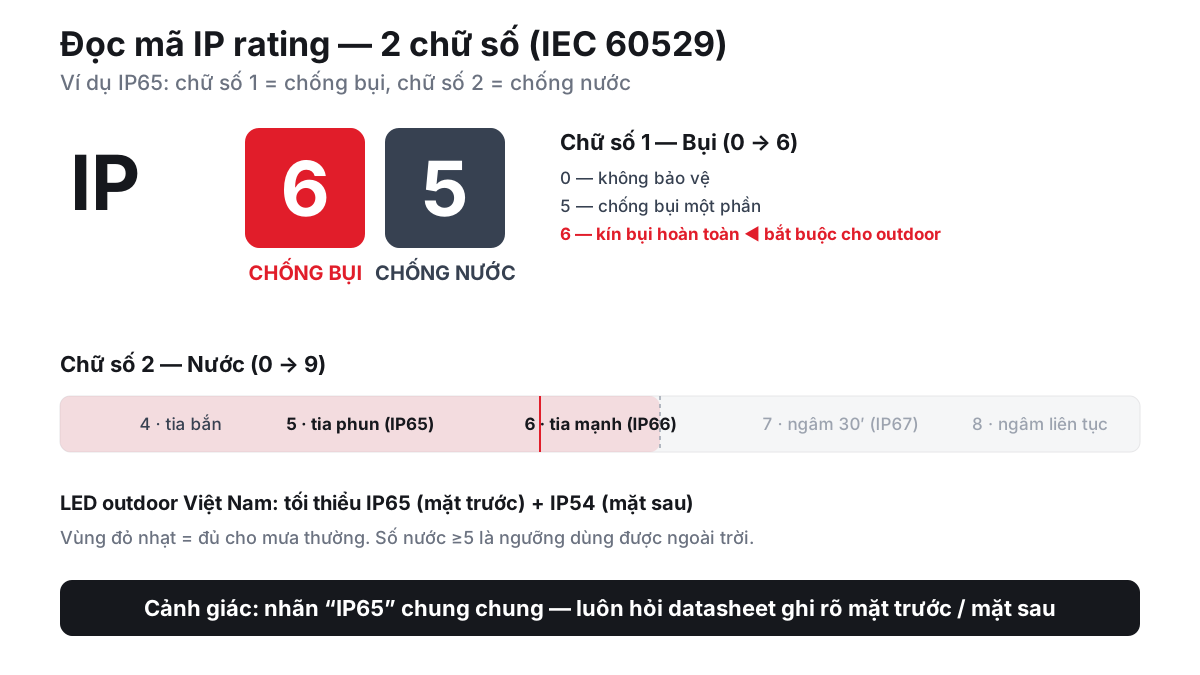
The IP rating (Ingress Protection), according to the international standard IEC 60529, is a two-digit code that specifies the degree of protection provided by electrical enclosures against dust and water. The first digit (0-6) measures dust ingress protection, and the second digit (0-9) measures water ingress protection. For outdoor LED displays in Vietnam, with its tropical climate characterized by heavy rain and high humidity, significant road dust, the IP rating is not just a marketing number but a critical factor directly determining the lifespan, maintenance costs, and warranty eligibility of the entire system.
The Structure of an IP Rating: Two Decisive Digits
- First Digit (Dust): 0 = No protection, 5 = Partial dust protection, 6 = Complete dust protection
- Second Digit (Water): 4 = Splash resistant, 5 = Jet resistant, 6 = Strong jet resistant, 7 = Submersible for 30 minutes, 8 = Continuous submersion
Outdoor LEDs require a minimum rating of IP65 — completely dust-tight and resistant to water jets. This is the minimum threshold for all outdoor digital out-of-home (DOOH) billboard [/giai-phap/outdoor-dooh-billboard] and facade LED projects [/giai-phap/bien-vay-mat-tien]. Below this level, moisture and fine dust can accumulate inside the cabinet, leading to module short circuits and PCB corrosion after just a few rainy seasons.
What is IP65 and Why is it the Common Outdoor Standard in Vietnam?
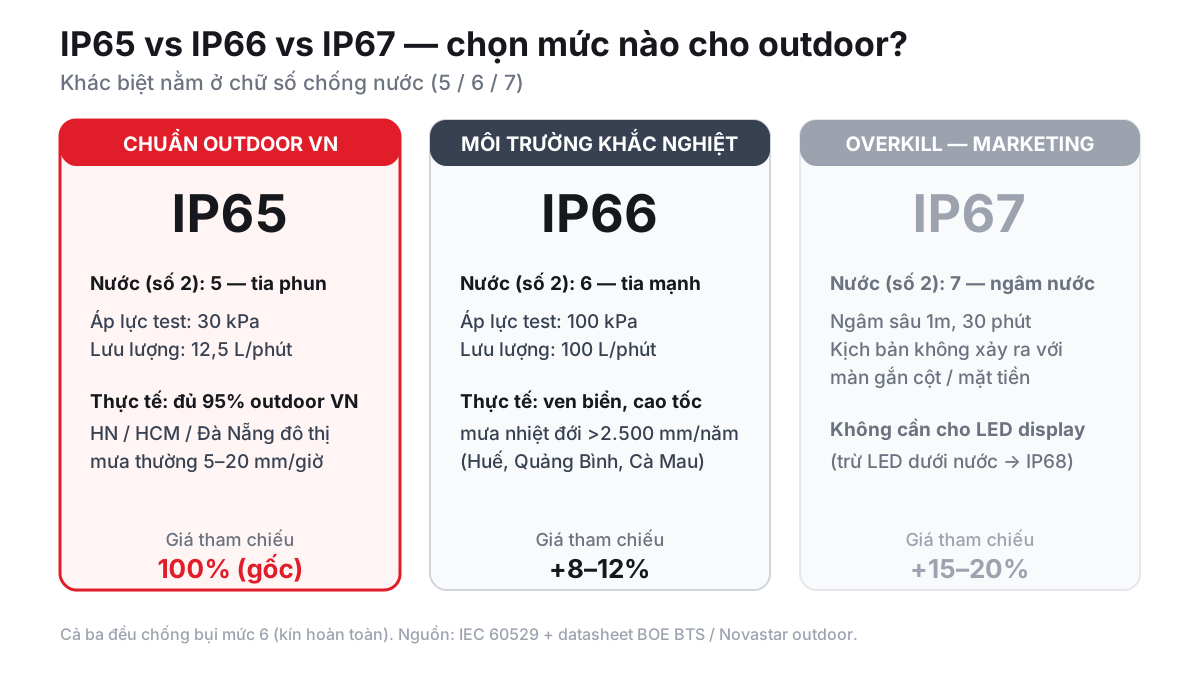
IP65 means the cabinet is completely dust-tight (level 6) and can withstand water jets from any direction at a pressure of 30 kPa with a flow rate of 12.5 liters/minute. This level is more than sufficient for typical rainfall in Vietnam (common intensity of 5-20 mm/hour), making it the chosen standard for approximately 95% of urban outdoor projects in Hanoi, Ho Chi Minh City, and Da Nang. Tier-1 brands like BOE BTS Series (BOE MLED, SMD direct-view) and Novastar's outdoor solutions achieve IP65 on the front according to the manufacturers' product documentation — this serves as a baseline for comparing higher protection levels.
IP65: Differentiating Front and Rear Protection is Crucial
This is the most overlooked aspect when purchasing equipment. An outdoor LED cabinet has two sides with different environmental exposures: - Front (display side): Where the LED chips are located and directly exposed to rain and sun — always requires IP65 or higher. - Rear (back side): Houses power connectors, cooling fans, and signal cables — requires proper sealing and drainage.
Many grey market products only achieve IP65 on the front, with the rear actually being IP43-54. Vietnam's tropical rains often blow sideways or upwards, entering the rear through ventilation slots, causing moisture and corrosion to resistors and capacitors within 3-6 months. The correct outdoor standard must specify IP65 (front) + IP54 (rear) or higher — always request datasheets that differentiate between the two sides; do not accept generic "IP65" labels.
When is it Necessary to Upgrade to IP66?
IP66 maintains complete dust protection (level 6) but upgrades water resistance to level 6 — capable of withstanding high-pressure water jets (100 kPa with a flow rate of 100 liters/minute), which is 8 times that of IP65. On a panel basis, IP66 is approximately 8-12% more expensive than IP65, making it a worthwhile investment only for truly harsh installation environments. Luxwave recommends upgrading in three scenarios:
1. Coastal Areas — Salty air causes rapid corrosion; requires corrosion-resistant alloy cabinets combined with IP66 protection. 2. High-Speed Highways and Major Roads — Strong winds create high-pressure water jets; IP66 offers superior protection against ingress through gaps. 3. Tropical Rain Zones (>2,500 mm/year) — Areas like Hue, Quang Binh, Ca Mau, and the Central Highlands experience prolonged heavy rainfall for months.
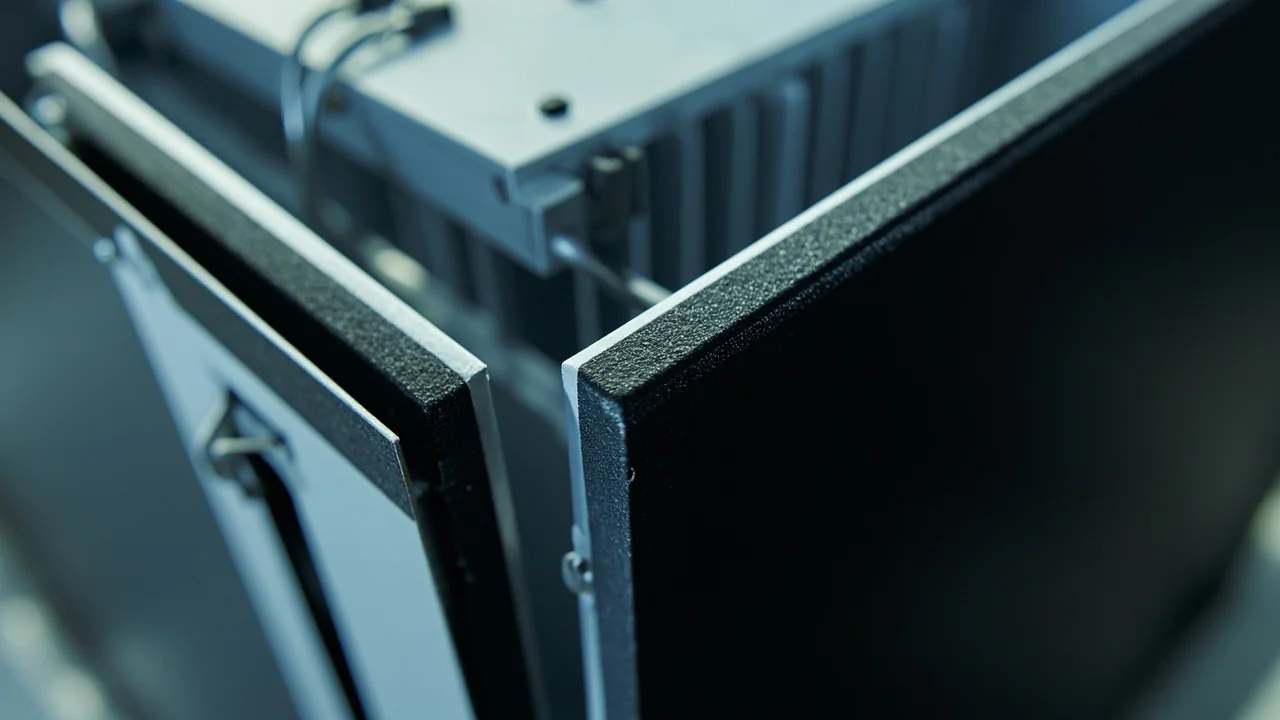
For typical Hanoi/HCMC/Da Nang conditions (rainfall <2,000 mm/year), IP65/IP54 is more than sufficient, and IP66 would only increase costs without providing significant practical benefits. An important note: IP66 is only effective when paired with appropriate materials and construction — corrosion-resistant alloy cabinets, UV-resistant EPDM rubber gaskets, and bottom drainage systems. Using an IP66-rated panel with a standard painted steel frame and junction box will shift the weak point to the structure, leading to rapid degradation even with a high-rated panel in a coastal environment.
Is IP67 Actually Necessary for LED Displays?
No. IP67 signifies resistance to submersion in water up to 1 meter deep for 30 minutes — a scenario highly unlikely for LED displays mounted on poles or building facades. This rating is designed for underwater electrical equipment like pool lights or submersible cameras, which is irrelevant for outdoor advertising screens. For LED displays, IP66 already covers all realistic weather conditions in Vietnam, including coastal areas and storms.
Many dealers use the "IP67" label as a marketing tool to justify a 15-20% price increase. Ask them to clearly explain why your specific project requires IP67; if there's no convincing technical reason, it's a wasteful expense. The only situation requiring protection beyond IP66 is for LEDs installed underwater (pools, fountains), which then requires the IP68 standard — a specialized product category.
Why Does Incorrect IP Rating Installation Void Warranties?
All tier-1 OEMs (BOE, Novastar, PixelHue) enforce strict policies: manufacturer warranties are voided if products are installed in environments inconsistent with their specifications. This is why many initially cost-saving projects face significant expenses when issues arise without support. Common scenarios include:
- Indoor LEDs (IP31) installed outdoors to save ~40% cost → 100% warranty loss, failure within 6-12 months.
- Outdoor LEDs (IP54) installed in coastal areas → warranty reduced to 12 months from 24-36 months due to salt corrosion.
- IP66 outdoor LEDs with improperly installed mounting structures → cabinet warranty remains valid, but structural warranty is void.
Refer to the article Indoor vs. Outdoor LEDs: How to Choose to clearly distinguish installation environments before finalizing configurations.
How to Verify a Product's Actual IP Rating?
Don't trust labels — verify with three specific steps before committing to any outdoor order. This process helps distinguish genuine, certified products from grey market items with exaggerated specifications and takes less than 10 minutes when dealing with a reputable supplier:
1. Request the official OEM datasheet — it must clearly state "front" and "rear" ratings. If only a generic "IP65" is listed, question it immediately, as the rear is likely less protected. 2. Ask for an independent test certificate from TUV, SGS, or Intertek — third-party lab certifications are more reliable than manufacturer self-declarations. 3. Check the physical label on the cabinet upon delivery — the IP rating should be stamped or printed on the metal casing, not a sticker. Stickers are easily removed and replaced, serving as a red flag.
Luxwave provides all three for every outdoor order: official datasheets differentiating front and rear ratings, third-party test certificates, and physical labels stamped on the cabinet.
Conclusion: Choose the Right IP Rating for the Environment
Selecting an IP rating isn't about choosing the highest number, but matching it precisely to the actual installation environment: overkill wastes budget, while under-specifying leads to screen failure and voided warranties. Here's a concise guideline for quick decisions on all outdoor LED projects in Vietnam:
- IP65/IP54: Sufficient for ~95% of outdoor projects in Vietnam — urban areas (Hanoi/HCMC/Da Nang), typical rainfall, billboards, and facade screens.
- IP66: For harsh environments — coastal areas, highways, and regions with heavy tropical rain (Central Vietnam).
- IP67+: Unnecessary for standard LED displays — merely a marketing label that inflates prices, except for underwater applications (IP68).
The most crucial step is to request datasheets specifying front and rear IP ratings, accompanied by third-party test certificates — do not trust generic "full IP65" labels. Investing in the correct rating ensures a lifespan matching the datasheet (10+ years), full manufacturer warranty, and low maintenance costs throughout the product's lifecycle. Refer to the Q2/2026 Price List for budgeting, or use the Get a Quote per m² tool to estimate outdoor costs based on area and installation environment.
| Criterion | IP65 | IP66 | IP67 |
|---|---|---|---|
| Dust Protection | 6 — Complete | 6 — Complete | 6 — Complete |
| Water Protection (2nd Digit) | 5 — Jet Resistant | 6 — Strong Jet Resistant | 7 — Submersible for 30 Minutes |
| Test Water Pressure | 30 kPa, 12.5 L/min | 100 kPa, 100 L/min | Submerged 1m deep for 30 min |
| Vietnam Practicality | Sufficient for 95% of outdoor | Highways + Coastal | Overkill for LEDs |
| Reference Price (%) | Baseline 100% | +8-12% | +15-20% |
| Applicable Brands | BOE BTS, Novastar Outdoor | BOE BTS Pro, PixelHue | Marketing Label Only |
Field insight
Evidence from a Luxwave-delivered project
See the full case study at /du-an/ecopark-p25-indoor.
Pitfalls
Common mistakes
- Trusting generic 'full IP65' specs — always request datasheets differentiating front/rear (IP65/IP54 is standard, not pure IP65)
- Buying indoor LEDs (IP31) for outdoor use to save 40% — failure within 6-12 months due to rain ingress + peak summer temps, voiding manufacturer warranty
- Investing in IP67 for standard LED displays — overkill +15-20% cost, IP66 is sufficient for all outdoor scenarios in Vietnam (even near coasts)
- Skipping TUV/SGS test certificate verification — relying solely on datasheet labels without third-party validation; many suppliers exaggerate specs
FAQ
Frequently asked questions
What is the minimum IP rating required for outdoor LEDs in Vietnam?
IP65 for the front and IP54 for the rear is the minimum standard for outdoor use in Vietnam. IP65 provides complete dust protection and resistance to water jets from all directions (typical rain). IP54 protects the rear from splashing water through ventilation slots. Products only stating 'IP65' without differentiation are a red flag — check the datasheet before purchasing, don't trust marketing labels.
How much more does IP66 cost than IP65, and when should it be chosen?
IP66 is approximately 8-12% more expensive than IP65 per panel. It should be chosen when: (1) installing near the coast — salty air causes rapid corrosion; (2) on high-speed highways — strong winds and water jets; (3) in tropical rain zones >2500mm/year (Hue, Quang Binh, Ca Mau). For normal conditions in Hanoi/HCMC, IP65/IP54 is sufficient — IP66 is an unnecessary expense.
Why do some suppliers claim 'full IP65' when the rear is only IP43?
This is a common marketing tactic in the grey market for LEDs. The IP65 test is often performed only on the front (display side) where manufacturers want to achieve certification. The rear is typically tested at a lower level or not at all. Request official OEM datasheets clearly stating 'IP65 (front) / IP54 (rear)' or equivalent. If no differentiation is provided, assume the rear is less protected and unsuitable for actual outdoor use.
Is IP67 truly necessary for outdoor LED displays?
No. IP67 allows submersion in water up to 1 meter deep for 30 minutes — a scenario that never occurs with LED displays mounted on poles or building facades. IP66 already provides resistance to high-pressure water jets and heavy tropical rain. IP67 is merely a marketing label that increases prices by 15-20% without practical benefit. The exception is LEDs installed underwater (pools, fountains), which require IP68 — a specialized application.
How can I verify a product's IP rating before purchasing?
Use three methods: (1) Request the official OEM datasheet (BOE, Novastar) — clearly differentiating front/rear IP ratings; (2) Ask for an independent test certificate from TUV, SGS, or Intertek — third-party lab verification; (3) Check the physical label on the cabinet upon delivery — the IP rating should be stamped on the metal casing, not a removable sticker. Luxwave provides all three for every outdoor order.
Does warranty coverage get affected by using the wrong IP rating for the installation environment?
Yes, significantly. All tier-1 OEMs (BOE, Novastar, PixelHue) have a policy: manufacturer warranties are voided if products are installed in environments inconsistent with their specifications — e.g., installing indoor IP31 LEDs outdoors. Installing indoor cabinets outdoors is acceptable but overkill. Verify that the installation environment specifications match the IP rating before deployment; otherwise, you bear the cost of failures occurring after 6-12 months.
References