
On this page
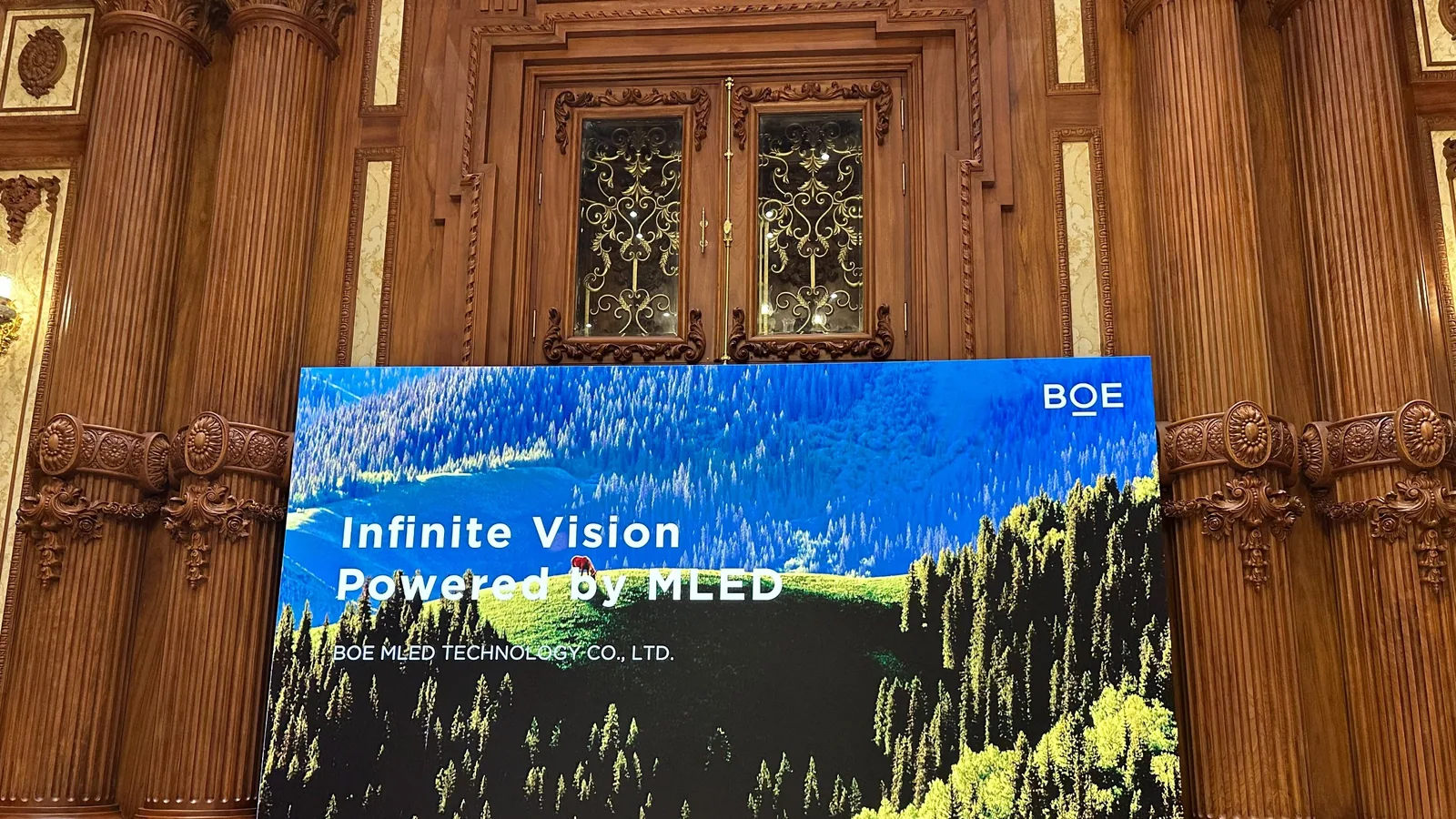
What Factors Determine LED Screen Cost in Vietnam?
The cost per square meter of an LED screen in Vietnam is not a fixed number but the sum of six contributing factors: pixel pitch, indoor or outdoor installation environment, COB or SMD chip packaging technology, brand and component quality, signal processor, and finally the frame structure, power supply and installation labour. Understanding these six factors lets you read a quote yourself and see where the money is going, instead of only comparing the bottom line. This is also why two quotes for the same "P2.5 indoor" screen can differ noticeably even though they look alike on paper.
This article does not publish a price table, because real figures depend on too many variables that change per project and per period. The goal instead is to give you a firm grasp of how cost is formed so you can be more in control when requesting a quote. Look up terms from this article in the LED glossary, or see detailed pitch selection guidance in choosing pixel pitch for meeting room LED screens. First, let's understand why each factor pushes cost up or down.
Pixel Pitch — The Heaviest Factor
Pixel pitch is the distance in millimetres between the centres of two adjacent pixels, and it is the heaviest variable in cost. The smaller the pitch, the more LED chips per square meter, rising with the square of the ratio: P1.5 has roughly 444,000 pixels per square meter, nearly three times P2.5 with 160,000. More chips means more components, more placement work and more calibration, so the investment per square meter climbs steeply as pitch drops. This is a physical constraint, not a marketing tactic, so do not force a pitch smaller than the actual viewing distance requires.
How Does Indoor Versus Outdoor Affect Cost?
The installation environment is the second factor, and it splits the market into two clearly different cost groups. Outdoor screens must survive rain and sun, so they need IP65 to IP66 ingress protection per IEC 60529 and high brightness to stay readable in daylight — the BOE BTS outdoor module line in the Luxwave catalogue sets a floor of ≥5,000 nits across every pitch from P2.5 to P5 — plus thick cast aluminium housings, moisture-resistant power supplies and surge protection circuits. All of this adds to panel cost. In return, outdoor screens usually use a larger pitch because viewers stand far away, so the final cost per square meter can end up lower than a small-pitch indoor screen despite the more complex construction.
The point to remember is that outdoor cost already bundles many protective items buyers tend to forget when comparing against indoor. Processors, IP66 power supplies and the surge protection system for an outdoor screen raise cost relative to the same pitch indoors. So when you receive a surprisingly low outdoor quote, check the IP rating and power supply configuration immediately — what got cheaper is usually exactly those protective items, and it is paid back later in service life.
Brightness and IP Rating Push Outdoor Cost Up
At the same pitch, a panel pushed above the ≥5,000 nits baseline of the BTS line will cost more, because it needs higher-power LED chips and better heat dissipation. Similarly, IP66 (protection against powerful water jets from any direction per IEC 60529) costs more than IP65 due to tighter gaskets and more carefully cast housings. When reading an outdoor quote, brightness and IP rating must both be stated explicitly — if a supplier leaves them vague, they may well be using lower-grade components to cut cost. See real configurations from outdoor projects on the Luxwave projects page.
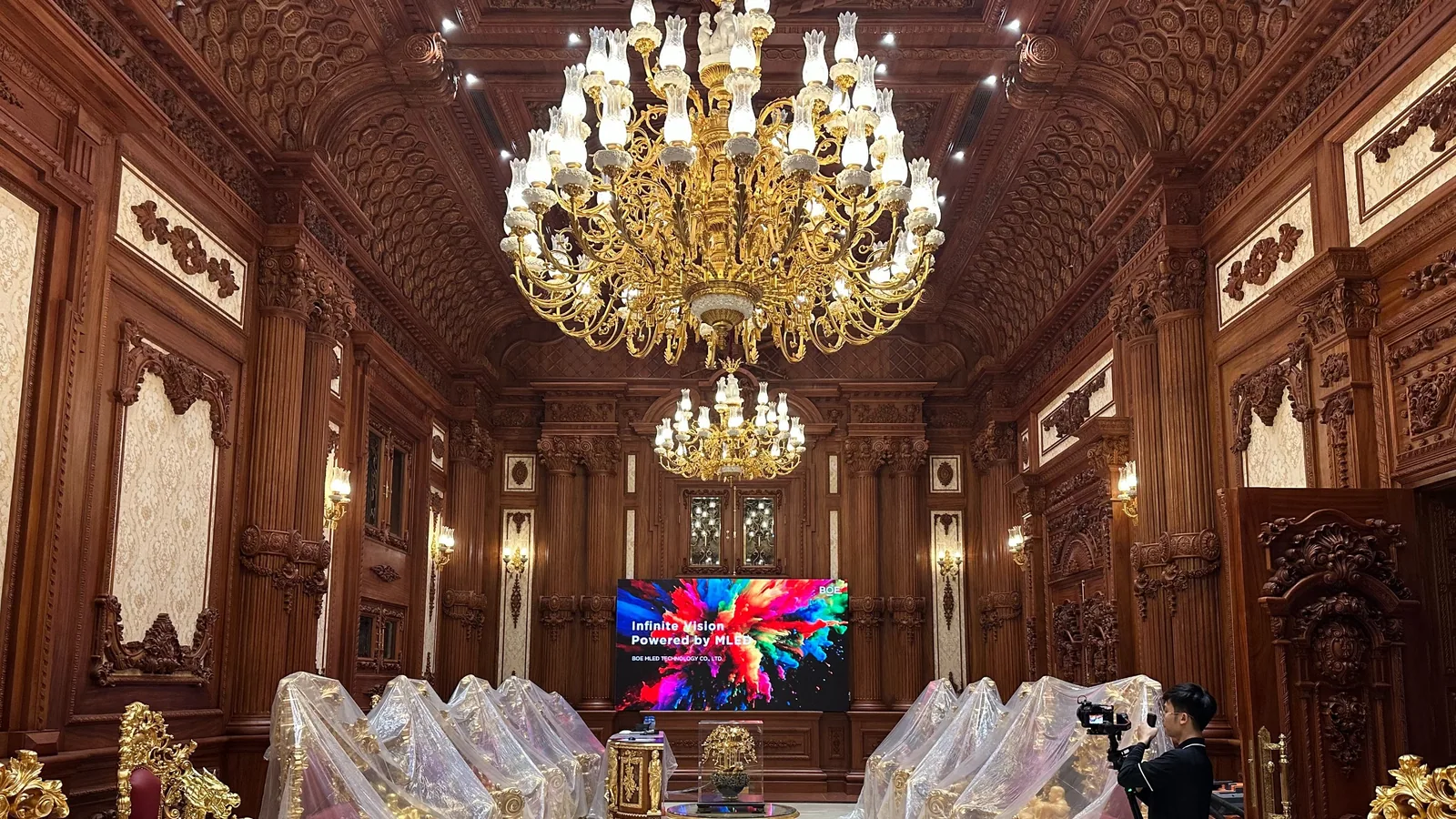
COB or SMD — Where Does the Cost Gap Come From?
COB and SMD are two ways of packaging LED chips, and this technological difference creates the largest cost gap at a given pitch. SMD mounts individually plastic-packaged chips onto the board surface — a mature technique, low cost, suitable from P1.5 upward. COB bonds bare chips directly onto the board and then covers them with a seamless protective resin layer, giving a flat impact-resistant surface, high contrast and no glare when viewed close up. In return, COB demands more complex production lines and calibration, so it costs more than SMD at the same pitch.
This difference shows clearly in the premium segment: ultra-fine-pitch COB is the most expensive group, while SMD at a comparable pitch is far gentler on the investment. COB genuinely earns its cost at small pitches and in environments where viewers sit close to the screen — boardrooms, premium showrooms and exhibitions, or video meeting rooms with cameras. At P1.9 and above with viewers standing back, SMD delivers comparable images at a much more comfortable cost — although industry reporting notes that COB in the P1.5-and-above band is steadily closing the cost-efficiency gap with SMD at the same pitch. For a deeper look at durability and maintenance differences, read COB vs SMD compared, 2026.
When Is COB Worth More Than SMD?
COB is worth the investment when three conditions meet: a small pitch of P1.25 or below — the band where, according to the 2026 COB/MIP report from Hangjia Research, P1.2/P1.25 remains the main shipping volume while P0.9 holds the ultra-fine segment — viewers seated closer than 3 metres, and a need for camera capture or live streaming. In these scenarios COB's flat surface and high refresh rate avoid the moiré that cameras pick up easily, and it resists impact better where users touch the screen. Conversely, for auditoriums, billboards or standard meeting rooms viewed from 3 metres out, SMD remains the balanced and more economical choice overall.
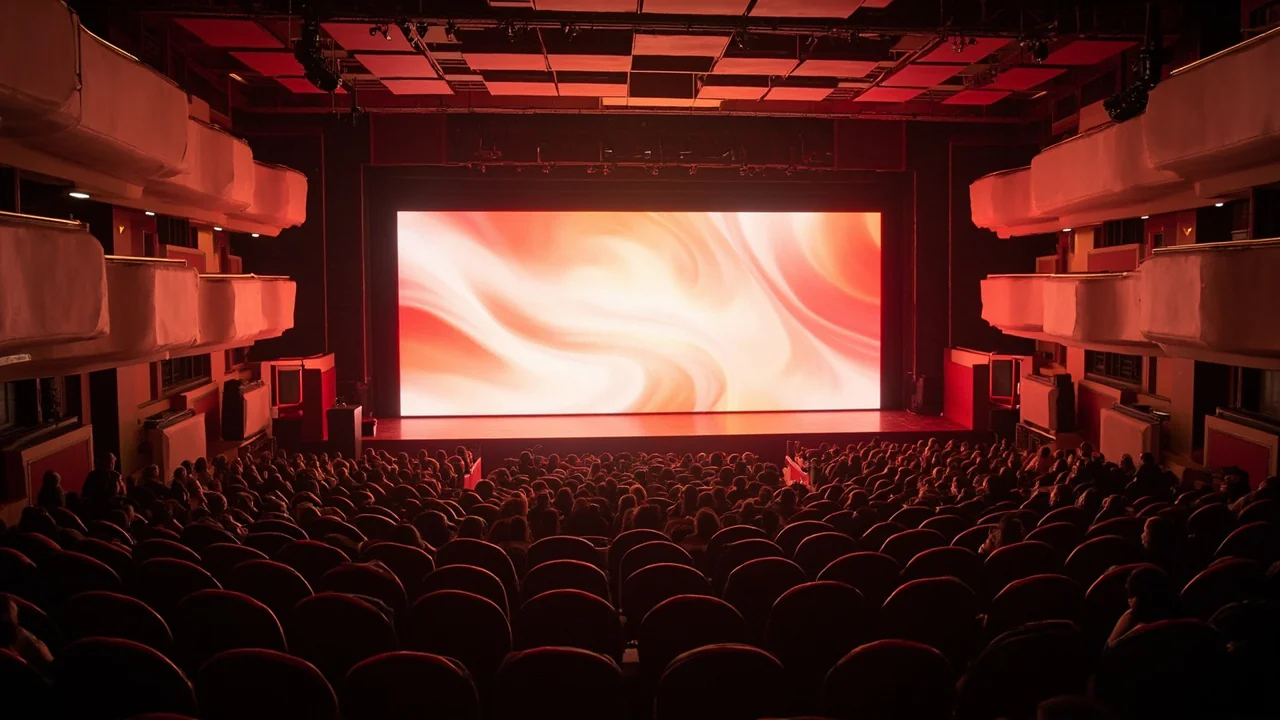
How Much Do Brand and Processor Add to Cost?
Two factors often skipped when comparing prices are chip brand and signal processor, yet both add meaningfully to total investment and to operational durability. At the same P2.5 pitch, a panel using top-tier genuine chips can sit a clear step above generic stock, driven by chip uniformity, colour stability after thousands of hours, and a longer manufacturer warranty. That premium is not for "buying a name" but for buying a lower probability of failure and colour drift across the 100,000-hour design life published in the datasheets for BOE's BYH and BTS lines.
The signal processor, or sending card, determines 4K source scaling, multi-window splitting and colour synchronisation. A high-end Novastar processor costs more than a basic one but allows several simultaneous sources and N+1 redundancy against interruption — important for screens running continuously. When you receive a quote, ask for the specific chip model and processor model; a line-itemised quote is what makes a like-for-like comparison possible. Refer to the BOE BSL P1.9 line for mainstream indoor and BOE BYH-COB P0.9 for the premium segment when shaping a configuration.
Area and Warranty Also Shift the Investment Per Square Meter
Project area affects cost per square meter in a way that runs against many people's intuition: the larger the area, the lower the cost per square meter, because fixed costs such as the processor, transport and setup are spread across more square meters. A small project of a few square meters carries a higher unit investment than a project of several dozen square meters at the same pitch. Warranty is a real variable too: a three-year on-site warranty package costs more than one-year component replacement, but for a screen running business hours over many years that difference is usually cheaper than a single out-of-warranty incident.
How Do You Request and Read a Quote Properly?
Because those six factors combine differently on every project, the right approach is to define the requirement first and then request a quote, rather than hunting for one universal number. Start from viewing distance and installation environment, then move to pitch and technology. Meeting rooms and showrooms viewed up close favour a small pitch and are worth considering in COB; auditoriums and outdoor billboards viewed from afar are cost-optimal with large-pitch SMD. Once the requirement is clear, contact the technical team for a site survey and a line-itemised quote via /quote. An accurate quote is always built on a specific configuration, never on a list price.
A common question is how long a quote stays valid. During 2026, Chinese trade press recorded a wave of cost adjustments across the LED supply chain: Hangjia counted more than 90 companies issuing price adjustment notices, concentrated in PCB and driver IC. This is foreign supply-chain data, not a selling price in Vietnam, and it does not translate directly into a quote for your project; Luxwave likewise does not use these figures to push customers to buy sooner. The only practical implication is to ask explicitly about the validity period stated on the quote, and to lock the configuration before comparing suppliers.
When you receive a quote, compare it line by line rather than by the total — that is the only way to compare suppliers on substance. A transparent quote must separate the display panel, the processor, the structure, the installation labour and the warranty terms. If one party bundles everything into a single figure, it is very hard to tell which part is being trimmed to lower the price.
Checklist for Reading a Quote Properly
Before signing, review the five mandatory lines in any transparent quote: the display panel (pitch, chip model, brightness, IP rating if outdoor); the processor (model and number of sources it can combine); the mounting frame and power supply; installation labour and colour calibration; and warranty terms (duration, on-site or component replacement). A quote missing one of these five lines is a signal to ask again, because the missing part usually reappears as an extra cost once deployment has started. Comparing quotes line by line, not by the total, is the only way to compare suppliers on substance.
| Factor | Impact | Why it moves cost |
|---|---|---|
| Pixel pitch | Very high | Smaller pitch means chip density rises with the square, plus placement and calibration work |
| Indoor / outdoor | High | Outdoor needs a high IP rating, high brightness, cast housings, moisture-resistant power and surge protection |
| COB / SMD technology | High | COB demands a more complex production line and calibration than SMD at the same pitch |
| Brand & chip | Medium | Uniform chips, stable colour and a longer warranty push cost up |
| Signal processor | Medium | Higher-end units handle 4K scaling, multi-window and N+1 redundancy against interruption |
| Structure & installation | Project-dependent | Mounting frame, power, installation labour and calibration can add meaningfully to the total |
Field insight
Evidence from a Luxwave-delivered project
See the full case study at /du-an/lau-dai-thanh-thang.
Pitfalls
Common mistakes
- Comparing purely by cost per square meter — leaving out the processor, mounting structure and installation labour. A full-package quote can differ substantially from bare panel pricing.
- Measuring pitch imprecisely — P2 and P2.5 differ clearly in cost, yet many quotes confuse them because P2.0 is used as shorthand for both.
- Ignoring brand tier — the same P2.5 costs more with top-tier genuine chips than with generic stock, because of chip quality and a longer warranty.
- Trusting an unusually low quote — it is usually B-grade goods without CO/CQ, without manufacturer warranty, or with line items missing.
- Forgetting the outdoor processor — outdoor screens need a processor, IP66 power supply and surge protection, raising cost against indoor at the same pitch.
FAQ
Frequently asked questions
What factors determine the cost per square meter of an LED screen?
Six main factors: pixel pitch (a smaller pitch means denser chips and steeply higher cost); indoor or outdoor environment (outdoor needs a high IP rating and high brightness); COB or SMD technology; brand and chip quality together with warranty length; the signal processor; and the frame, power supply and on-site installation labour. An accurate quote requires surveying the real configuration.
Why is fine-pitch COB more expensive than SMD at the same size?
COB chip-on-board costs more on three counts: chips are bonded straight onto the PCB without plastic packaging, reaching pixel densities SMD struggles to match at the same pitch; the production line and factory calibration are more complex; and the seamless resin coating adds a surface processing step. In return you get higher contrast, a flat impact-resistant surface and no cooling fans.
Does outdoor LED screen cost move much over time?
The two segments move differently. For small-pitch indoor, the 2026 COB/MIP report from Hangjia Research recorded COB in 2025 trending toward rising volume and falling prices across the whole pitch range. Large-pitch outdoor has no comparable packaging shift so it moves less, but still absorbs PCB and IC component cost swings from the supply chain. These are Chinese industry figures and do not translate directly into Vietnamese quotes.
Is an unusually low quote safe?
It needs careful checking. Unusually low quotes typically have three causes: B-grade goods without genuine CO/CQ and without on-site warranty; missing line items such as structure, processor or installation labour; or indirect imports without authorisation. Ask for a line-itemised quote so you can compare suppliers on substance rather than on a single bundled figure.
How does project area affect the investment per square meter?
The larger the area, the lower the cost per square meter, because fixed costs such as the processor, transport and setup are spread across more square meters. A small project of a few square meters carries a higher unit investment than one of several dozen square meters at the same pitch. Total investment still rises with area, so scale and budget must be balanced.
How do I get an accurate figure for my project?
Because cost depends on the specific configuration — pixel pitch, technology, brightness, area, control system and mounting structure — no figure can be fixed until those parameters are known. The correct approach is to establish viewing distance and environment first, then contact the technical team for a real site survey and a line-itemised quote via [/quote](/quote).
References
- 1.ResearchHangjia Research — 2026 COB/MIP report: COB volume up, prices down through 2025
- 2.ResearchHangjia — over 90 LED supply-chain companies adjust prices, PCB and IC rising most
- 3.ManufacturerBOE MLED COB — official product page
- 4.StandardIEC 60529 — Degrees of protection provided by enclosures (IP65 / IP66)