

ISLE (International Signs & LED Exhibition) is one of the largest LED display exhibitions, held in Guangzhou every March, where nearly all leading manufacturers showcase their technologies and pricing for the entire year. For the Vietnamese market — where most LED screens are imported from the Chinese supply chain — what appears at ISLE often foreshadows domestic products and prices for the next twelve to twenty-four months. ISLE 2026 did not feature a single breakthrough, but rather a convergence of five simultaneous directional shifts: advanced chip packaging, shrinking pixel pitches, transparent displays, integrated cabinets, and energy efficiency.
This analysis separates these five trends, placing each within the context of actual Vietnamese business needs, and clarifying which should be adopted immediately and which should wait. Instead of listing booth specifications, we focus on the questions actual investors ask: what problem does this technology solve, how much more expensive is it, and when is it reasonable to invest.
!High-brightness outdoor LED billboard resistant to rain
Why are COB and MiP Replacing SMD in Small Pitches?
The clearest technological story at ISLE 2026 is the shift away from traditional SMD towards two new packaging methods in the indoor small pixel pitch segment. SMD mounts individual LED chips with plastic casings onto a PCB; this mature and inexpensive technique has LEDs protruding from the surface, making them prone to damage when the pitch drops below P1.5. COB directly encapsulates chips under a protective resin layer, creating a seamless flat surface that is impact and moisture resistant, and avoids glare when captured by cameras. MiP places micro-chips into a tiny package and mounts them like SMD, combining COB's durability with a more flexible production line.
What's changing the game isn't the technology itself — COB has existed for several years — but the price. As yield rates improve and factories like BOE expand capacity, the price difference between COB and SMD at the same pitch is rapidly narrowing. The implication for Vietnam: mainstream COB products like the BOE BYH-COB P0.9 are becoming feasible for high-end boardrooms, studios, and video conference rooms — where viewers sit close and cameras easily capture surface imperfections. Conversely, for large outdoor pitches, SMD remains the more economical choice with no compelling reason to switch.
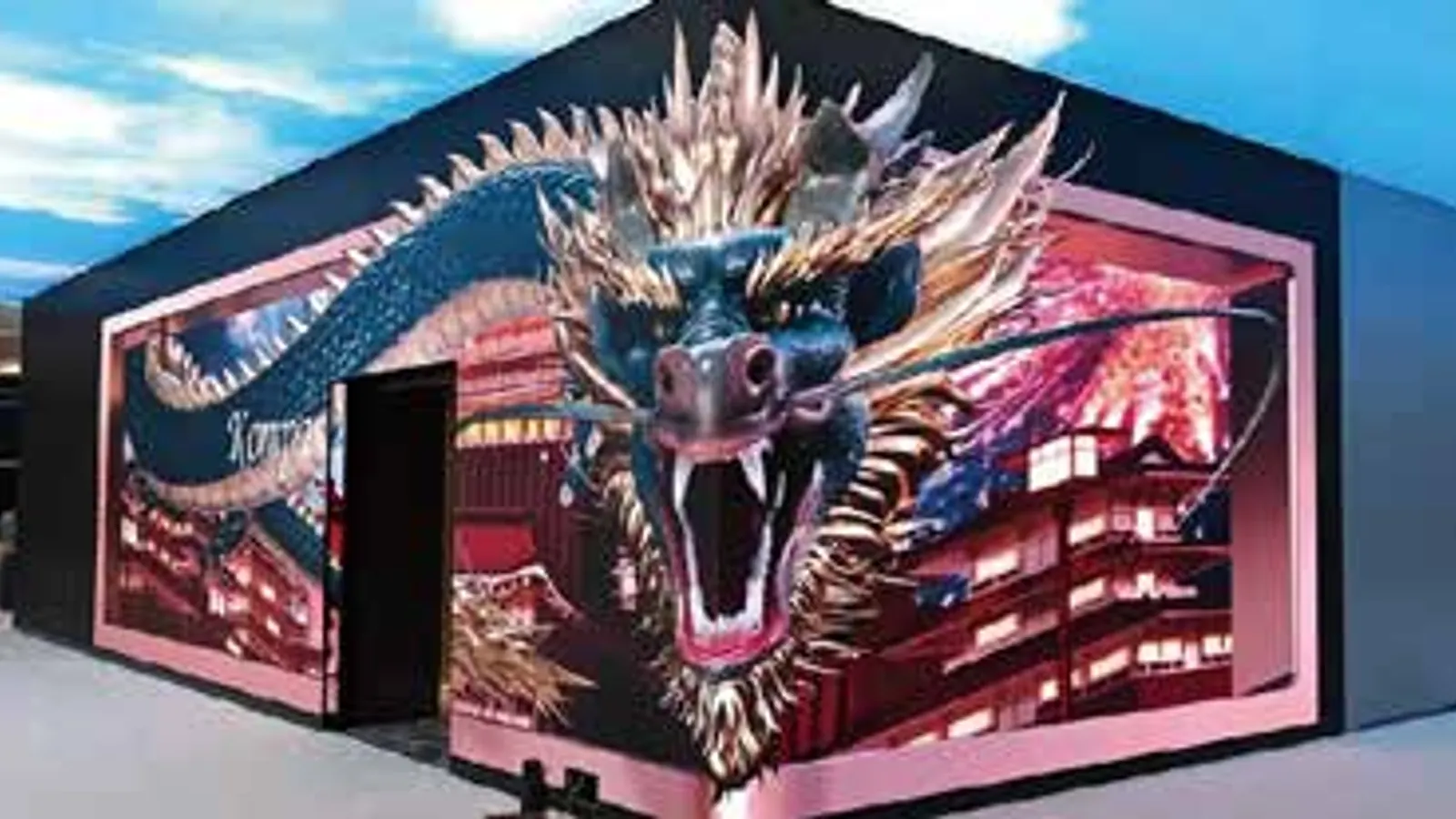
!Curved dragon-shaped LED display in a high-end retail space

Ultra-Fine Pixel Pitch and Micro-LED: Adopt or Wait?
Every ISLE features a race to showcase record-breaking small pitches, and 2026 was no exception — demonstrations of sub-millimeter pixel pitches and Micro-LED appeared at many major booths. The issue is the wide gap between what's displayed and what's commercially available. Ultra-fine pitches at demonstration levels are often prototypes for labs, virtual production in cinema, or custom high-end displays, priced many times higher per square meter than commercial versions and requiring large minimum orders. They look impressive on the exhibition floor but are rarely practical for a typical Vietnamese B2B project of a few dozen square meters.
The practical advice is to separate the "signal" from the "product." The signal is clear: the industry is pushing pixel density higher and driving down prices over time, so small pitches will become increasingly affordable. However, for purchasing decisions in 2026, most businesses should stick to COB around P0.9 or higher for close-viewing applications, and P1.5 to P2.5 for standard conference rooms. To choose correctly based on actual viewing distance rather than impressive specifications, consult how to choose LED pixel pitch based on viewing distance and the guide to choosing pixel pitch for conference rooms. Widespread commercial adoption of Micro-LED for the mass market is likely still several years away.
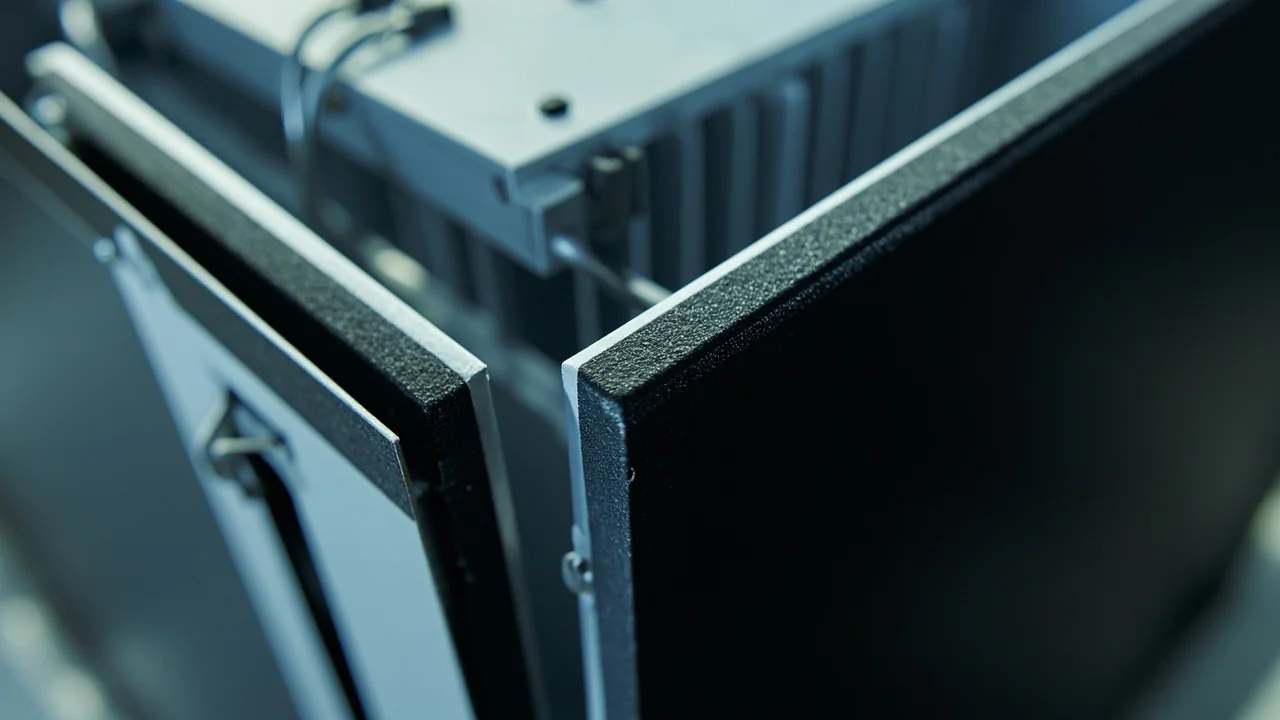
!Rear of an LED cabinet with moisture gasket and hot-swap module design

What New Applications Do Transparent and Creative LED Displays Enable?
A notable growth area at ISLE 2026 was transparent LED displays and creative solutions — curved screens, shaped displays, and geometric block assemblies. Transparent displays use sparse pixel density and gaps between LED strips to allow light and vision to pass through, enabling mounting on glass surfaces while maintaining outward visibility. This technology opens new applications for showrooms and exhibition booths, high-end retail stores, hotel lobbies, and building facades, where aesthetics and experience are as important as displayed content.
However, this is the area most prone to misapplication. High transparency always comes at the cost of lower brightness and resolution compared to opaque displays, so transparent screens should be viewed as a visual effect layer, not a primary content display. For premium Vietnamese brands — retail chains, car showrooms, resorts — this can be a valuable brand accent if placed correctly. Creative LED shaping also requires more complex structural design and content programming than flat screens, so installation costs and lead times must be factored in from the start, rather than treating them as standard curved screens.
How Are All-in-One Cabinets and Energy Efficiency Changing Display Procurement?
Two less glamorous but directly impactful trends for investors are all-in-one cabinets and energy efficiency. All-in-one cabinets integrate the LED panel, processor, power supply, and sometimes content management software into a standardized unit, featuring a hot-swap design for quick replacement of faulty modules from the front or rear. This results in shorter installation times, less reliance on highly skilled calibration engineers for small projects, and simpler maintenance. This is also why the differentiation between reputable distributors and general dealers is shifting towards after-sales service and project management capabilities, rather than pure technical skills which are increasingly automated.
Concurrently, energy efficiency has moved from a "nice-to-have" to a genuine purchasing criterion. Thanks to high-efficiency chips, intelligent driver circuits, and ambient light sensors, new generation displays consume significantly less power than older models of the same size. For displays running many hours a day, such as outdoor billboards or mall lobbies, the accumulated energy savings over several years can significantly offset the initial investment cost. The lesson for investors is to request actual power consumption specifications per square meter and calculate the total lifetime cost — including electricity, cooling, and lifespan — rather than just comparing initial purchase prices. You can quickly estimate scale and configuration by requesting a quote per m² before scheduling a site survey.
What Do the Five ISLE 2026 Trends Mean for Vietnamese Businesses?
In summary, the five trends at ISLE 2026 paint a consistent picture for the Vietnamese market: the most valuable aspect lies not in record-breaking technology on the exhibition floor, but in mature technologies becoming more affordable and widespread. Mainstream COB is becoming a worthwhile purchase for the high-end close-viewing segment; small pixel pitches continue to get cheaper but it's not yet time to bet on Micro-LED; transparent and creative LED displays open new doors for retail and showrooms if applied correctly; while all-in-one and energy efficiency are quietly redefining supplier selection criteria.
For an investor considering a project in 2026, the safe strategy is to embrace what is mature and maintain discipline with what is still developing. Prioritize mainstream COB for boardrooms and studios like the BOE BYH-COB P0.9 series, stick with SMD P1.86 like the BOE BSL P1.9 for standard conference rooms and large-pitch applications, experiment with transparent displays on a small scale for brand accents, and always compare total operating costs instead of just the purchase price. To understand choices more deeply, read the COB vs. SMD comparison. For specific configuration advice for your space, contact the Luxwave technical team for a transparent survey and quotation for each item.
Five ISLE 2026 Trends and Their Significance for Vietnamese Businesses?
Consolidated, the five trends at ISLE 2026 present a coherent outlook for the Vietnamese market: the greatest value lies not in record-breaking technologies showcased at the exhibition, but in mature technologies that are becoming more affordable and accessible. Mainstream COB is becoming a viable option for the high-end, close-viewing segment; small pixel pitches continue to decrease in price, but it's not yet time to invest heavily in Micro-LED; transparent and creative LED displays offer new possibilities for retail and showrooms when used appropriately; while all-in-one cabinets and energy efficiency are quietly reshaping supplier selection criteria.
For an investor considering a project in 2026, a prudent strategy is to adopt proven technologies and exercise caution with emerging ones. Prioritize mainstream COB for boardrooms and studios, such as the BOE BYH-COB P0.9 series. For standard conference rooms and large-pitch applications, consider SMD P1.86 like the BOE BSL P1.9. Experiment with transparent displays on a small scale for brand highlights, and always compare total cost of ownership rather than just the initial purchase price. For a deeper understanding of platform choices, refer to the COB vs. SMD comparison. To get specific configuration advice for your space, contact the Luxwave technical team for a transparent site survey and quotation per item.
Pitfalls
Common mistakes
- Chasing new technologies when demand doesn't require it — Micro-LED or sub-millimeter pitches are still too expensive and niche for most Vietnamese B2B projects in 2026.
- Believing exhibition booth specifications — ultra-fine pitches are often lab or virtual production versions; clarify commercial availability, minimum order quantities, and lead times.
- Overlooking total operating costs — energy-efficient displays still require consideration of electricity, cooling, and actual lifespan, not just the initial purchase price.
- Underestimating the learning curve for all-in-one cabinets — integrated cabinets reduce installation time, but technical teams still need training in calibration software and content management.
- Purchasing transparent displays for the wrong context — high transparency trades off brightness and resolution for lower performance, suitable for showroom glass but not as a primary content display.
FAQ
Frequently asked questions
What is the ISLE 2026 exhibition and why is it important for the Vietnamese market?
ISLE (International Signs & LED Exhibition) is one of the largest LED display exhibitions, held in Guangzhou every March. Since Vietnam's LED supply chain is largely imported from China, the technologies and prices launched at ISLE will shape products sold in Vietnam over the next twelve to twenty-four months.
How do COB and MiP differ from SMD, and should we switch?
SMD mounts individual LED chips with casings onto a PCB; COB encapsulates chips directly under a resin layer for a flat, impact-resistant surface; MiP places micro-chips into small packages and mounts them like SMD. COB and MiP offer better durability and camera performance for small pitches. Switching is recommended for boardrooms, studios, and pitches below P1.5; for large outdoor pitches, SMD remains more cost-effective.
Is Micro-LED ready for commercial projects in Vietnam?
Not widely adopted in 2026. Micro-LED and sub-millimeter pixel pitches currently serve primarily labs, virtual production, and custom high-end displays, with very high prices and large minimum orders. Most Vietnamese B2B projects should still opt for COB around P0.9 or higher; Micro-LED will become commercially widespread after chip prices and error rates improve.
What applications are suitable for transparent LED displays?
Transparent LED displays are ideal for showroom glass, retail stores, hotel lobbies, and exhibition booths where content needs to be displayed while maintaining visibility through the glass. In exchange for transparency, these displays have lower brightness and resolution than opaque screens, so they cannot replace primary content displays. Consider them a visual effect layer, not a main display.
What savings do all-in-one cabinets offer investors?
All-in-one cabinets integrate the LED panel, processor, power supply, and sometimes content management software, featuring hot-swap design for quick module replacement. They reduce installation time and reliance on calibration engineers for small projects. However, technical teams still require basic software training, and investors should compare total lifetime costs rather than just the purchase price.
Where does energy efficiency in new LED displays come from, and is it worth considering?
Primarily from high-efficiency chips, intelligent driver circuits, and ambient light sensors, reducing power consumption compared to older models of the same size. For displays operating many hours daily, like billboards or lobbies, the accumulated energy savings over years are significant. Request actual power consumption specifications per square meter for comparison, don't just rely on marketing labels.
References