

InfoComm 2026, held June 17–19, 2026, at the Las Vegas Convention Center, USA, featured over 750 exhibitors and more than 130 Chinese companies. For the LED display industry, the clearest signal is not just bigger or brighter screens, but the race in pixel packaging: SMD is mature, COB is entering high-end projects, and MiP is being promoted as a bridge to Micro-LED commercialization. This article does not rehash the exhibition press releases but dissects each technology from the perspective of Vietnamese investors needing to budget: where to use it, what are the risks, and when is it worth paying a premium.
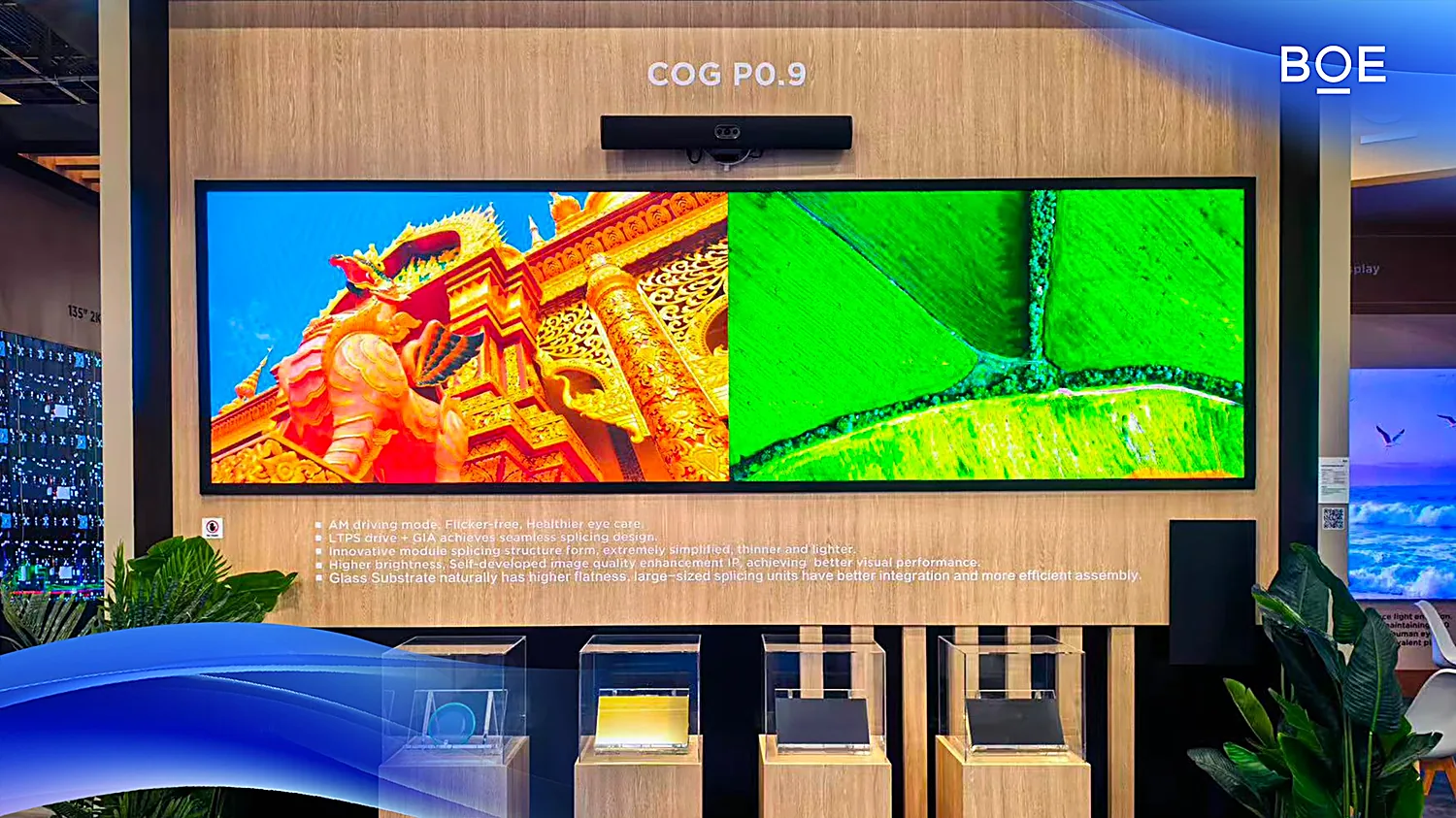
!BOE MLED display with high contrast showcased at InfoComm 2026
What are the Core Differences Between MiP, COB, and SMD?
MiP, COB, and SMD are all methods of mounting LED chips onto a display surface, but their manufacturing and maintenance logic differs significantly. SMD uses LED chips with plastic casings that are soldered individually onto the PCB, making it mature and easy to replace individual diodes. COB encapsulates the chip directly with resin on the PCB, creating a flat surface that is more resistant to impact and moisture. MiP places micro-chips within small packages, which are then mounted using SMT processes for ultra-fine pitches.
These differences dictate practical application rather than just the technology name. In a meeting room where viewers are close, a flat surface, color uniformity, and camera performance are often more critical than replacing individual LEDs. For outdoor billboards, cost per square meter, brightness, and quick repairability are more important than extremely small pixel density. Therefore, the right question is not "which technology is the newest," but rather "which pixel pitch serves which viewing distance, operating environment, and budget."
SMD is the most familiar foundation. For pitches from P1.5 upwards, especially P1.9, P2.5, P3.9, or larger, SMD still offers a good balance of price, brightness, repairability, and supply. Its weaknesses emerge when pushed to smaller pitches: the exposed LED beads can easily detach, scratch, or be damaged if the screen is in an area where people might touch it or during frequent cleaning.
COB addresses this weakness by encapsulating the chip with resin, resulting in a nearly flat surface that is less susceptible to direct impact on individual LED beads. This is why COB is often suitable for command centers, studios, boardrooms, and close-viewing areas. The BOE BYH-COB Ultra P0.9 line provides clear specifications: 20000:1 contrast, 7680Hz refresh rate, and 2000 nits brightness, according to BOE. COB full-flip P1.2 is also mentioned for its 7x24 operation capability.
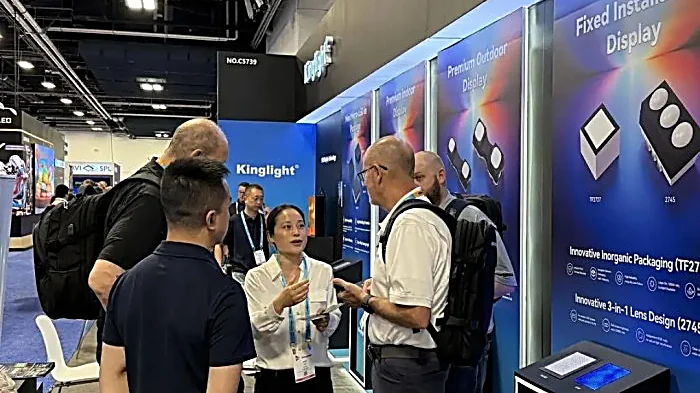
MiP takes a different approach: packaging micro-chips into small modules that are then mounted onto PCBs like SMD. According to 新浪科技/Sina, Kinglight 晶台 emphasizes its mass production capabilities for the P0.4–P1.2 range with color uniformity, full greyscale, and high yield; outdoor MiP is mentioned for 3500–6000 nits. Sina also reports that 芯映光电 offers a 99% black ratio and 175° viewing angle. While these specifications are promising, when considering the Vietnamese market, it's crucial to verify which versions are commercially available, their pricing, and lead times.
Why is InfoComm 2026 Reigniting This Comparison?
InfoComm 2026 is not solely an LED exhibition, but it's where the AV, meeting room, broadcast, XR, DOOH, and control system ecosystems converge on a common challenge: LED displays must be sharper, more durable, and operate reliably in professional environments. AVNetwork noted the continued prominence of LED products on the show floor, while Chinese sources highlighted MiP, Micro-LED, IPMX, and Agentic AI as major themes. This makes the comparison of LED packaging more practical, moving beyond laboratory debates.
From Luxwave's perspective, the takeaway from InfoComm 2026 is that Micro-LED is the long-term goal, while MiP and COB represent two paths to commercialization within the current purchasing cycle. COB already offers clear products for high-end close-viewing customers; MiP is being aggressively promoted by packaging chains; and SMD retains its cost advantage for large pitches. A successful project requires evaluating these three options on the same budget sheet.
!Kinglight 晶台 booth showcasing MiP and packaging solutions
When to Choose COB Over SMD or MiP?
COB should be prioritized when the display is installed in a close-viewing space, requiring smooth images, a durable surface, and stable camera performance. Projects like executive boardrooms, control rooms, broadcast studios, video conference rooms, technology showrooms, or VIP experience zones typically have short viewing distances and stringent image requirements. In these scenarios, the benefits of a flat, impact-resistant, and glare-reducing surface may outweigh the initial cost savings of SMD.
COB's strengths also lie in long-term operational feel. When screens operate for many hours daily, the resin surface helps mitigate risks from dust, moisture, and minor impacts during cleaning. For high-end meeting rooms, clients not only view content with their eyes but also through conference cameras; high refresh rates and good contrast ensure images are less flickery and less glaring. This is why BOE's COB/MLED lines are suitable for projects prioritizing stability over just large display area.
However, COB is not the answer for every budget. When pixel defects or localized color shifts occur, repairs can be more complex than with SMD, as it's not as simple as replacing individual diodes. Investors need to inquire about module replacement options, the number of spare modules, warranty periods, and the color calibration process after replacement. If a project only requires a standard meeting display with a moderate viewing distance and a tight budget, a BOE BSL P1.9 or an equivalent SMD configuration might be more appropriate.
For close-viewing projects, the question is not "how much more expensive is COB," but rather "what is the cost of dealing with a fragile surface, poor camera performance, and repeated maintenance associated with SMD."
A practical example is the Optupus International Library project, where the LED display serves training and close-up projection. This project requires clean, eye-friendly images, no visible pixels from the front rows, and stable operation over multiple sessions. When viewer experience is paramount, COB becomes an easier choice to justify in the technical proposal.
When is MiP Worth Considering, and What to Ask Before Ordering?
MiP is worth considering when a project targets ultra-fine pitches, requires a more flexible approach to Micro-LED than COB, or when manufacturers can demonstrate stable mass production capabilities. The P0.4–P1.2 range announced by Kinglight 晶台, according to 新浪科技/Sina, indicates the packaging industry is pushing MiP into territories challenging for traditional SMD. Guoxing is also mentioned with MIP P0.93/P0.78 for 4K/8K configurations and 4.2mm soft modules, showing MiP is not just an idea but has multiple specific product directions.
However, "having a product" differs from "being suitable for the Vietnamese market." When budgeting, it's essential to ask if the MiP version is already in mass production, what the MOQ is, what the lead time to Vietnam will be, how the package is warranted, and if modules will remain compatible for future replacements. For XR, studios, or executive meeting rooms requiring high resolution on small areas, MiP is worth including in the comparison. For general projects, COB or SMD are usually easier to manage.
It's important to note neutrally that MiP competes not only with COB indoors. Information about outdoor MiP at 3500–6000 nits suggests expansion into brighter environments, but for large-pitch outdoor DOOH billboards, SMD retains a strong economic advantage. If clients need outdoor screens for distant viewing, prioritizing brightness, cost, and quick replacement, MiP may not be the default choice in 2026. If specialized facades, smaller-than-usual pitches, or premium design requirements are needed, MiP could be a controlled experimental option.
To avoid confusion, one can refer to articles like What is MiP Micro LED in Package and What's the Difference Between Mini-LED vs Micro-LED. Micro-LED is the technological goal at the display chip level; MiP is a packaging solution that makes micro-chip integration more practical for production, repair, and assembly. Therefore, MiP should be evaluated based on its supply chain and warranty, not just pixel density.
What Projects is SMD Still Suitable For in Vietnam?
SMD remains suitable for the majority of projects requiring large areas, long viewing distances, and optimized budgets. Outdoor billboards, event stages, medium-pitch auditorium screens, commercial backdrops, facades, and many retail spaces do not require viewers to be extremely close to the screen. In these contexts, SMD has clear advantages: wide supply, good pricing, experienced technical teams, convenient individual diode repair, and numerous brightness options for outdoor environments.
The pitfall to avoid is pushing SMD to excessively small pitches solely to reduce the initial quote price. In the sub-P1.5 range, especially where users might touch the screen, exposed LED beads pose a real risk. A few detached or color-shifted pixels in a high-end meeting room will be far more noticeable than the same defect on a distant outdoor billboard. If the screen is used for filming, live streaming, or online conferences, surface quality and refresh rate also need consideration, not just the nominal resolution.
For clients needing quick decisions, a three-tier principle can be applied. For large screens with distant viewing, prioritize SMD. For small pitches, close viewing, and proven commercial configurations, prioritize COB. For ultra-fine pitches, special requirements, and a willingness to conduct more thorough supplier verification, include MiP in the list. Then, cross-check with how to choose LED pixel pitch, as packaging is only one part; screen size, resolution, brightness, processor, and operating content ultimately create the final experience.
How Should Budgeting for 2026 Be Based on Application?
Budgeting for 2026 should start with the application, not the technology name. A P0.9 boardroom screen has different requirements than a P4 outdoor billboard; a broadcast studio differs from an event backdrop screen; a 7x24 command center has different needs than a showroom open only during business hours. When used in the correct context, MiP, COB, and SMD all have a reasonable place in the investment portfolio of Vietnamese businesses.
For meeting rooms, boardrooms, and high-end presentation spaces, COB is the most defensible option if the budget allows. BOE BYH-COB Ultra P0.9 offers the aforementioned specifications for contrast, refresh rate, and brightness, suitable for clients needing smooth, durable screens with good camera performance. If the budget is lower or the viewing distance is greater, SMD P1.9 might offer a balance. MiP should only be considered if the client has specific requirements for ultra-fine pitches, very high resolution in limited areas, or wants to explore new technology with clear warranty terms.
For command centers and continuous operation spaces, priority should be given to stability, long-term color calibration, and spare modules. The 7x24 operation of COB full-flip P1.2 is a noteworthy specification, but it shouldn't be mechanically applied to all brands. Technical proposals must clearly state backup plans, color calibration procedures, maintenance response times, and compatible processors. The article COB vs SMD Comparison 2026 and What is COB LED Display help separate technical benefits from marketing language.
For DOOH, facades, outdoor stages, or distant viewing screens, SMD continues to be the economical choice. Investors should allocate budget towards structure, waterproofing, power supply, heat dissipation, maintenance, and content, rather than forcing the purchase of smaller pitches or new packaging when viewers are not close enough to perceive the difference. COB and MiP may appear in a few specialized high-end projects but are not yet standard configurations for optimizing total cost.
Conclusion: Which Technology is the Safest Choice?
The safest choice in 2026 is not a single technology, but the principle of choosing correctly based on viewing distance and operational risks. SMD remains the economical foundation for large pitches and outdoor applications. COB is a more mature option for close-viewing small pitches, especially in meeting rooms, studios, and command centers. MiP is a promising direction post-InfoComm 2026 but requires thorough verification of mass production, pricing, lead times, and warranty before becoming a primary configuration.
If a project requires a decision in 2026, Luxwave recommends starting with SMD for large, distant-view screens, COB for premium close-view screens, and MiP for ultra-fine pitch challenges or R&D with a verification budget. This approach avoids chasing new technology at all costs while also embracing the Micro-LED trend being commercialized through MiP and COB. As an authorized distributor, Luxwave can assist Vietnamese investors in placing options from BOE, processing systems, and warranty conditions on the same budget sheet, enabling decisions based on data rather than intuition.

| Criterion | MiP | COB | SMD |
|---|---|---|---|
| Structure | Micro-chip in small package, SMT mounted | Chip encapsulated with resin on PCB | Chip with separate plastic casing soldered onto PCB |
| Specialty Pitch | P0.4–P1.5 (ultra-fine) | P0.6–P1.5 (ultra-fine) | P1.5 and above |
| Surface Durability | High | Very High | Medium (exposed beads prone to detachment at small pitches) |
| Pixel Repair/Replacement | Flexible (package replacement) | Difficult (entire module) | Easy (individual diodes) |
| Cost at Small Pitch | Medium–High | Medium–High | High & Poor Durability |
| Cost at Large Pitch (Outdoor) | Not Optimized | Not Common | Most Economical |
Lưu ý
Sai lầm thường gặp
- Comparing MiP, COB, and SMD based solely on initial purchase price, ignoring repair costs, impact risks, and image stability during camera recording.
- Choosing SMD for pitches below P1.5 in high-touch areas, leading to detached or color-shifted LED beads after operation.
- Including MiP in high-end budgets without clarifying mass production status, delivery times, package warranty policies, and replacement conditions.
- Assuming COB is always the best for every project, while large outdoor screens or budget billboards still require SMD for cost optimization.
FAQ
Câu hỏi thường gặp
What's a brief summary of the differences between MiP, COB, and SMD?
SMD uses LED chips with plastic casings soldered individually onto the PCB, offering good cost-effectiveness and easy repair for large pitches. COB encapsulates the chip with resin on the PCB, providing a flatter and more durable surface for close viewing. MiP places micro-chips in small packages and mounts them like SMD, targeting ultra-fine pitches and offering more flexible Micro-LED production.
In 2026, should I choose COB or MiP for high-end meeting rooms?
For high-end close-viewing meeting rooms, COB is preferable if you need a more established option with clear specifications and easier budgeting in Vietnam. MiP is worth considering for projects requiring very small pitches or a long-term Micro-LED strategy, but mass production status, pricing, lead times, and warranty policies must be verified before finalizing the configuration.
Is SMD still worth buying after InfoComm 2026?
SMD remains highly valuable for large pitches, especially outdoor LED billboards, DOOH, stages, or distant viewing areas. This technology is mature, cost-effective, and allows for convenient individual diode repair. SMD's weakness lies in pitches below P1.5, where exposed LED beads are susceptible to impact and the surface is less refined than COB or MiP.
What are the drawbacks of COB in practical implementation?
COB offers a durable, flat surface with good camera performance, but pixel repair is less flexible than SMD as it often requires module-level handling. Investors should choose distributors with available replacement modules, clear warranty processes, and color calibration capabilities post-maintenance to avoid discrepancies between old and new modules.
Is MiP ready for commercial projects in Vietnam?
MiP is advancing rapidly after InfoComm 2026, particularly in ultra-fine pitches and the Micro-LED direction, but its readiness depends on the specific manufacturer, product line, and mass production capacity. For Vietnamese projects, MiP should be included in technical comparisons but not considered the default choice until clear quotes and lead times are available.
What should be asked of suppliers when comparing these three technologies for budgeting?
Budgeting should involve requesting specifications on pitch, brightness, refresh rate, surface protection level, module or package replacement plans, delivery times, spare parts, and post-warranty maintenance costs. For MiP, inquire about mass production status; for COB, ask about replacement modules; for SMD, assess impact risks at small pitches.
Nguồn tham khảo