

BOE COG and Samsung The Wall both belong to the premium glass-based display category, catering to spaces where visible seams, module edges, or the traditional "construction LED screen" feel are undesirable. This comparison is valuable as both address MicroLED, flatness, seamless splicing, and premium experiences, albeit from different starting points. BOE emphasizes its active-matrix glass substrate capabilities as a major panel manufacturer, while Samsung highlights its Korean brand, ecosystem, and The Wall's position in executive/8K spaces.
This article does not declare an absolute winner. For projects in Vietnam, the right questions are: Is the display for long-viewing meeting rooms, control centers, studios, showrooms, or brand presentation areas? Which ecosystem is the operations team familiar with? What is the local after-sales support like? And what other equipment is needed beyond the display panel? If you need foundational knowledge before comparing, read our article BOE BYH-COG Chip-on-Glass LED Display.
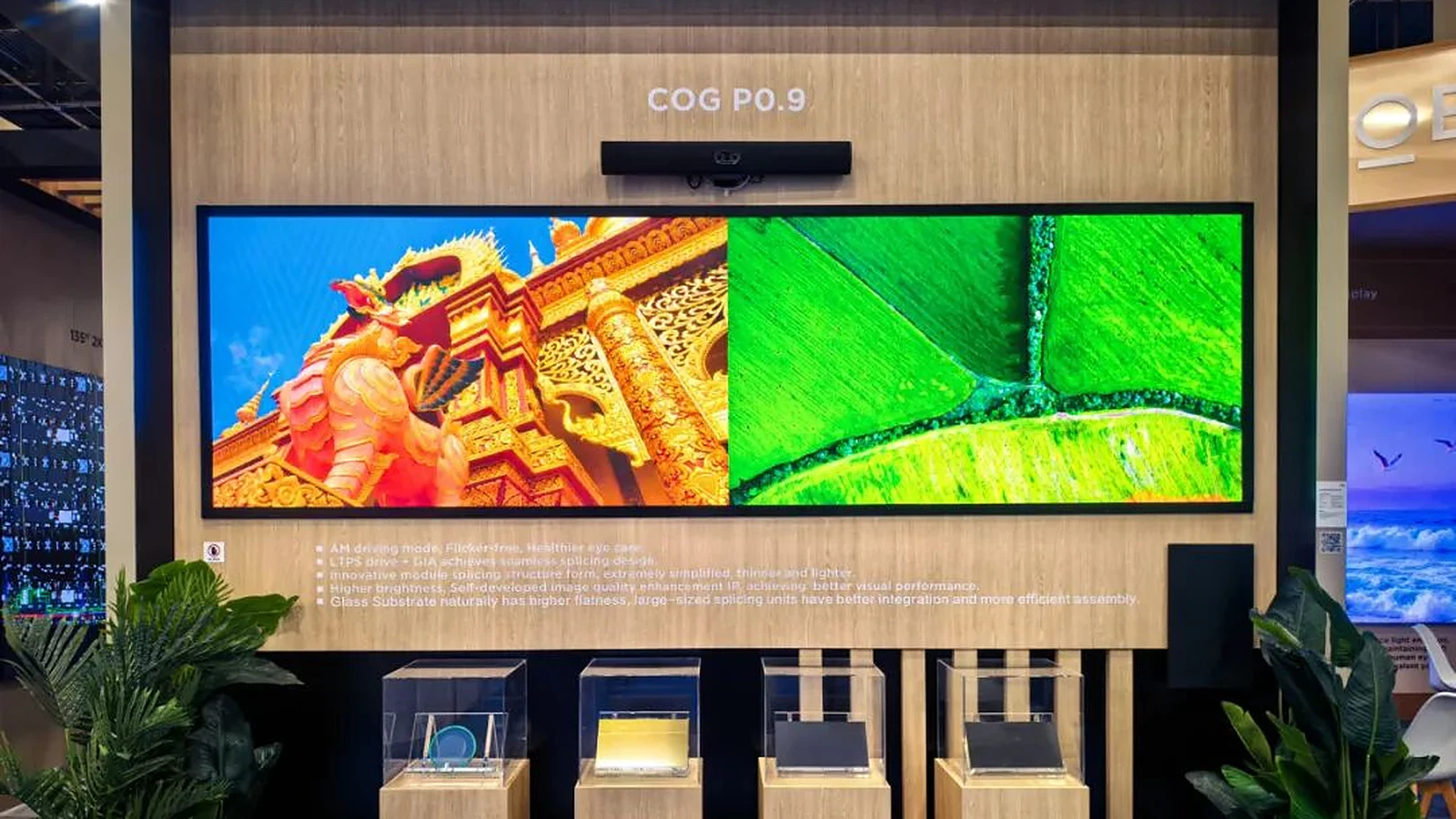
!BOE COG P0.9 glass-based display with Video Bar
Where Do BOE COG and Samsung The Wall Align?
BOE COG and Samsung The Wall share a premium orientation: utilizing glass substrates, pursuing a flat surface, achieving seamless splicing, and delivering smooth images at close viewing distances. Neither is a mainstream LED choice for all projects; they are better suited for executive meeting rooms, command centers, product display areas, studios, or locations demanding high-quality visuals. Compared to traditional SMD LED screens, the most noticeable difference is a more unified surface feel and a less "industrial" aesthetic.
The second point of alignment is their focus on MicroLED/fine-pitch technology. Samsung The Wall is known as a premium MicroLED line, employing glass substrates and COB/MicroLED flip-chips, with pitches as small as 0.84mm according to brief data. BOE COG P0.9 also falls into the glass-based Micro-LED category, placing Micro-LED chips directly onto a glass substrate instead of a PCB. Consequently, both systems aim for high pixel density, excellent flatness, and a close-viewing experience for premium environments.
However, alignment in direction does not equate to identical product philosophies. BOE COG emphasizes point-to-point AM drive, low blue light, flicker-free operation, and eye comfort during extended use. Samsung The Wall focuses on brand strength, ecosystem integration, and positioning for executive meeting rooms/8K. For buyers, this is a crucial distinction: one prioritizes the panel foundation and visual experience; the other emphasizes brand ecosystem and product synergy.
What Technological Differences Set BOE COG Apart from Samsung The Wall?
The most significant technological difference lies in how each brand approaches the glass-based concept. BOE COG is Chip-on-Glass: Micro-LED chips are placed directly on a glass substrate instead of a PCB, coupled with point-to-point active-matrix AM drive. According to BOE's data in the brief, this approach results in low blue light, flicker-free operation, and greater eye comfort during prolonged viewing. For meeting rooms, control centers, or collaborative spaces, these factors are practically valuable as users often spend many hours looking at the screen.
Samsung The Wall also follows the premium glass-based and MicroLED path, utilizing COB/MicroLED flip-chips with pitches as small as 0.84mm. The Wall's prominent strength lies not just in its pixel specifications but in Samsung's strategic positioning within the premium display ecosystem. For clients who have standardized on Samsung infrastructure or require a familiar name in executive meeting rooms/8K spaces, The Wall offers advantages in brand recognition and ecosystem consistency.
For BOE, a notable foundational element is its position as the world's leading display panel manufacturer and its control over the entire supply chain. While this doesn't automatically make every BOE configuration superior to every Samsung configuration, it explains BOE's ability to integrate panel manufacturing logic, LTPS drive, and GIA seamlessness into its COG displays. If COG is considered a distinct technological branch, the article BOE COG P0.9 Wins Best of Show InfoComm 2026 provides further context on the showcased product.
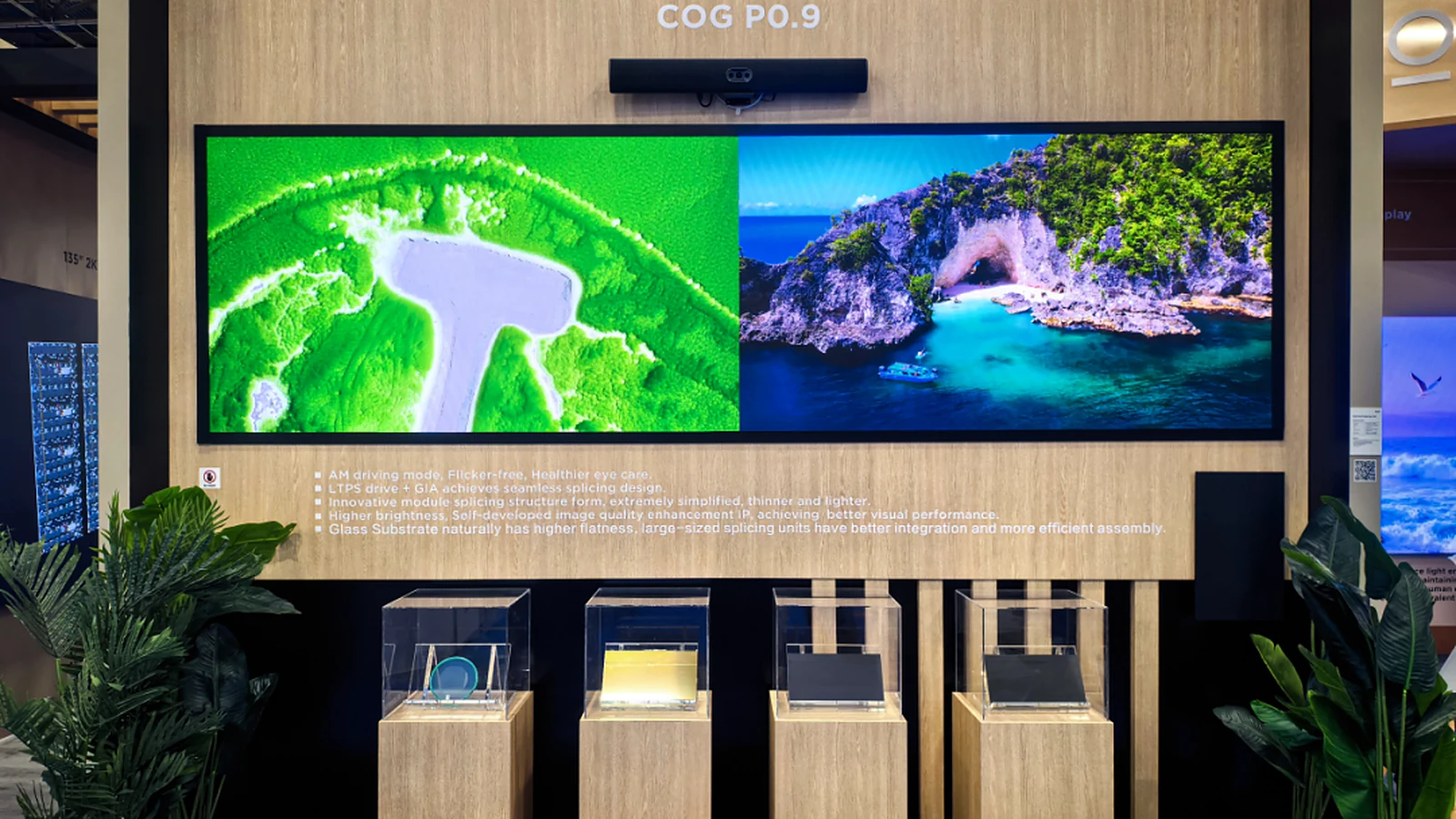
!COG P0.9 display showing content

When is BOE COG a More Suitable Choice?
BOE COG is a more suitable choice when projects prioritize long viewing comfort, slim design, flatness, and meeting room integration. The brief data indicates BOE COG P0.9 uses point-to-point AM drive, low blue light, and flicker-free technology, emphasizing eye comfort over mere brightness or pitch. In premium meeting rooms, control centers, and monitoring spaces, users often view screens for many hours; therefore, eye strain, flickering, and image stability are critical criteria to evaluate.
Another advantage of BOE COG is its mechanical design. According to the provided data, the display has a thickness of approximately 5-6mm, is about 25% lighter per m², and for a 162-inch screen, the number of modules is reduced from 288 to 48, enabling 5x faster installation. These figures are significant for system integrators as they impact mounting structures, construction timelines, alignment points, and the risk of surface deviation when splicing multiple modules.
BOE COG is also worth considering if a project requires an integrated meeting room solution. The brief highlights BOE's emphasis on integrated Video Bars for meeting rooms, meaning they offer not just a glass-based display but also incorporate the screen into collaborative scenarios. For clients designing executive meeting rooms, presentation centers, or product demo areas, BOE BYH-COG should be evaluated alongside cameras, audio systems, video processors, and daily operational workflows.

When Should Samsung The Wall Be Prioritized?
Samsung The Wall is prioritized when brand recognition, ecosystem integration, and 8K positioning are critical project criteria. In many executive meeting rooms, brand experience zones, or premium spaces, clients are not just buying specifications; they are buying the familiarity of a global brand, compatibility with existing equipment, and confidence when presenting to leadership. This is a tangible advantage for Samsung, especially as The Wall has established a strong presence in the premium MicroLED segment.
The Wall is also suitable for projects aiming to integrate the display into a broader Samsung ecosystem. If a facility already uses Samsung professional displays, signage, or display solutions, or adheres to Samsung operational standards, choosing the same ecosystem can streamline approval processes, device management, and post-installation support. It's important to note that the ecosystem's value is contingent on the deployment package, warranty, and local technical team meeting project requirements.
Technologically, The Wall uses a glass substrate, COB/MicroLED flip-chips, and offers pitches as small as 0.84mm according to brief data. This positions The Wall within the premium glass-based display category, directly competing in spaces requiring high smoothness and a luxurious experience. However, choosing The Wall solely based on its name is ill-advised; a thorough evaluation of the actual configuration, content, lighting conditions, signal processing, and after-sales support plan is still necessary before making a decision.
What Criteria Should Be Used for Comparison?
BOE COG and Samsung The Wall should be compared based on their intended use cases, not just pitch or brand name. For meeting rooms and control centers, evaluate long-viewing comfort, flicker, blue light emission, small text legibility, gray backgrounds, fine lines, and video conferencing performance. For studios or on-camera spaces, assess interaction with cameras, skin tones, motion handling, and signal processing. For showrooms, review actual product content rather than just demo videos.
The second criterion is mechanical design and deployment. BOE COG provides clear data in the brief: approximately 5-6mm thickness, about 25% lighter per m², and a 162-inch screen reducing module count from 288 to 48. These figures should not be taken as universal promises for all sizes but should guide specific inquiries: what is the required load capacity for the mounting structure, what is the estimated installation time, how many modules require alignment, and how will pre- and post-maintenance be handled?
The third criterion is the surrounding system. Premium glass-based displays still require processors, signal sources, control systems, audio, cameras, and operational workflows. If the project is for a command center, stability and operational clarity are more critical than visual effects. For broadcast studios or event stages, signal integrity, camera compatibility, color accuracy, and backup plans must be verified. For projects requiring complex image processing, the PixelHue series remains a recommended component for system design.
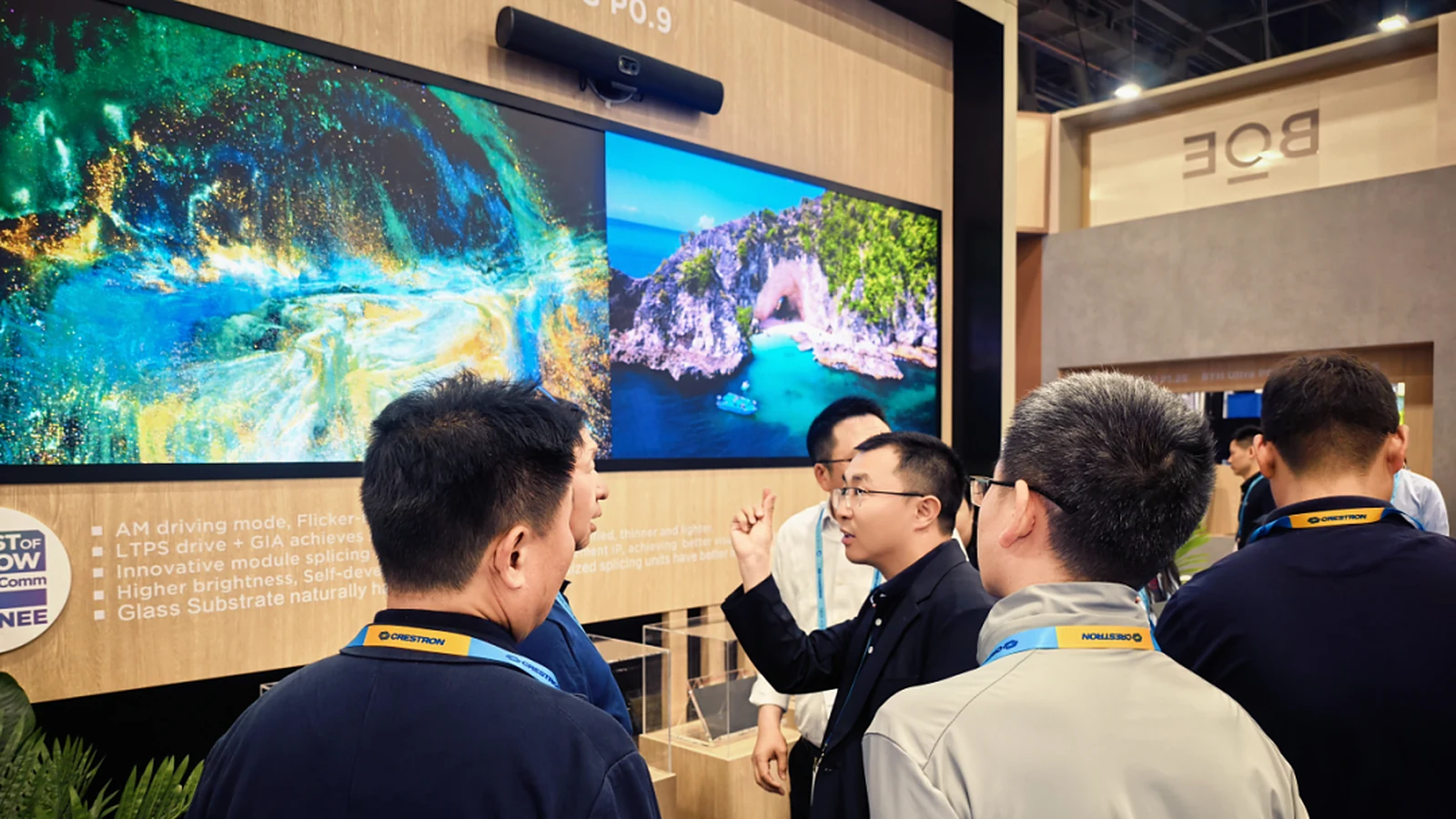
!Customer experiencing BOE COG display
Conclusion: BOE COG or Samsung The Wall?
If eye comfort, active-matrix glass substrate, slim profile, reduced module count, and integrated meeting room solutions are priorities, BOE COG is a highly compelling option. BOE's COG P0.9 boasts notable specifications: 3000 nits HDR, LTPS drive + GIA seamless, approximately 5-6mm thickness, about 25% lighter per m², and recognized as Best of Show at InfoComm 2026. Leveraging its position as the world's leading display panel manufacturer, BOE has a strong foundation for pursuing premium glass-based displays.
If Korean brand recognition, Samsung ecosystem integration, and positioning for executive meeting rooms/8K are key, Samsung The Wall remains a strong contender. The Wall is suitable for clients seeking a familiar brand, clear brand messaging, and a display ecosystem that can synchronize with other devices. Crucially, brand reputation should not replace thorough technical due diligence; the specific configuration, deployment package, and Vietnamese after-sales service must be verified with concrete documentation.
For Luxwave, the correct approach is to place both options within a decision matrix: consider long viewing needs versus brand presentation, room structure, actual content, operating brightness, integration requirements, maintenance capabilities, and local Vietnamese service. If comparing COG with other COB solutions, read BOE BYH Ultra COB Premium to differentiate between glass-based COG and PCB-based COB. The right choice is not the most famous one, but the one that best fits the system that will operate for many years.
| Criterion | BOE COG P0.9 | Samsung The Wall |
|---|---|---|
| Core Technology | Micro-LED Chip-on-Glass substrate, AM active-matrix drive | Glass substrate, COB/MicroLED flip-chip within The Wall ecosystem |
| Key Message | Eye comfort, slim, flat, seamless, integrated Video Bar | Strong brand, Samsung ecosystem, executive meeting room/8K |
| Featured Pitch | P0.9 in BOE COG data | Pitch as small as 0.84mm in The Wall positioning |
| Image Quality | 3000 nits HDR, LTPS drive + GIA seamless | Premium MicroLED, targeting executive room and 8K experience |
| Installation | Approx. 5-6mm thick, ~25% lighter/m², 162-inch screen reduces modules from 288 to 48 | Requires evaluation based on configuration, size, and specific deployment package |
Lưu ý
Sai lầm thường gặp
- Comparing based on brand name while overlooking viewing distance, room lighting, operating duration, processing power, and local maintenance capabilities.
- Treating glass substrates as a uniform technology; BOE emphasizes COG active-matrix, while Samsung highlights COB/MicroLED flip-chips and its ecosystem.
- Choosing the smallest pitch without verifying actual content performance, such as small text, gray backgrounds, video calls, camera interaction, and viewing angles.
- Ignoring integrated system configurations; Video Bars, processors, controls, mounting structures, and after-sales service can be as critical as the display panel itself.
FAQ
Câu hỏi thường gặp
Are BOE COG and Samsung The Wall in the same technology category?
Both can be classified as premium glass-based displays, focusing on flatness, seamless splicing, and MicroLED/fine-pitch imagery. However, their emphasis differs: BOE COG places Micro-LED chips on an active-matrix glass substrate, while Samsung The Wall is notable for its glass substrate, COB/MicroLED flip-chips, and Samsung ecosystem.
Is BOE COG P0.9 superior to Samsung The Wall?
A one-sided conclusion should be avoided. BOE COG P0.9 offers clear advantages in eye-friendly AM drive, slim design, reduced module count, and integrated Video Bar solutions. Samsung The Wall excels in Korean brand reputation, ecosystem integration, and positioning for executive meeting rooms/8K. Comparison should be based on project objectives.
Which projects is Samsung The Wall suitable for?
Samsung The Wall is suitable for projects prioritizing a global brand, Samsung ecosystem, and premium display environments like executive meeting rooms, experience zones, or 8K configurations. Key aspects to verify are the specific configuration, service package, deployment team, and local support capabilities.
Which projects is BOE COG suitable for?
BOE COG is ideal for premium meeting rooms, control centers, product display areas, and projects requiring thin, flat glass-based displays with reduced eye strain during long viewing periods. BOE's strengths lie in its point-to-point AM drive, 3000 nits HDR, lighter design, and Video Bar integration for collaboration.
Should I choose based on the smallest pitch?
Pitch should not be the sole deciding factor. A small pitch enables smooth close-up visuals, but the final decision must consider flatness, operating brightness, displayed content, processing power, color calibration, after-sales support, and installation capabilities. For both The Wall and BOE COG, a demo with project-specific content is recommended.
Does Luxwave favor BOE in this comparison?
Our goal is to guide you to the right choice, not to promote or denigrate any brand. BOE COG is noteworthy for its active-matrix glass substrate, Best of Show award at InfoComm 2026, and supply chain advantages. Samsung The Wall remains a strong option if your project requires the Samsung brand, a synchronized ecosystem, and 8K positioning.
Nguồn tham khảo
- 1.Nhà sản xuấtBOE — MLED COG Product Page
- 2.Nhà sản xuấtBOE InfoComm 2025 — MLED COB & COG
- 3.Nghiên cứuGlass-Based MicroLED Overview
- 4.Nhà sản xuấtSamsung The Wall — MicroLED Display
- 5.Nhà sản xuấtGenuine PixelHue
- 6.Tin tứcOfficial PixelHue Facebook
- 7.Tiêu chuẩnPixelHue Master Academy — Official Training Materials