

InfoComm 2026, held from June 17-19, 2026, at the Las Vegas Convention Center, USA, features over 750 exhibitors, including more than 130 Chinese companies. Alongside Agentic AI, IPMX, MiP, and Micro-LED, a trend highly relevant to Vietnamese buyers is the All-in-One LED display: an LED system packaged as a complete device, offering faster installation than traditional modular LED walls and eliminating the segmented look of LCD video walls. This article examines AIO not as a fleeting trend, but as a practical solution for meeting rooms, lobbies, and showrooms, and when to revert to cabinet-based modular LED solutions.
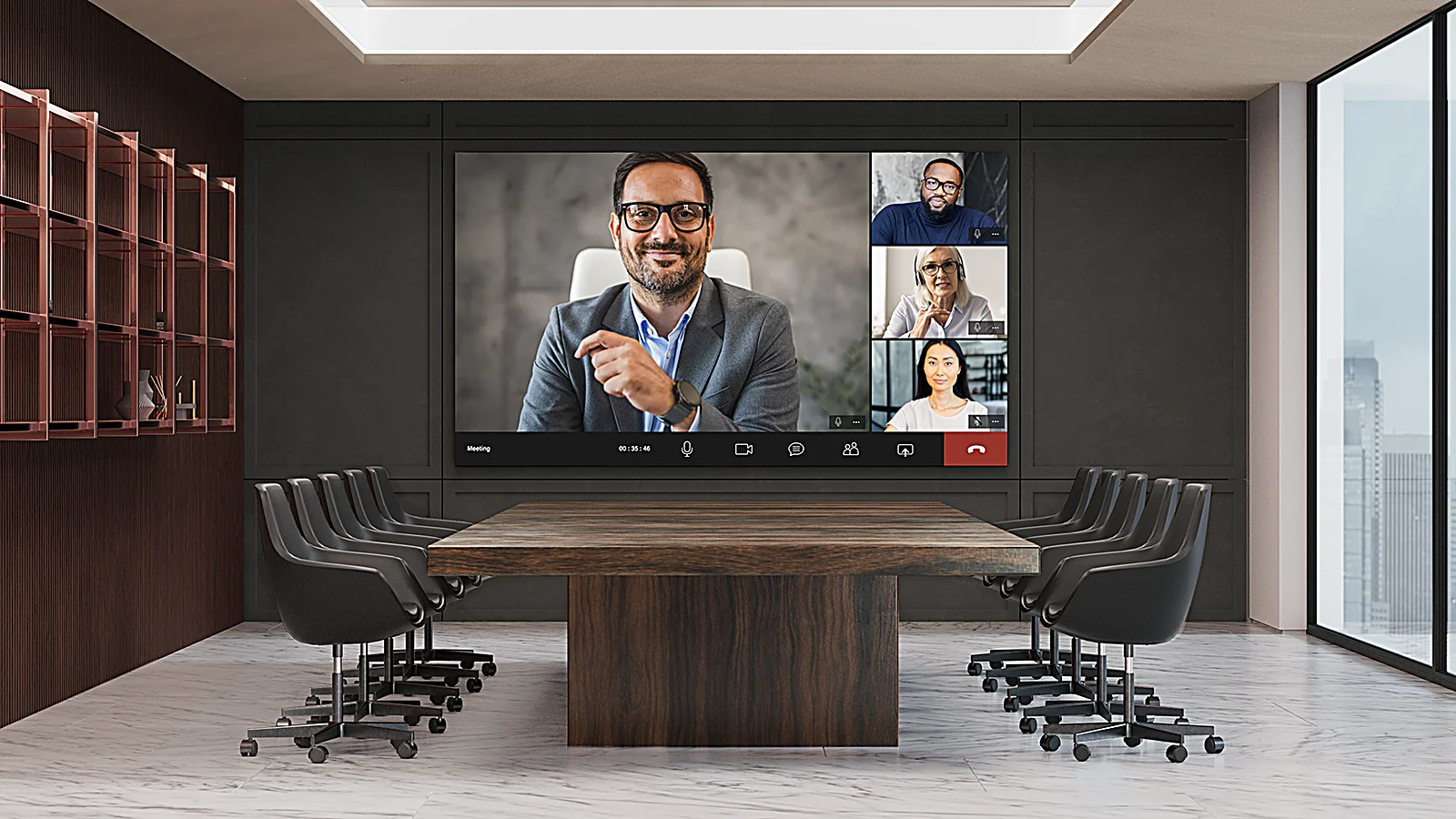
!Meeting room with video conferencing display, illustrating an all-in-one LED screen
What is an All-in-One LED Display?
An All-in-One LED display, often abbreviated as AIO, is a standardized LED system packaged as a single product unit: LED panels, image processor, power supply, and sometimes software, speakers, cameras, or a video bar. Instead of designing individual cabinets, selecting receiving cards, wiring power, calibrating colors, and testing signals like a traditional modular LED project, AIO aims for an experience akin to a large monitor: install it in the room, fix it mechanically, connect power, input signal, and operate.
It's important to note that AIO is not a distinct chip technology. It's a method of packaging and deploying a system. Internally, it can utilize dvLED, COB, COG, or Micro-LED depending on the manufacturer; externally, it's a standard-sized unit, typically ranging from 108 inches to 163 inches. At InfoComm 2026, Sony introduced the 135-inch dvLED All-in-One Crystal LED UNIFY (according to AVNetwork), while Absen presented the 54-inch M54 Micro-LED, a 1080P display that functions like an LCD with plug-and-play HDMI. These examples illustrate AIO's shift of LED from the realm of "engineering projects" to "meeting room equipment."
For Vietnamese buyers, the practical understanding is: AIO is suitable when a business desires a large, seamless display with minimal installation time, a compact form factor, and operation similar to a complete AV device. For fine-pitch LED solutions for close viewing, consider COB lines like BOE COB P0.9 or BOE BYH012 COB P1.25. However, the choice between AIO and modular cabinets still depends on the area, viewing distance, and operational requirements.
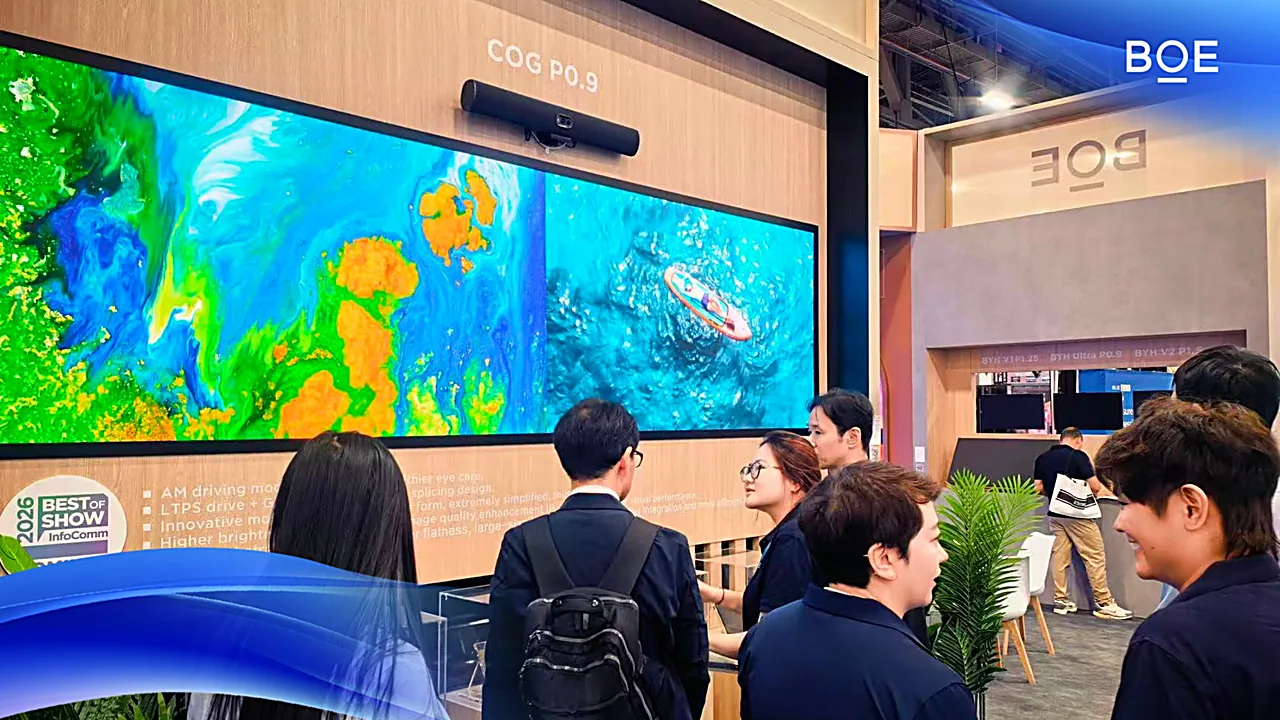
!BOE 48-inch display showcasing nature content

How Does AIO Differ from Traditional Modular LED Walls?
AIO differs from traditional modular LED walls in its level of standardization. Traditional modular LED walls start with cabinets, modules, power supplies, receiving cards, processors, mounting structures or frames, followed by engineer calibration to achieve uniform color and brightness across the entire surface. AIO consolidates many of these components into a pre-configured solution, reducing technical decisions and on-site installation risks, especially for meeting rooms or lobbies with finished interiors.
The primary advantage is speed. An AIO system is designed for rapid installation, with pre-calibrated colors and minimal need for in-depth engineer calibration. For active offices, every day a meeting room is closed represents a cost. Therefore, AIO is often attractive for meeting rooms, small control centers, briefing rooms, and executive reception areas where handover time and stability are nearly as critical as technical specifications.
The second advantage is the viewing experience. AIO retains LED's biggest advantage over LCD video walls: a seamless surface without bezels or the perception of small panels arranged side-by-side. When displaying slides, dashboards, brand imagery, or video calls, a borderless surface enhances the room's premium feel and reduces visual distraction. The article COB vs. LCD Video Wall for Control Rooms delves deeper into this difference in environments requiring continuous display.
The drawback lies in this very standardization. AIO typically comes in fixed sizes, making it difficult to fit irregular wall sections or unique architectural layouts. If a project requires curved screens, unusually proportioned long screens, multi-layered content, or LED modules spanning multiple areas, modular cabinets offer greater flexibility. When integrating multiple LED modules or signal sources, processors like NovaStar must be considered from the outset, rather than assuming AIO handles everything internally.
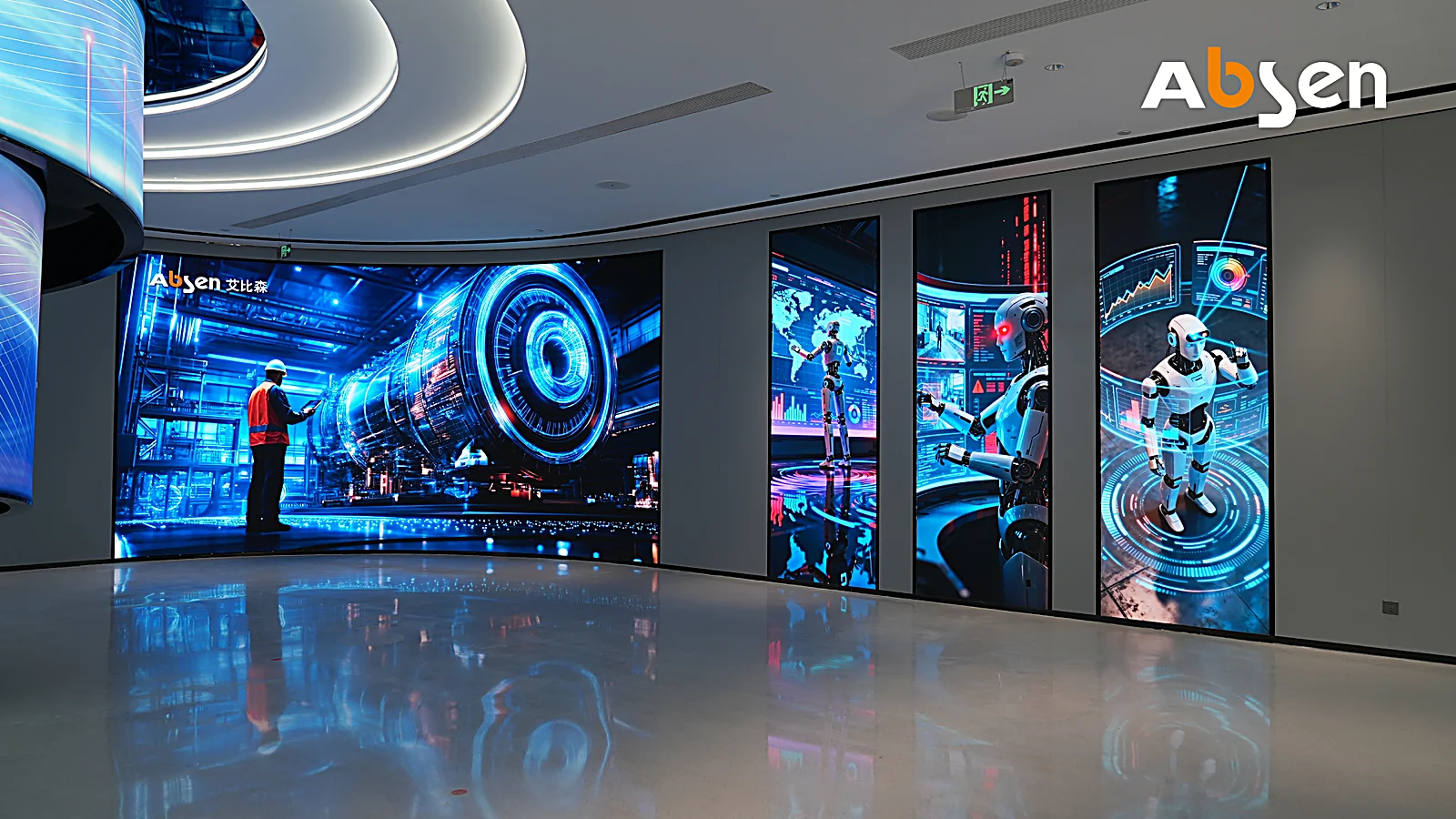
!Row of LED video walls at InfoComm 2026

Why Did AIO Stand Out at InfoComm 2026?
AIO stood out at InfoComm 2026 because it directly addressed a key pain point in the corporate AV market: meeting rooms need larger displays than TVs, better than LCD video walls, but without the complexity of a full LED installation project. This year's exhibition in Las Vegas showed manufacturers not only competing on pixel pitch but also packaging LED into products that are easier to purchase, install, and integrate into meeting and presentation ecosystems.
Sony's 135-inch Crystal LED UNIFY is a prime example of the dvLED All-in-One approach for high-end boardrooms (according to AVNetwork). Absen's M54 demonstrates another direction: a 54-inch, 1080P Micro-LED that accepts HDMI and functions like an LCD. BOE presented a COG P0.9 MicroLED + Video Bar solution, emphasizing all-in-one meetings with a slim, seamless design, HDR, and low-frequency flicker reduction; the video bar includes AI for framing and sound source localization (according to 新浪科技/Sina). Nanolumens also showcased the Captivate All-In-One along with practical LED applications like Engage Pro, The Portal, and NanoPanel 55 (according to AVNation).
The common thread among these examples isn't that they will all immediately arrive in Vietnam with the same configurations. The commonality is a clear market direction: LED is entering meeting rooms by reducing complexity. For Luxwave, as an authorized distributor, the crucial question isn't "which brand just launched what product," but rather, "is this product compatible with the power, structure, maintenance, operational habits, and budget of Vietnamese businesses?"
With AIO, don't just ask about the screen size. Ask how many implementation risks it solves: room closure time, color synchronization, module maintenance, signal processing, and upgradeability as meeting room needs evolve.
When Should You Choose AIO for a Vietnamese Project?
Choose AIO when the space requires a large, seamless display with relatively standard dimensions and prioritizing quick handover over optimizing every centimeter of space. The most suitable applications in Vietnam include executive meeting rooms, high-end training rooms, lobby areas, experience centers, and exhibition showrooms. These spaces typically do not require complex curved screens but demand a premium surface, minimal installation defects, and ease of operation by IT or administrative staff.
In meeting rooms, AIO can replace large-format TVs when TV sizes are insufficient and LCD video walls when the client wants to avoid bezels. For video conferencing, verify camera placement, audio, room lighting, and screen splitting for Zoom or Teams calls. The BOE COG P0.9 + Video Bar series at InfoComm 2026 is noteworthy for integrating display needs with meeting requirements: a seamless screen, HDR, low-frequency flicker reduction, plus AI for framing and sound source localization.
In lobbies and showrooms, AIO is suitable when a business wants to create a premium focal point without extended construction. Hotel lobbies, bank headquarters, corporate offices, or product showrooms can use AIO for brand videos, dashboards, event schedules, or welcome content. Projects like VPF Meeting Room P1.5 and Optupus International Library highlight the growing demand for close-viewing, clear text, and flat surfaces in Vietnamese corporate spaces.
When Should You Not Choose AIO?
Avoid AIO when the primary challenge involves customizing dimensions, contours, or mechanical structures. If the wall section is long but short, requires corner wrapping, multi-level facades, or precise integration with interior design, modular cabinets remain the more flexible option. AIO is designed for simplified deployment; when a project demands significant customization, this simplicity can become a limitation.
In terms of cost, AIO typically has a higher price per square meter than modular LED displays with the same pitch because buyers pay a premium for the integrated mechanical frame, power, processing, color synchronization, and rapid installation experience. This difference may be justified if the project requires minimal room downtime, reduced calibration risks, and an operations team without specialized LED expertise. However, for new constructions with ample installation time and large-format screen requirements, traditional modular LED often offers a better budget solution.
Regarding maintenance, AIO solutions tend to be more dependent on the manufacturer or distributor's technical support. This is not inherently negative if the system is purchased through authorized channels with available spare parts and a clear warranty process. However, for projects in remote areas, those with intensive daily operation, or requiring rapid recovery, inquire beforehand about replacing modules, power supplies, controllers, and the expected response time. The article What is a COB LED Display? also helps differentiate surface technology from system packaging.
How to Budget for AIO to Avoid Mistakes?
Budgeting for AIO should start with the intended use, not the screen size. A 135-inch screen in a boardroom might be ideal if viewers are seated close enough and content is primarily slides, dashboards, and video calls; however, the same size might be insufficient for a large lobby with distant viewers and content requiring brand impact. Therefore, the budget breakdown should clearly separate dimensions, pixel pitch, actual resolution, signal sources, audio, cameras, mounting, and maintenance.
The first step is to assess the viewing distance and content. If a meeting room has front rows close to the screen, a small pitch like P0.9 or P1.25 is worth considering; if viewers are farther away in a lobby, an extremely small pitch may not be necessary. The article Choosing Pixel Pitch for Meeting Rooms helps avoid common errors: purchasing a very large screen with insufficient actual pixels for small text, or selecting too small a pitch for spaces viewed only from a distance.
The second step is to examine the signal system. A standalone AIO might accept HDMI and function like a large monitor, but businesses often need to display multiple windows, cameras, laptops, signage players, or dashboards. In such cases, processors and control systems like NovaStar can be critical for stability. When integrating multiple AIO units or combining AIO with modular LED cabinets, the signal design must be treated as a complete AV system, not an afterthought.
The final step is to compare the total cost of ownership. Beyond the equipment price, include costs for mounting hardware, shipping, installation, power, air conditioning, operator training, spare parts, and maintenance time. An AIO that is more expensive per square meter might be more cost-effective in reality if it enables earlier room operation, reduces color errors, and minimizes engineer calls. Conversely, a modular cabinet display might be more optimal if the project is large enough and the technical team requires control over every component.
Conclusion: Who Should and Shouldn't Use LED AIO?
LED All-in-One should be considered an implementation option, not a universal solution for every LED project. It suits businesses seeking a seamless display surface, rapid installation, minimal reliance on complex construction, and standard dimensions that fit their space. It is not suitable for projects requiring significant architectural customization, extremely tight per-square-meter budgets, or complex multi-zone LED systems.
For the Vietnamese market in 2026, AIO is most worth considering for executive meeting rooms, reception lobbies, product experience centers, and showrooms aiming to replace LCD video walls with a cleaner display surface. Products and signals from InfoComm 2026 indicate that LED is moving closer to the AV equipment purchasing model: less fragmented, with more integrated features. However, investors should still budget based on actual usage scenarios, verify maintenance plans, and select distributors with strong technical capabilities, especially when systems involve BOE fine-pitch, NovaStar processors, or multiple signal sources.
Pitfalls
Common mistakes
- Purchasing an AIO solely for its quick installation without verifying if its fixed dimensions match the wall, viewing distance, and actual content requirements.
- Comparing AIO prices with LCD or modular LED based on initial purchase cost, neglecting installation time, color calibration, maintenance, and operational downtime costs.
- Treating AIO as a fully customizable LED screen; in reality, many models have standard sizes, making them difficult to fit non-standard wall sections.
- Overlooking the processor when integrating multiple screens or requiring numerous sources; while standalone AIO units are more compact, larger systems still necessitate a robust signal design.
FAQ
Frequently asked questions
How does an All-in-One LED display differ from a traditional modular LED wall?
An All-in-One LED display integrates the LED panel, processor, power supply, and sometimes software, speakers, or camera into a standard configuration. Traditional modular LED walls use cabinets, power supplies, receiving cards, and processors designed for each specific project. AIO offers faster installation and less calibration, while modular LED provides greater flexibility in size, shape, and signal configuration.
Can AIO replace LCD video walls in meeting rooms?
Yes, if the goal is a large, seamless surface without bezels and a more premium look than an LCD video wall. AIO is particularly suitable for executive meeting rooms, briefing rooms, and reception areas. However, investors should check standard dimensions, viewing distances, actual resolution, and camera requirements before finalizing the configuration.
When should you not choose an All-in-One LED display?
Avoid AIO when wall dimensions are irregular, curves are needed, multiple architectural surfaces must be covered, or special display ratios are required. In such cases, modular LED cabinets are preferable for controlling width, height, pixel pitch, and maintenance options. AIO is best suited when standard dimensions meet the requirements.
Does an AIO require a separate NovaStar processor?
A single AIO unit typically has integrated processing for basic signal input. However, when multiple units need to be connected, multiple sources displayed, presets used, cameras integrated, or for operation in a control room environment, a processor and control system remain crucial. NovaStar is often considered for managing signals, scaling images, and ensuring stable operation of larger LED systems.
Are AIO LED displays more expensive than modular LED displays?
On a per-square-meter basis, AIOs are generally more expensive than modular LED displays with the same pixel pitch due to the standardized mechanics, power, processing, and installation process. However, the total project cost can be competitive if rapid installation, minimal room downtime, reduced calibration personnel, and a premium finish are required. It's best to compare based on total cost of ownership, not just equipment price.
Where is AIO most suitable for the Vietnamese market?
In Vietnam, AIO is well-suited for executive meeting rooms, reception lobbies, product experience centers, and showrooms looking to replace LCD video walls with a seamless surface. These are projects that prioritize aesthetics, delivery time, and stable operation. For large outdoor screens or complex facades, traditional modular LED remains more practical.
References