

What to Ask Before Choosing an LED Display Installation Company?
Choosing an LED display installation company should not start with "how much per square meter," but rather with "who is responsible for the entire system after the screen is operational." An LED screen is a combination of modules, cabinets, power supplies, receiving cards, processors, structures, software, and calibration processes. If investors only compare module prices, risks related to product origin, maintenance, acceptance, and after-sales service will be pushed to the operational phase.
!Technical team surveying indoor LED screen installation location before construction
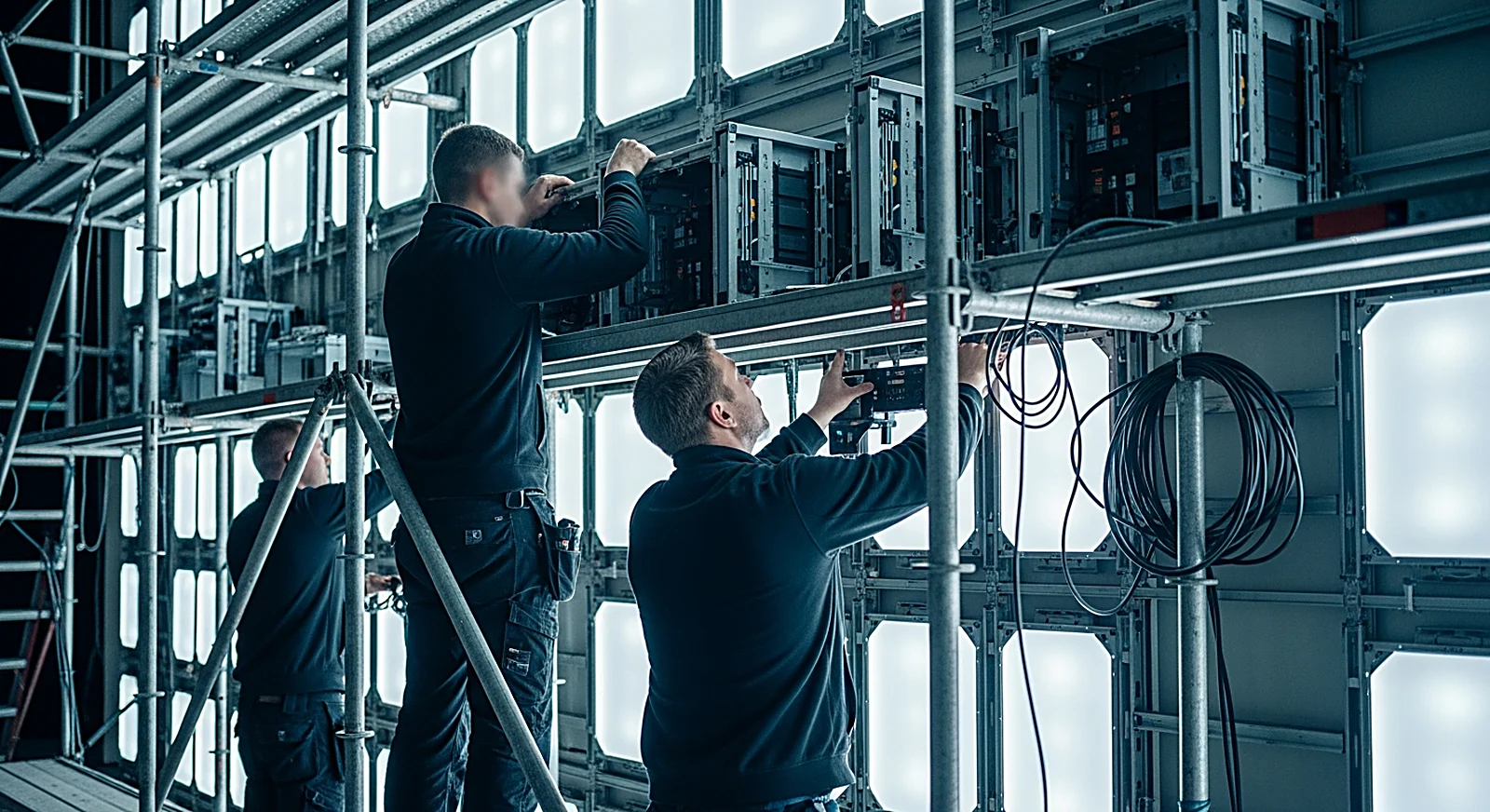
A practical approach is to prepare a set of questions before meeting suppliers. Ask them about the intended brands, models, pixel pitches, control systems, warranty duration, where replacement modules will be sourced from, and who will be available to address issues. These questions help distinguish serious technical companies from those merely consolidating orders or brokering projects. If your project requires a stringent handover process, consider reading the LED display installation and acceptance checklist for on-site inspection points.

How Important is Genuine Product Origin?
Genuine product origin is crucial because an LED screen is a long-term operational asset, not a one-time purchase. For brands like BOE or control systems like NovaStar, investors need to know the product's distribution channel, whether the model in the quote is correct, and how the warranty applies. Information from manufacturers like BOE and NovaStar serves as a reference for product capabilities, but project documentation must specify the exact product line being offered.
!LED screen installation technician at Thanh Thang Castle project
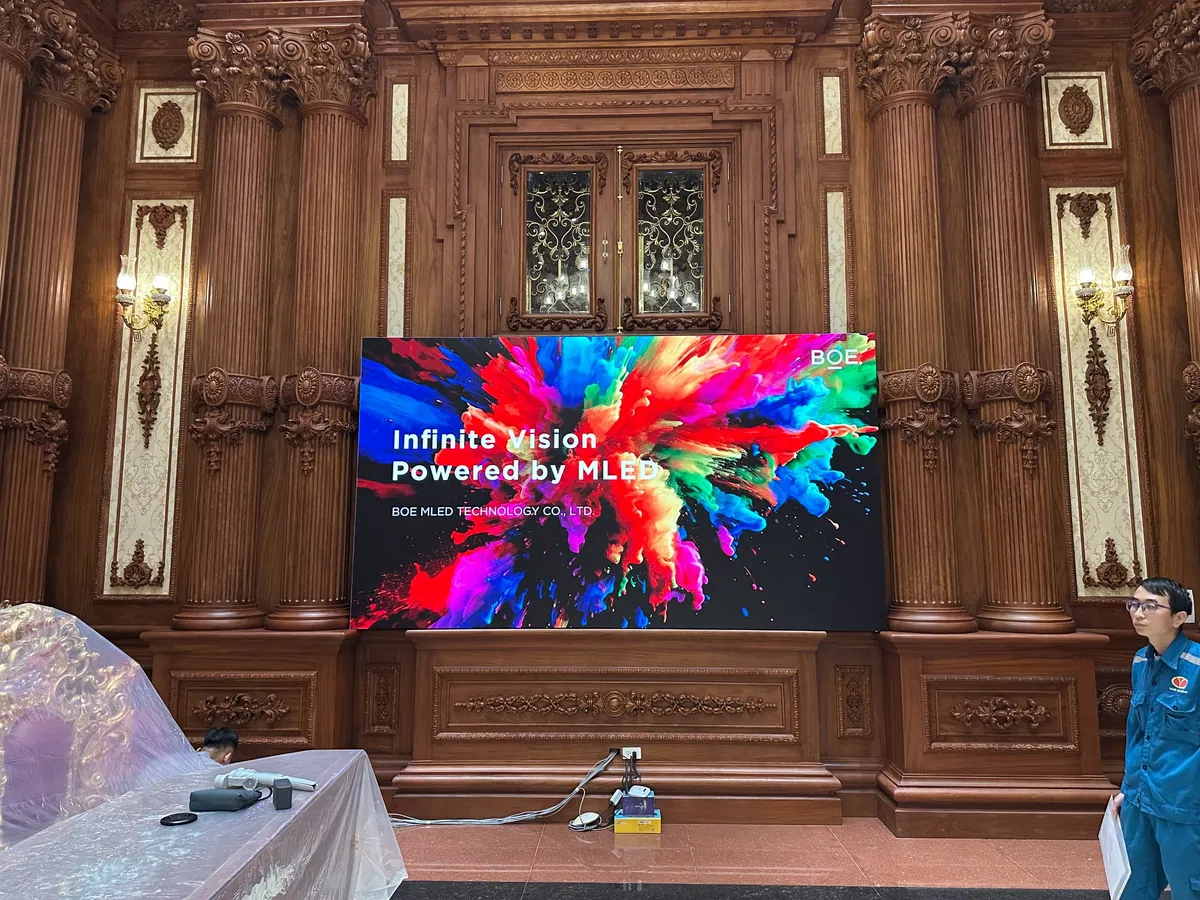
Unbranded or grey market products may seem attractive initially due to lower prices, but risks emerge later: unclear production batches, mismatched module colors for replacements, unsynchronized control cards, or warranties passed through multiple intermediaries. For fine-pitch COB screens like the BOE BYH COB Ultra P0.9, even minor differences in module batches or color calibration can be noticeable at close viewing distances. Therefore, proof of origin should accompany the quote, not be a verbal promise after contract signing.
What's the Difference Between a Full-Service Provider and an Equipment Supplier?
An equipment supplier's responsibility ends with delivering the correct goods; a full-service provider is accountable from survey, design, supply, installation, calibration, to warranty. This distinction is significant because many LED screen issues are not solely with the LED panels but stem from the chosen structure, viewing distance, power supply, ventilation, cabling, maintenance access, and processor configuration. A cheap equipment quote can become expensive if the investor needs to hire multiple additional parties to complete the system.
For example, in an auditorium project, the contractor must understand the stage space, seating angles, audio-visual lighting, and projection needs. For auditorium applications, the screen must not only be bright and sharp but also operate reliably during meetings, events, or live streams. For stadium applications, the focus shifts to brightness, water resistance, outdoor structures, and rapid maintenance capabilities. Full-service capabilities ensure the chosen configuration suits the actual context rather than a generic price list.
How to Verify Real Project Experience?
Real project experience should be verified through completed installations, not just presentation slides. Investors should request site photos, operational videos, acceptance reports, or verifiable case study information. If possible, visit a screen that has been operational for several months to assess flatness, color consistency, dead pixels, signal stability, and how the company handles maintenance. Operational projects speak louder than any capability statement.
A notable example is the case of Luxwave delivering 2 BOE COB P0.9 projects in Q1/2026, as COB fine-pitch technology demands high uniformity and calibration standards. For high-end projects, the question is not just "have you installed LED screens before," but "have you installed the right type of screen, in the right environment, with the right complexity?" A serious company can explain why they chose a particular configuration, what challenges they faced during installation, and what criteria were used for acceptance.
How Detailed Should Warranty and After-Sales Service Be?
Warranty details should be specific enough for investors to know who to contact, response times, what replacement parts will be used, and which costs are covered. A "24-month warranty" commitment is insufficient without specifying the scope for modules, power supplies, receiving cards, processors, labor, travel expenses, and exclusions. The larger the LED screen, the higher the cost of downtime, making after-sales service a part of the total cost of ownership, not an afterthought.
A direct question to ask is whether the company has compatible spare parts readily available. Modules, power supplies, receiving cards, and controllers should have backup options, especially for continuous operation projects. Processors like the NovaStar VX1000 require proper configuration, file backups, and operational handover to ensure the technical team is not reliant on a single individual. The LED screen maintenance checklist can serve as a post-handover checklist.
What Constitutes Transparent Pricing and Contracts?
A transparent quote must clearly state the model, pixel pitch, dimensions, resolution, cabinet, power supply, receiving card, processor, software, structure, transportation, installation, calibration, acceptance, and warranty. If two quotes only mention "P1.8 LED screen" or "indoor LED screen" without specifying the brand and model, they cannot be fairly compared. P1.8 from different product lines can vary significantly in brightness, uniformity, lifespan, maintainability, and replacement costs.
The contract should also include appendices for technical specifications and acceptance criteria. For indoor screens, flatness, dead pixels, color deviation, brightness, signal lines, and actual content playback capability should be checked. For outdoor screens, standards like IEC 60529 for dust and water ingress protection, structural load capacity, and maintenance access should be considered. When budgeting, investors can refer to the COB LED screen price 2026 article, but the final price must be based on the configuration and on-site survey.
What Red Flags Should Prompt Immediate Withdrawal?
The first red flag is an ambiguous quote: lacking model, module brand, control system, warranty period, or only stating a price per square meter. The second red flag is unclear product origin, evasiveness regarding authorized dealership, product documentation, and compatible spare parts. The third red flag is a design lacking maintenance access, technical doors, or cabinet removal plans, significantly increasing future repair costs.
The fourth red flag is pressuring for a quick decision with promotions, while neglecting on-site surveys, technical acceptance, or failing to present completed projects. A serious company may state a quote's validity period but will not use time pressure as an excuse to bypass technical due diligence. Luxwave, part of Ho Gia JSC, is an authorized dealer for many OEMs such as BOE, NovaStar, Muxwave, and Leyard; our approach involves consulting on configurations, providing full-service installation, and offering documented warranties, rather than encouraging decisions based solely on shock prices.
Conclusion: How Should Investors Finalize a Contractor?
Finalizing an LED screen contractor should be based on evidence, not intuition. Request five sets of information simultaneously: genuine product origin, full-service capabilities, completed projects, warranty terms, and transparent pricing/contracts. Once this information is clear, investors can compare prices based on their true value: same configuration, same responsibilities, same acceptance criteria, and same after-sales service capabilities.
A serious company will welcome detailed questioning, as these questions protect both parties before the project commences. If they can present documentation of origin, survey procedures, maintenance plans, parts lists, and reference projects, operational risks will be significantly reduced. For high-end LED screens, "genuine" and "full-service" are not just sales slogans; they are prerequisites for stable system operation long after handover.
Pitfalls
Common mistakes
- Quotes lacking specific model, pixel pitch, module brand, control system, and warranty period, leaving investors without a basis for comparison or accountability.
- Unclear sourcing, inability to prove genuine channels, and lack of compatible spare parts for post-handover issues.
- Designs lacking maintenance access, technical doors, or cabinet removal plans, leading to significantly increased future repair costs.
- Sales personnel pressuring for quick decisions with attractive prices while avoiding on-site surveys, technical acceptance, and failing to present completed projects.
FAQ
Frequently asked questions
How can I tell if an LED display installation company is reputable?
Request documentation of product origin, quotes with specific models, photos or acceptance reports of completed projects, and a clear post-acceptance warranty process. A reputable contractor will typically provide clear answers on technical aspects, present maintenance plans, and not evade questions about spare parts.
Why shouldn't I choose the cheapest LED screen quote?
Low prices might stem from different pixel pitches, modules, inferior control systems, inadequate structures, or omitted maintenance costs. If a quote lacks model, brand, specifications, and warranty duration, investors have little understanding of what they are buying and find it difficult to compare suppliers fairly.
What is the difference between an LED display broker and a true installation contractor?
Brokers typically focus on closing deals and subcontracting, making it difficult to take responsibility for the entire project lifecycle. A true installation contractor possesses the capabilities for on-site surveys, design, supply, installation, calibration, and warranty using their own technical team or a well-controlled partner network.
Is it necessary to request an authorized dealer certificate when purchasing an LED screen?
It is advisable, especially for projects with large budgets or long-term operational requirements. An authorized dealer certificate, distribution confirmation, or import documentation helps mitigate risks associated with grey market products, incorrect batches, and warranty issues not supported by the official manufacturer or distributor.
What should be included in an LED display installation contract?
The contract should clearly specify the module model, pixel pitch, dimensions, resolution, control system, cabinet, power supply, structure, timeline, acceptance criteria, warranty period, and maintenance response time. These details ensure mutual agreement on scope and prevent disputes during acceptance or repairs.
What should investors check after the LED screen is handed over?
Investors should verify flatness, dead pixels, color deviation, brightness, signal reception capability, configuration documentation, operating instructions, and warranty terms. It is also important to retain the spare parts list, technical support hotline, and acceptance report for warranty claims.
References
- 1.ManufacturerBOE
- 2.ManufacturerNovaStar
- 3.StandardIEC 60529 — Ingress Protection