
On this page
- Which Two BOE MLED COB Projects Has Luxwave Delivered in Vietnam?
- Why Did Both Projects Choose COB P1.25 with Different Configurations?
- How Was Lâu Đài Thành Thắng Implemented, and What Were the Challenges?
- What Were the Specific Technical Requirements for Optupus International Library?
- What Lessons Were Learned from These Two Projects for Clients and the Installation Team?
Which Two BOE MLED COB Projects Has Luxwave Delivered in Vietnam?
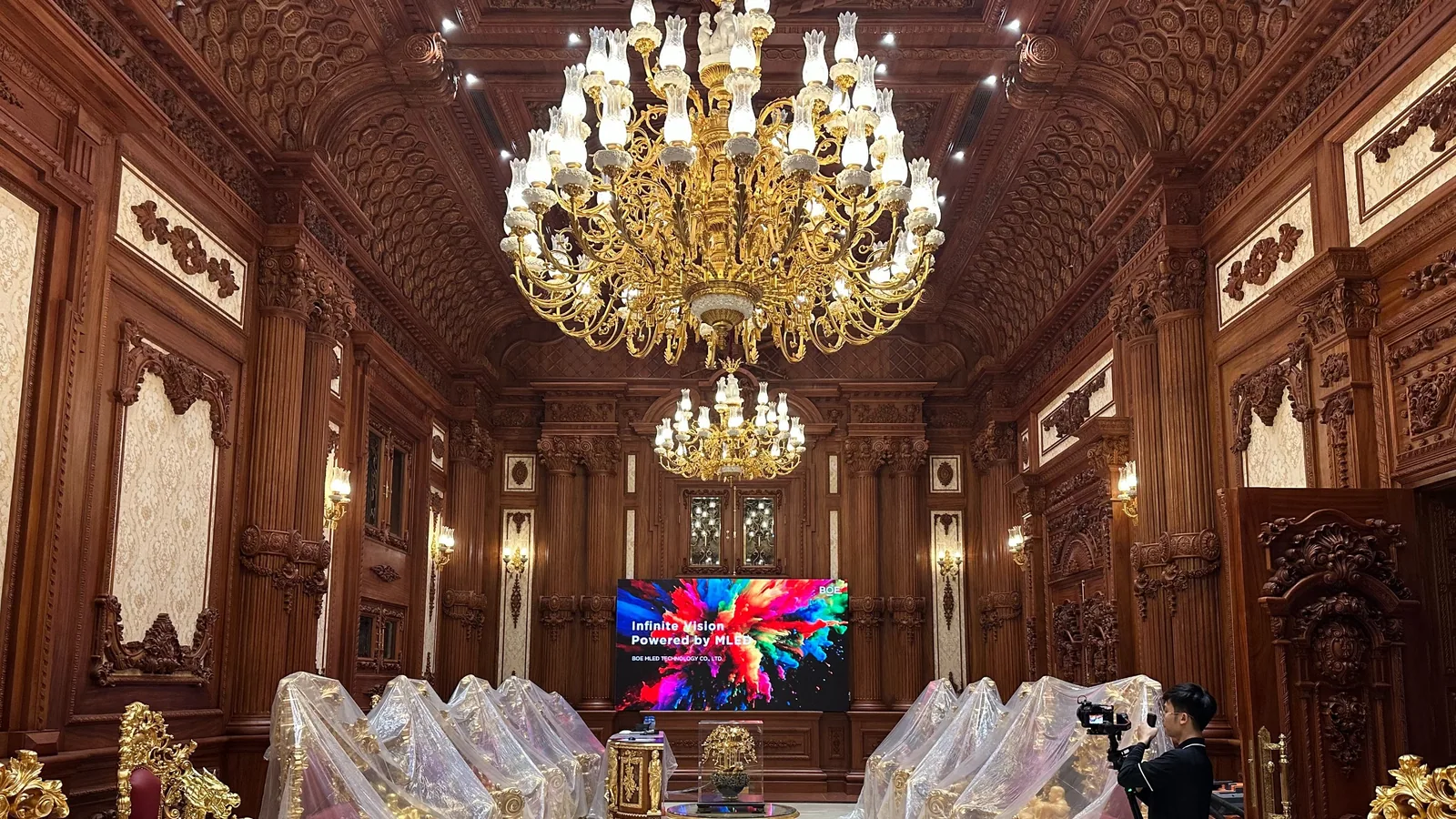
Luxwave has completed and delivered two BOE MLED COB projects in Vietnam, both featuring the BOE BYH012 COB P1.25 series in distinct settings. The first project is the reception hall of Lâu Đài Thành Thắng in Gia Viễn, Ninh Bình, covering an area of 6.5m². The second is the training room of Optupus International Library in Hanoi, spanning 9.1m² with BYH012V12 cabinets. The BYH012 model corresponds to a 1.25mm pixel pitch as per the BOE datasheet (P0.9 uses the BYH009 model code). Both installations utilize cabinets from BOE MLED's BYH-COB series.
While the total deployment area of 15.6m² is modest, these projects mark a milestone: Luxwave has successfully deployed the BOE BYH-COB series in Vietnam for the first time, in two vastly different environments – a luxury private residence and a technology training space. The choice of COB for both was driven by a core reason: close viewing distances and the demand for high image quality and aesthetics. The differences lie in the installation context and processor configuration, offering valuable insights from these projects.
Why Did Both Projects Choose COB P1.25 with Different Configurations?
Both projects share the same BOE BYH-COB 600×337.5mm cabinet platform but are paired with different processors based on pixel load: Thành Thắng uses Novastar VX1000, while Optupus employs NovaStar VX2000 Pro. The 600×337.5mm COB cabinet allows for seamless integration with a surface flatness of ≤0.1mm according to the datasheet, making module boundaries indistinguishable at a 2m viewing distance. This is crucial for luxurious spaces where visible seams can detract from the monolithic aesthetic.
The decision to opt for COB over SMD is based on three key advantages. Firstly, COB technology directly mounts LED chips onto the PCB and coats them with a protective resin, creating a flat, seamless surface without protruding LED beads that are prone to damage or glare at close viewing distances. Secondly, the passive cooling design eliminates the need for fans, ensuring near-silent operation – essential for quiet reception halls and training rooms. Thirdly, the high contrast ratio and chip durability ensure stable performance throughout the 100,000-hour datasheet lifespan.
The Optupus installation specifically utilizes the NovaStar VX2000 Pro for its superior capability in scaling high-resolution sources, synchronizing colors across cabinets, and supporting multi-window displays – necessary for a training room receiving content simultaneously from laptops, cameras, and playback devices. Thành Thắng, with a single content source, found the Novastar VX1000 sufficient. Luxwave's technical team, holding NovaStar NCE Professional certifications, performed on-site uniformity and color gamut calibration, rather than relying solely on factory default settings. For guidance on selecting configurations based on room type, refer to the article on choosing LED screen pixel pitch for meeting rooms.
How Was Lâu Đài Thành Thắng Implemented, and What Were the Challenges?
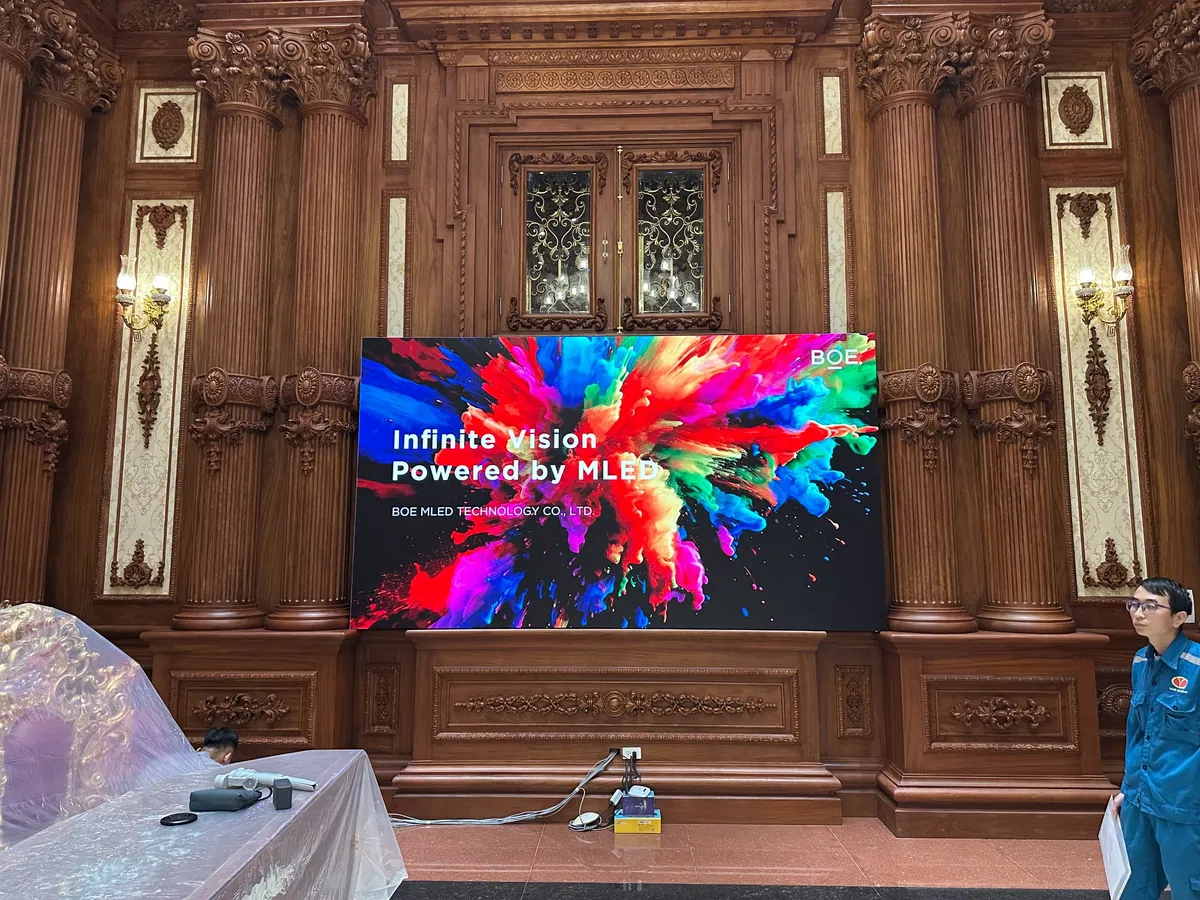
Lâu Đài Thành Thắng is a large-scale private residence in Ninh Bình, featuring a reception hall adorned with crystal chandeliers and intricately carved wood in a European style. Luxwave's objective was clear: the 6.5m² LED screen had to blend seamlessly with the wooden background when off – appearing almost invisible – and display high-resolution content vividly when on, all within a space with strong reflective light sources. COB P1.25, with its seamless black bezel and 100,000:1 contrast ratio, meets these requirements, as its flat, dark surface when off harmonizes with the dark wood.
The primary installation challenge was the mounting structure. Carved wood is not a flat metal surface that can be easily adjusted, whereas the 600×337.5mm COB modules demand a surface flatness tolerance of only ±2mm. Exceeding this threshold can cause shadows and color shifts at the seams. The technical team conducted meticulous measurements and fabricated auxiliary frames to achieve the required flatness, while also ensuring the preservation of the valuable wood from scratches or damage during the process. The entire installation and calibration took 5 days, longer than the other project due to the complexity of the base structure.
The post-acceptance results met the investor's expectations. Under the crystal chandeliers, the BYH-COB cabinet's brightness effectively counteracted glare without causing discomfort when lights were dimmed, and the seamless black bezel made the screen virtually disappear against the wooden backdrop. When displaying content, the images were sharp even at a 2m viewing distance – the typical proximity of guests in the hall. This exemplifies the reason for using fine-pitch COB in luxury private spaces: not for distant viewing, but to withstand close-up scrutiny. Explore Luxwave's completed projects for more examples of real-world configurations in various settings.
What Were the Specific Technical Requirements for Optupus International Library?
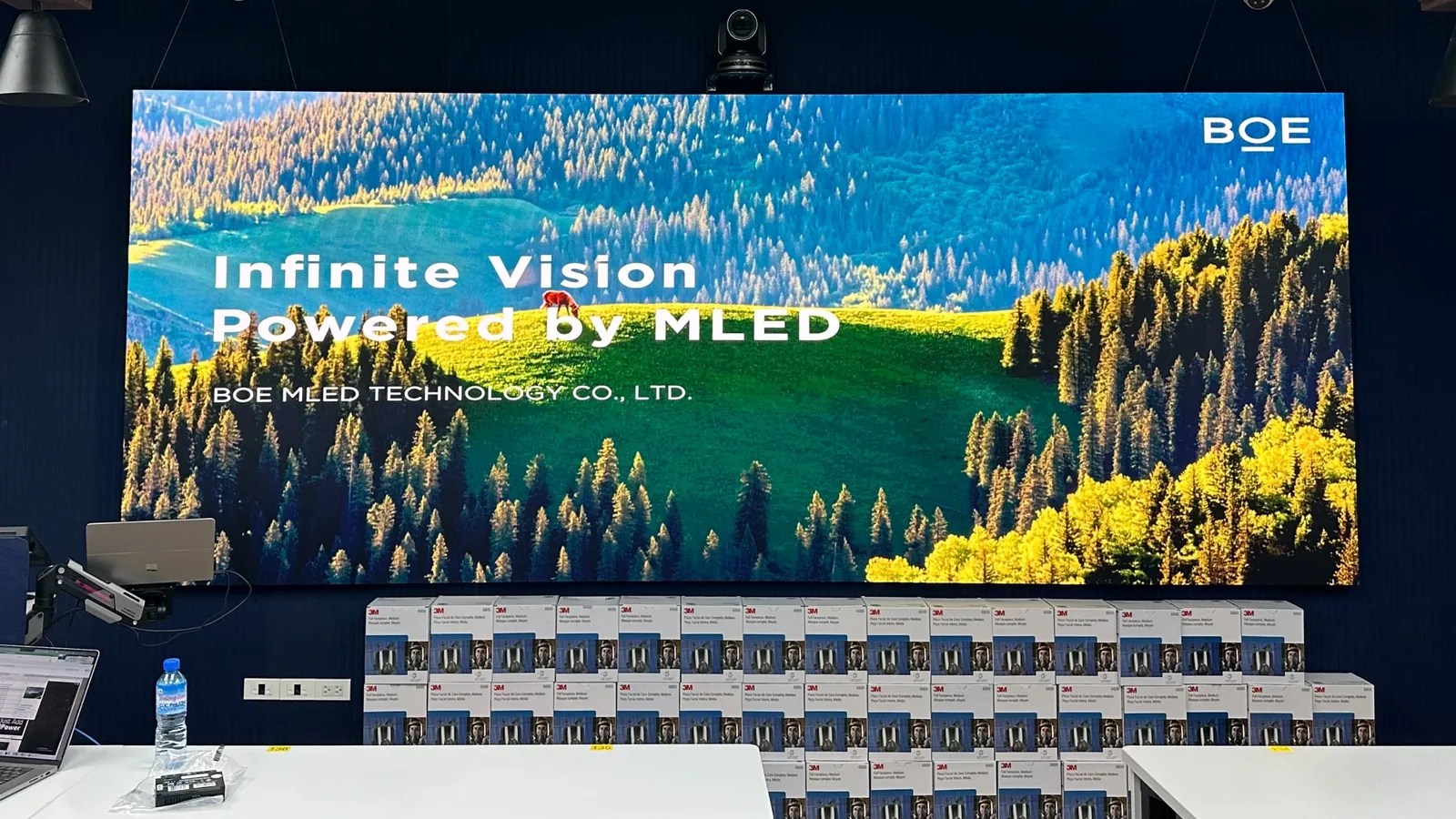
Optupus International Library in Hanoi is a technology training facility where the 9.1m² LED screen serves as the primary display for students. The configuration consists of 9×5 BYH012V12 cabinets (600×337.5mm), forming a 5.4m × 1.6875m display with a resolution of 4320×1350px at P1.25 pitch. Unlike a private residence, this is a continuously operating environment with more practical demands: content must be clearly visible to students seated at distances ranging from 2 to 4m, effectively displaying small text slides and data tables, and performing well under the ambient light of the classroom, including downlights from the ceiling. The context of MLED technology training also requires the screen itself to be a reliable reference for quality.
The core technical requirements were brightness and uniformity. The BYH012V12 offers adjustable brightness up to 800 nits (600 nits typical) and an ambient contrast ratio of ≥7700:1, sufficient to combat ceiling downlights in standard mode without resorting to peak brightness levels that could reduce chip lifespan. The technical team calibrated each pixel for brightness and chroma to ensure uniformity across cabinets, preventing the "patchy" appearance that students might notice on white backgrounds. At P1.25 pitch, students in the front rows at 2-3m cannot discern individual pixels due to the seamless COB surface – an experience comparable to a high-quality LCD screen but at a significantly larger scale.
As the screen was mounted on a flat wall, the installation process was considerably faster than at Thành Thắng: frame erection, module assembly, and calibration were completed in 3 days, with operation commencing on the fourth day after delivery. The flatness of the mounting surface directly contributed to the reduced timeline – a point Luxwave consistently emphasizes during site surveys: the complexity of the mounting surface impacts project schedule more than the screen area itself. Optupus also serves as an excellent reference for clients interested in applications for showrooms and exhibitions requiring large, seamless displays.
What Lessons Were Learned from These Two Projects for Clients and the Installation Team?
These two projects demonstrate that COB pitch is not a default choice for every space but a conditional decision. Both Thành Thắng and Optupus met three criteria justifying fine-pitch: close viewing distances (under 3m), requirements for high aesthetics or clarity, and environments with strong reflective light demanding good brightness and contrast. Both installations used P1.25 – sufficiently fine for a 2m viewing distance thanks to the seamless COB surface; stepping down to P0.9 (BYH009 series) would significantly increase investment costs with little perceptible difference to the naked eye at this distance. For rooms where the furthest seat is over 5m away, P1.5-P2.5 is adequate and more cost-effective.
The second major lesson learned regarding project operation concerns lead time and mounting structures. COB cabinets are manufactured to order, requiring 14-21 days at the BOE factory, rather than being stocked. Therefore, any launch plans must factor in an additional 21-30 days from the contract signing date. The mounting structure also influences the installation timeline more than the screen area: a flat wall allows for 3 days of work, while carved wood requires 5 days. On-site surveys – measuring surface flatness within ±2mm tolerance, assessing ambient light levels, and determining mounting solutions – must be conducted before providing accurate quotes; estimations from afar are unreliable.
Following these two projects, Luxwave continues to expand its BOE BYH012 COB P1.25 line for executive meeting rooms – precisely the pitch that Optupus has proven to be a balance between clarity and investment cost. The company is prioritizing two segments: high-end boardrooms (20-40m²) and luxury private reception halls. Interested clients can refer to the actual BOE BYH012 review in Vietnam or schedule an on-site survey via the contact page for measurements and project-specific quotations.
Field insight
Evidence from a Luxwave-delivered project
See the full case study at /du-an/lau-dai-thanh-thang.
Pitfalls
Common mistakes
- Purchasing BOE COB through unofficial channels – risk of grey market products lacking CO/CQ, voiding the 36-month on-site warranty, and lacking support from BOE-trained technicians.
- Underestimating COB cabinet lead time – COB modules are made-to-order, requiring 14-21 days of production at the BOE factory, not stocked like common SMD cabinets. Launch plans must allow an additional 21-30 days from contract signing.
- Overlooking structural flatness checks – 600×337.5mm COB cabinets require mounting frames with a ±2mm tolerance; carved wood or tempered glass installations necessitate pre-fabrication measurements.
- Selecting a pitch smaller than actual needs – for rooms with the furthest seats over 5m away, P1.5-P2.5 is sufficiently clear; choosing a smaller pitch increases investment cost without discernible visual difference at that distance.
- Forgetting to adjust brightness based on room lighting – spaces with crystal chandeliers or reflective ceiling panels require ambient light measurement beforehand to set appropriate brightness levels and prevent glare.
FAQ
Frequently asked questions
Is Luxwave an authorized BOE MLED dealer?
Yes. Luxwave is an official authorized dealer of BOE MLED in Vietnam. All BOE products distributed by Luxwave come with genuine CO/CQ and a 36-month on-site warranty. Our technical team is directly trained by the BOE Training Program, avoiding indirect channels like Hong Kong or Singapore, ensuring transparent pricing and lead times.
Why did both projects choose COB over larger-pitch SMD screens?
In both scenarios, viewers were seated within 3 meters, and high aesthetic standards were required. COB technology provides a seamless, flat surface without visible pixel dots at 2m viewing distances, allowing it to blend with luxurious interiors. Larger-pitch SMD screens would reveal pixelation up close and have a textured surface, failing to meet the sophisticated requirements of these installations.
How long is the lead time for ordering BOE BYH-COB cabinets?
BYH series COB cabinets require 14-21 days of production from the contract signing date, as they are not stocked like common SMD cabinets. Air freight from the BOE factory to Hanoi takes 3-5 days, including genuine CO/CQ. On-site installation and calibration add another 2-5 days depending on the project size. The total average lead time is 21-30 days.
Why did the Thành Thắng installation take 5 days while Optupus took only 3?
The difference lies in the mounting structure. At Optupus Library, the screen was mounted on a flat wall, allowing for quick frame erection and module assembly, completed in 3 days. At Lâu Đài Thành Thắng, the screen was attached to a carved wood structure, requiring precise measurements and surface preparation to meet the ±2mm tolerance before installation, while also protecting the valuable wood throughout the process, extending the work to 5 days.
Do BOE COB screens require fans for cooling and frequent maintenance?
No. BOE BYH-COB cabinets feature passive thermal management without fans, resulting in near-silent operation, ideal for quiet reception halls and training rooms. The COB surface is coated with impact-resistant resin and can be cleaned with a damp cloth. Routine maintenance primarily involves surface cleaning and power supply checks; LED chips rarely require replacement within their 100,000-hour lifespan.
What are Luxwave's next steps for BOE COB after these two projects?
Luxwave is continuing to expand its BOE BYH012 COB P1.25 line for executive meeting rooms, as this pitch is currently a leading segment for the COB market. The focus is on two main categories: high-end boardrooms (20-40m²) and luxury private reception halls. Interested clients can schedule an on-site survey to receive project-specific configurations and quotations.
References